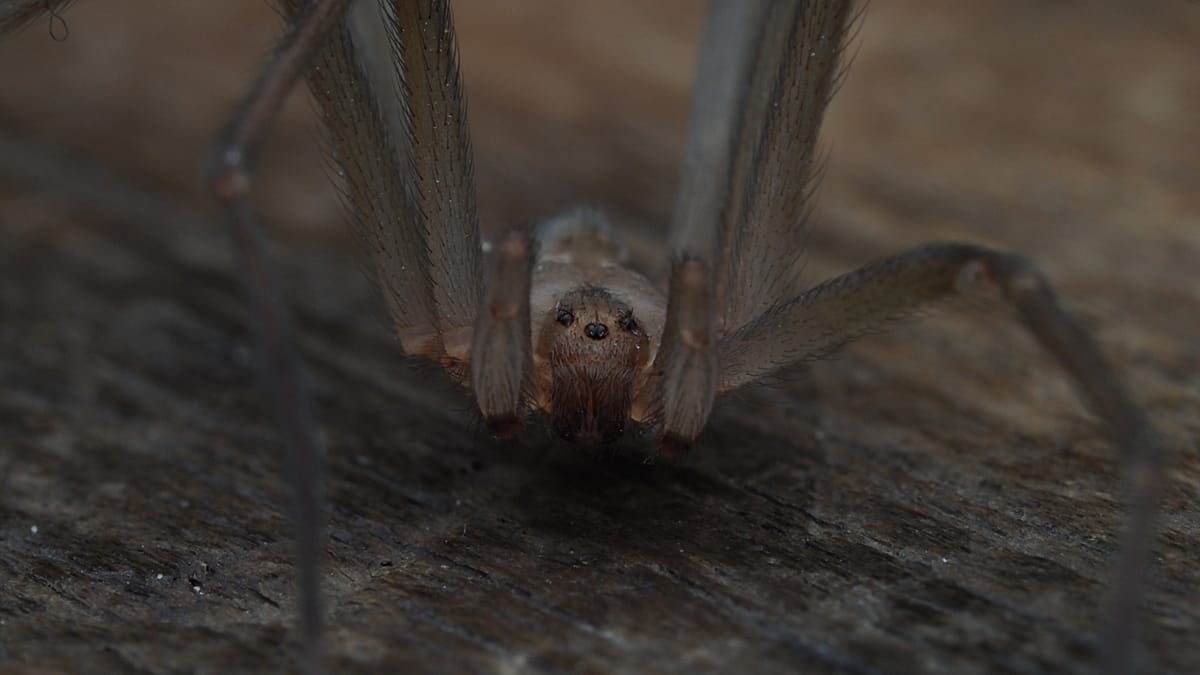
Biologists in Portugal have confirmed the presence of the Chilean recluse spider (Loxosceles laeta) in the city of Porto, marking the first documented occurrence of this venomous arachnid in the Iberian Peninsula. The discovery, made by researchers at the Natural History and Science Museum of the University of Porto, adds a new species to the continent's growing list of non-native arthropods.
José Manuel Grosso-Silva, an entomologist at the museum and co-author of the study, told Euronews that the species' discreet behaviour should allay public concern. “The likelihood of people coming across this species or being bitten by it is low,” he said. The study, published in Portuguese, notes that while the spider is not aggressive, its bite can cause significant skin damage, often leading to necrotic lesions.
How the spider arrived in Europe
Native to western South America, particularly Brazil and Argentina, the Chilean recluse has spread globally through international trade. The first European record dates back to 1972, when it was found in a building housing the Departments of Zoology and Genetics at the University of Helsinki in Finland. More recently, in 2025, a specimen was identified in the basement of Eberhard Karl University of Tübingen in Germany. There are also unconfirmed reports of its presence in Italy.
The first specimen in Porto was spotted on 10 September 2025 on a wall in Campo dos Mártires da Pátria. A second male was found dead on a sticky trap on 10 January 2026. Researchers are unsure whether the species is confined to Porto or already more widespread, as it closely resembles the Mediterranean recluse spider (Loxosceles rufescens), which has been established in Portugal for decades. The key distinguishing feature is the anatomy of the males' pedipalps, which are used for reproduction.
“We do not know whether this new species is confined to Porto or already more widespread,” Grosso-Silva noted. “As the Chilean recluse spider can easily be mistaken for the Mediterranean recluse, it is possible that there are photographic records labelled as the latter which in fact show the newly identified species.”
Risk and previous cases
Both species share similar morphology and behaviour: uniformly brown, nocturnal, and preferring dark corners and walls for their webs. The venom of Loxosceles spiders can cause loxoscelism, a syndrome that ranges from mild skin irritation to severe necrosis and, in rare cases, death. In 2023, Portugal recorded a case of loxoscelism from a bite by the Mediterranean recluse spider. A 48-year-old woman bitten on the nape of the neck in an urban park developed swelling, headaches, fever, and necrosis, requiring a 16-day hospital stay before full recovery.
Grosso-Silva stressed that the risk remains low. “There is a risk, but it seems low to me, so I try not to fuel panic or excessive alarm,” he said.
Broader context of invasive species
Portugal now hosts over 300 established insect species from around the world, many introduced through increased goods transport. The biologist pointed to the Asian hornet, which arrived in Europe via a shipment of Chinese bonsais in France, as a parallel. Urban development and monocultures—such as eucalypt plantations and extensive maize crops—have reduced natural habitats, favouring the spread of exotic species. Rising temperatures, with Europe warming faster than the global average, may further accelerate this trend.
“We do not know how it will evolve here in the Iberian Peninsula; this is a situation to be monitored over the coming years,” Grosso-Silva concluded.