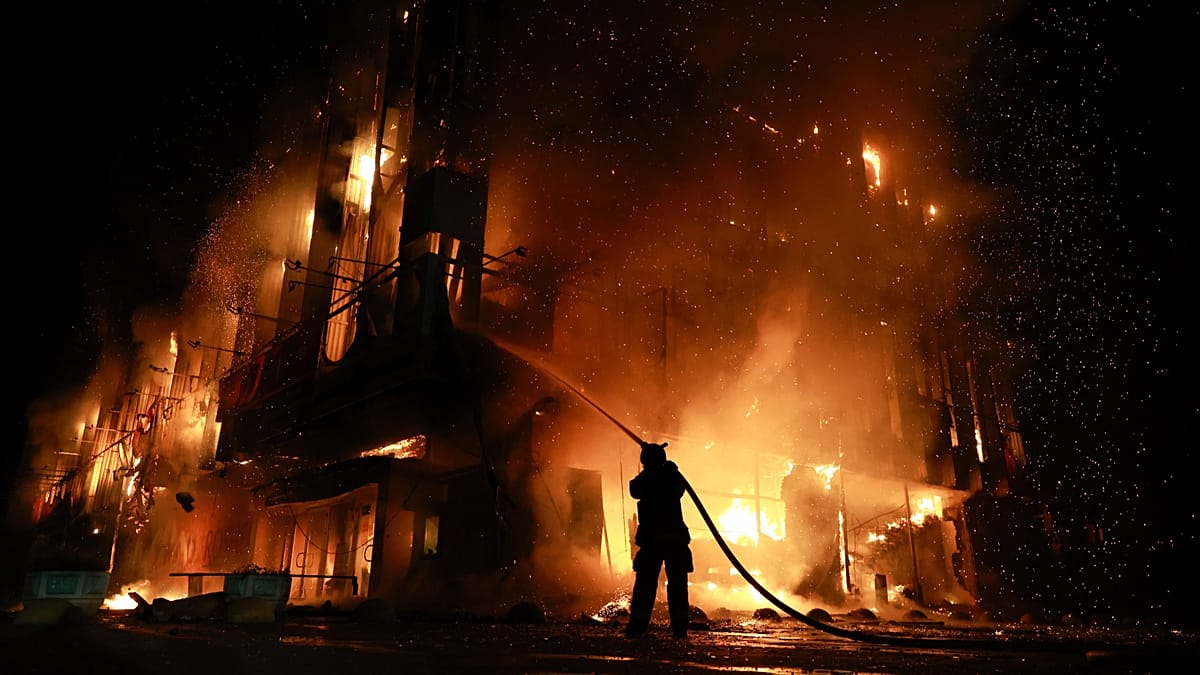
A stark new analysis published this week highlights the accelerating climate risk for Europe's youngest generation. Researchers found that children born in 2026 will experience, on average, 84% more days of 'fire weather' – conditions of high heat, low humidity, and strong winds that fuel wildfires – compared to people born around 1960.
Generational climate divide
The study, conducted by a team of European climate scientists, projects that without significant emissions reductions, a child born this year in Europe will live through roughly 84% more fire-prone days than their grandparents did. This figure is part of a broader global pattern, but the Mediterranean basin, including countries like Portugal, Spain, Italy, and Greece, is expected to see some of the most pronounced increases.
Lead researcher Dr. Elena Marchetti of the University of Bologna said in a statement: "The numbers are sobering. We are not talking about a distant future; these children will face these conditions within their lifetimes. The data shows that the climate we are handing to our children is fundamentally different from the one we inherited."
The term 'fire weather' refers to a combination of meteorological factors that make wildfires more likely to ignite and spread. These include high temperatures, low relative humidity, and strong winds. The study's projections are based on a scenario of moderate emissions, which is still considered optimistic given current global policy trajectories.
Regional hotspots and implications
While the entire continent is affected, the research points to southern Europe as the primary hotspot. In regions such as Andalusia, Sicily, and the Greek Peloponnese, the increase in fire weather days could be even higher than the continental average. This poses significant challenges for firefighting services, agriculture, and tourism, which are already under strain from recent heatwaves and wildfires.
The findings come as Portugal braces for a late-September heatwave, with temperatures expected to approach 38°C in some areas. Such events, once considered exceptional, are becoming more frequent and intense, aligning with the study's projections.
Climate policy experts argue that the report should serve as a wake-up call for EU leaders. "This is not just an environmental issue; it is a public health and economic issue," said Dr. Hans Weber, a climate policy analyst at the German Institute for Economic Research in Berlin. "The costs of inaction will be borne by the most vulnerable – our children."
The study also notes that even if global warming is limited to 1.5°C above pre-industrial levels, the increase in fire weather for European children would still be substantial. This underscores the need for both aggressive mitigation and adaptation measures, such as improved forest management and urban planning.
As the European Union continues to negotiate its climate targets for 2040, the report adds urgency to the debate. The bloc has already committed to becoming climate-neutral by 2050, but the path to that goal remains contentious, with disagreements over the pace of phasing out fossil fuels and the role of nuclear power.
For the parents of Europe's newest citizens, the study is a reminder of the world they are inheriting. "We are not just leaving them a planet; we are leaving them a set of risks," said Marchetti. "The question is whether we are willing to act on that knowledge."
For more on the latest developments across the continent, see our midday Europe bulletin.