The latest Living Planet Report, produced by WWF and the Zoological Society of London, paints a sobering picture: monitored wildlife populations have fallen by an average of 73% over the past five decades. But the same report insists that these declines are not inevitable, pointing to a handful of species that have clawed their way back from the brink.
The Living Planet Index, which tracks nearly 35,800 population trends across 5,790 vertebrate species, shows an average annual decline of 2.5% between 1970 and 2022. Habitat loss and degradation remain the most frequently cited threats, followed by overexploitation, climate change, pollution, invasive species, and disease. The report attributes these pressures to systemic failures in the global food, energy, and finance systems.
Regional disparities are stark. Latin America, the Caribbean, Africa, and Asia-Pacific have seen the steepest drops. Europe and North America show smaller negative trends, but that is largely because their biodiversity was already severely depleted by 1970, the index's baseline year.
Species that beat the odds
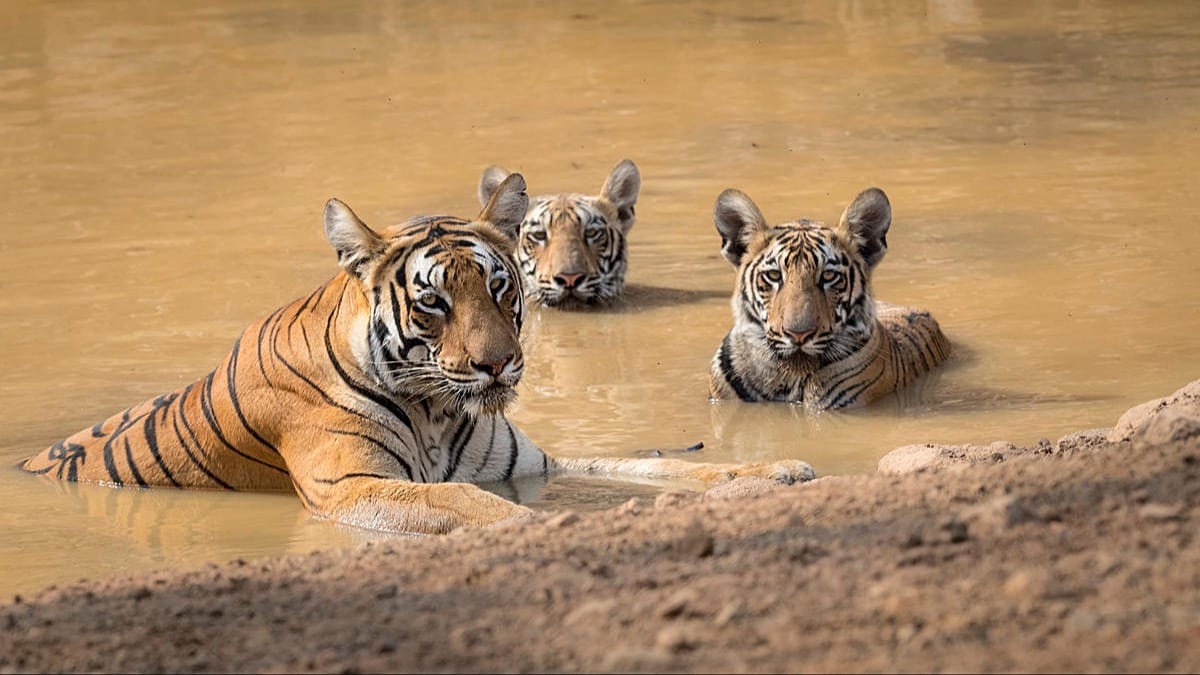
Despite the grim averages, the report highlights several conservation victories that demonstrate nature's capacity to rebound. Tigers are perhaps the most emblematic. In 2010, only around 3,200 remained in the wild, and extinction seemed imminent. By 2025, that number had risen to roughly 5,700—a 70% increase, driven by coordinated anti-poaching efforts and habitat protection across India, Nepal, and Bhutan.
Atlantic bluefin tuna, once pushed to the edge by decades of overfishing, have recovered to the point where they are no longer considered threatened. In South Africa, elephant populations are stable or growing in areas where local communities co-manage the land. And last year, the green sea turtle became the first marine turtle to be downlisted from Endangered to Least Concern on the IUCN Red List, following decades of nesting-beach protection and fishing-gear reforms.
Dr Kirsten Schuijt, director general of WWF International, credits these successes to “sustained collective conservation.” She adds: “Biodiversity continues to be degraded at an alarming pace, yet amid these steep declines there are grounds for hope.”
But she warns that such gains will remain isolated unless the underlying drivers of nature loss are addressed. “Progress is already underway. Not everywhere, and not yet at the scale required, but enough to demonstrate that change is possible,” she says.
The systems driving biodiversity loss
The report identifies three interconnected systems that, if transformed, could trigger positive tipping points. The first is energy: burning fossil fuels generates roughly three-quarters of greenhouse gas emissions, making climate change a driver of biodiversity loss across every ecosystem. The second is food production, which remains the single largest cause of habitat destruction. The third is the financial system—capital allocation determines which industries grow and which shrink.
In 2023, around $7.3 trillion (€6.5 trillion) flowed into activities harmful to nature, while only $220 billion (€197 billion) went toward protection and restoration. “Until that ratio shifts, the underlying drivers of biodiversity loss will continue to be funded,” the report warns.
Yet there are signs that positive tipping points are possible. Solar power, once confined to pocket calculators and satellites, is now the cheapest source of new electricity in most countries. In 2025, solar and wind together generated more electricity in the EU than fossil fuels for the first time—solar alone accounted for 13.1% of EU electricity, outpacing coal. This shift is not just an energy story; it is a biodiversity story, as cleaner energy reduces the pressure on habitats from extraction and pollution.
For Europeans, these lessons resonate beyond the continent. The recovery of the bluefin tuna in the Mediterranean and the Atlantic is a direct result of EU-led fishing quotas and international cooperation. Similarly, the green turtle's comeback in Cyprus and Greece shows that regional conservation efforts can yield global results. As Dr Schuijt puts it, “It's time to accelerate the scale of those systemic changes already underway and work together in harmony with nature to build a more sustainable, equitable and resilient world.”
The report is a reminder that while the overall trend is alarming, it is not a verdict. With sustained political will, community engagement, and a rebalancing of financial flows, the next half-century could tell a different story—one where tigers, turtles, and tuna are not exceptions, but the rule.