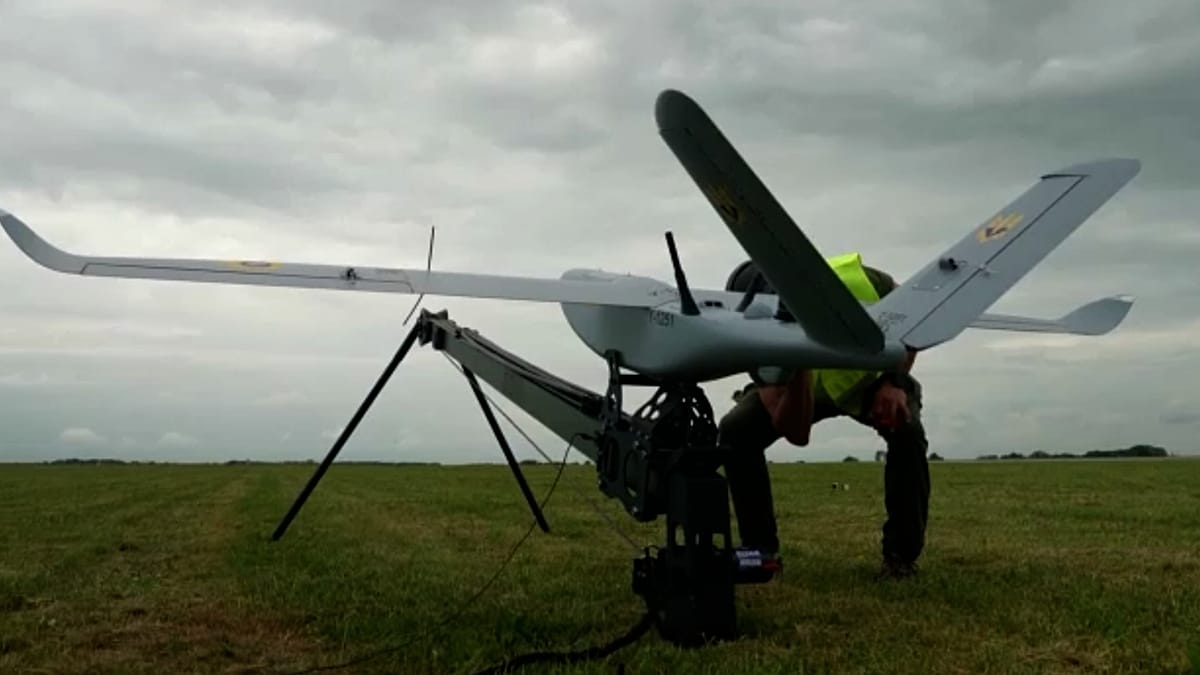
At a major industry gathering in Copenhagen, defence contractors and drone manufacturers unveiled the latest in drone detection and counter-drone technologies, underscoring Europe’s accelerating efforts to confront the rising threat of unmanned aerial vehicle (UAV) incursions. The event, held against the backdrop of heightened security concerns across the continent, highlighted a range of systems designed to detect, track, and neutralise hostile drones—from small commercial quadcopters to larger military-grade platforms.
The showcase comes as European Union member states, together with partners such as the United Kingdom, Norway, and Switzerland, advance plans for a coordinated 'drone wall'—a network of sensors, jammers, and interceptors intended to protect critical infrastructure and national borders. The initiative, first floated by Lithuania and Poland in early 2025, has gained momentum following a series of incidents that exposed vulnerabilities in Europe’s airspace security.
From Detection to Neutralisation
Among the technologies on display were radar systems capable of identifying drones at ranges exceeding 20 kilometres, radio-frequency scanners that can pinpoint control signals, and optical sensors that use artificial intelligence to distinguish between birds, aircraft, and UAVs. Several firms also demonstrated kinetic solutions, including net-firing drones and directed-energy weapons that can disable targets with high-power microwaves or lasers.
“The threat landscape has evolved dramatically in the past two years,” said Henrik Larsen, a defence analyst at the Danish Institute for International Studies. “We’re no longer just worried about hobbyists flying into restricted airspace. State actors are using drones for reconnaissance, smuggling, and even direct attacks on energy facilities.”
Europe’s push for a drone wall has been partly catalysed by events in Ukraine, where both sides have deployed drones extensively for surveillance and strikes. A Russian drone barrage on Kharkiv earlier this year underscored the devastating potential of massed UAV attacks. Closer to home, a naval drone detonated in the Romanian port of Constanța, raising alarms about the vulnerability of Black Sea infrastructure.
National Efforts and Coordination Challenges
Several EU member states have already begun deploying counter-drone systems at airports, border crossings, and military bases. Poland has invested heavily in electronic warfare capabilities, while the Baltic states—Estonia, Latvia, and Lithuania—have integrated drone detection into their broader air defence networks. Germany’s Bundeswehr is testing mobile jamming units, and France’s Direction Générale de l’Armement has accelerated procurement of anti-drone lasers.
However, experts caution that a truly effective drone wall will require seamless coordination across national borders. “Drones don’t respect Schengen,” noted Larsen. “A UAV launched from Belarus could cross into Poland, then Lithuania, and be gone before any single country can react. We need shared data, common protocols, and interoperable systems.”
The European Commission has allocated €180 million under the European Defence Fund for joint research into counter-drone technologies, with a focus on artificial intelligence and spectrum management. The European Defence Agency is also working on standardising threat classification and response procedures.
Industry Response and Export Potential
European defence firms are racing to meet demand. Thales, Leonardo, and Rheinmetall all presented new products at the Copenhagen event, while smaller startups showcased niche solutions such as acoustic detection arrays and drone-mounted decoys. The market for counter-drone systems in Europe is projected to grow by 25% annually over the next five years, driven by both military and civilian applications.
“This is not just about defence—it’s about economic security,” said Marie-Claire Dupont, CEO of a French drone detection startup. “If a drone shuts down an airport or disrupts a power grid, the cost runs into millions. Governments are realising that prevention is far cheaper than remediation.”
The drone wall concept also has export potential. Several non-EU countries, including Ukraine and Georgia, have expressed interest in adopting similar systems. A drone strike on shadow fleet vessels in the Sea of Azov that killed five Azerbaijani sailors highlighted the growing use of UAVs in maritime conflicts, further broadening the market.
Looking Ahead
As Europe’s drone wall moves from concept to reality, the continent faces a delicate balancing act: deploying effective countermeasures without stifling the commercial drone industry, which contributes billions to the EU economy. The European Union Aviation Safety Agency (EASA) is developing regulations that would allow for the safe integration of drones into airspace while maintaining the ability to neutralise threats.
The Copenhagen showcase demonstrated that the technology is ready. What remains to be seen is whether Europe’s fragmented defence procurement systems can deliver a unified shield in time to meet the evolving threat.