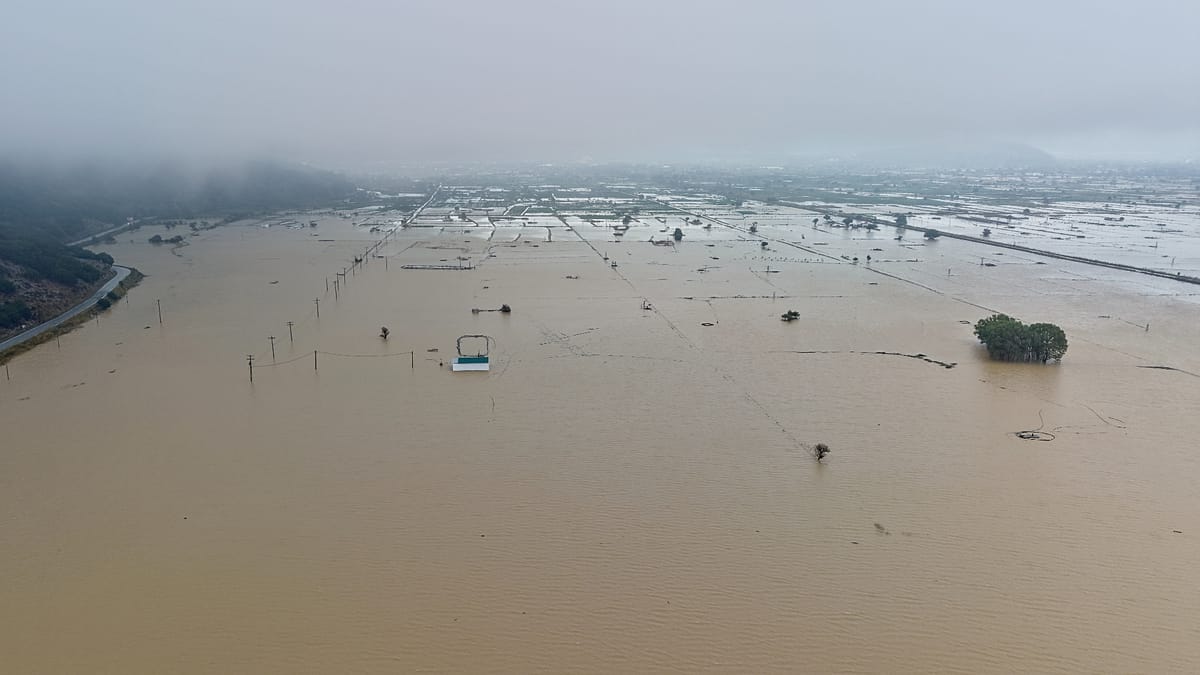
Five consecutive days of torrential rain and thunderstorms have left a trail of destruction across Crete, flooding farmland, destroying roads, and disrupting life in mountain villages and coastal resorts alike. The storm, which began on 1 October, has been particularly severe in the island's mountainous interior, where rainfall totals have reached levels rarely seen outside of winter cloudbursts.
According to the National Observatory of Athens, 91 millimetres of rain fell by mid-afternoon on Sunday at Xyloskalo, the entrance to the famous Samaria Gorge in the Chania region. That figure translates to 91 litres of water per square metre in a single day. But the most extreme accumulation was recorded on the Lasithi Plateau, a fertile upland basin at around 840 metres above sea level in eastern Crete. Thodoris Ninos, head of the Crete Development Organisation, told local media that approximately 440 millimetres—or 440 litres per square metre—fell in just two days. Over four days, the plateau received about 470 millimetres, compared with an average annual rainfall of 700 to 900 millimetres.
Reservoir levels surge
The deluge has had a dramatic effect on the island's water infrastructure. The Aposelemis dam, about 30 kilometres east of Heraklion and a key source of drinking water for the city and parts of eastern Crete, saw its reserves jump from 9.26 million cubic metres on 30 September to more than 12.7 million cubic metres by 4 October—an increase of over 3.4 million cubic metres in just four days. Ninos noted that water from the Lasithi Plateau was still flowing into the reservoir, suggesting levels could rise further.
The human cost has been severe. An 80-year-old livestock farmer who went missing in Karines, in the Rethymno regional unit, was found dead, and authorities are investigating the circumstances. The Fire Service received 485 calls across Crete between 1 October and midday on Sunday, carrying out 96 pump-outs of floodwater and 101 transfers of people to safety. Eight national park workers remain stranded in the Samaria Gorge, a popular hiking destination, as rescue operations continue.
Damage across all four regional units
The storm's impact has been felt in every corner of the island. In Chania, western Crete, flash floods and landslides hit mountain villages and coastal areas. In Rethymno, the mountainous Mylopotamos region was among the worst affected: in Zoniana, a river burst its banks, turning streets into torrents and damaging homes and infrastructure. Between 30 and 40 residents were evacuated, and damage to the water supply left villages without running water. On the slopes of Mount Psiloritis, farmers reported dozens of dead or missing livestock.
In the Heraklion regional unit, damage extended from the mountains to the tourist coast. The municipality of Malevizi reported extensive damage to rural roads, boreholes, and irrigation systems, particularly in upland settlements. In the Lasithi regional unit, the plateau itself has been transformed into a lake, with large tracts of farmland submerged under water and mud. According to local reports cited by Cretalive, around 3,000 tonnes of potatoes and vegetables may have been destroyed, and roughly 85% of the plateau's crops lie within the affected plain. The final losses have yet to be calculated.
On Lasithi's southern coast, the town of Ierapetra and resorts to the east—Ferma, Koutsounari, Agia Fotia, and Makry Gialos—were hit by torrents and landslides. Roads were blocked or badly damaged, vehicles were swept away, and dozens of people had to be moved from hotels and other accommodation to safer locations.
EU satellites map the damage
Greece has activated the European Union's Copernicus Emergency Management Service under activation code EMSR933, which uses satellite imagery to produce maps of the affected areas. The data will help authorities assess damage and plan recovery operations. The request was submitted by Greece's civil protection authority and approved by the EU.
In the municipality of Amari, damage to the road network and continuing difficulties in getting around led to in-person schooling being suspended on Monday. The storm has also raised concerns about the resilience of Crete's infrastructure to extreme weather, which scientists say is becoming more frequent due to climate change. As the island begins the long process of recovery, the full scale of the agricultural and economic losses is only beginning to emerge.
For more on how extreme weather is affecting European agriculture, see Dutch farmers turning to rice and the squeeze on EU farmers. The situation in Crete remains fluid, with further rain forecast in the coming days.