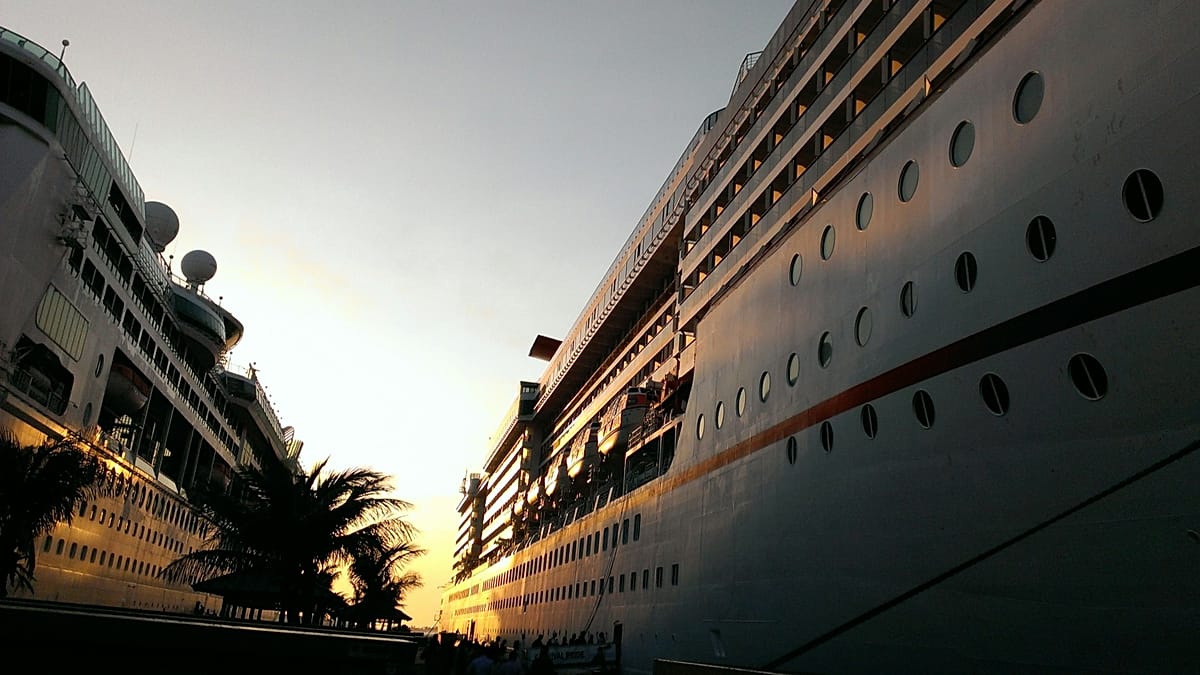
A night on a cruise ship in European waters is taxed nearly half as much as a night in a hotel, despite the industry's outsized environmental footprint and contribution to overtourism in cities like Barcelona, Venice, and Dubrovnik. That is the central finding of a new analysis by the NGO Transport & Environment (T&E), which argues that a legal loophole allows cruise lines to sidestep VAT and fuel taxes that land-based accommodations must pay.
The study compared taxes on a €100-per-night hotel room in France, Italy, and Spain with a similarly priced cruise cabin. On average, hotel guests pay 23% of the price in taxes, while cruise passengers pay just 12% — a gap of 11 percentage points. The discrepancy stems from the classification of cruise ships as maritime transport, even though they function primarily as floating holiday resorts.
“We are treating floating hotels like they are essential maritime infrastructure,” said Fanny Pointet, Shipping Manager at T&E. “Cruises are not a mode of transportation but the destination itself, yet we are giving them the same benefits as freight transport. Taxing cruise ships properly would help cities to tackle the pollution and to address concerns of overtourism.”
Environmental Costs Outweigh Current Taxes
The report quantifies the external costs of cruise emissions — including greenhouse gases and air pollutants — in France, Spain, and Italy at between €790 million and €1.3 billion in 2025. These costs, which reflect real-world damage to health and the climate, are not fully covered by existing tax policies. Under the EU's Emissions Trading System (ETS), cruise operators pay only a fraction of their climate-related damage, with the study finding that the sector's climate costs exceed its ETS payments by a factor of two to three. For air pollution, no EU-level tax exists at all.
T&E proposes a €15 tax per passenger per port call, which its modelling suggests would raise €335 million annually across the three countries. Such revenue could be directed toward national budgets, coastal ecosystem protection, or green infrastructure such as onshore power supply for docked ships. However, the NGO acknowledges that a single levy is insufficient to close the gap between environmental costs and compensation.
“A cruise ship levy must be viewed as part of a broader regulatory mix,” Pointet added. “To fully mitigate the sector's environmental footprint, parallel supply-side policies are necessary.”
The report recommends strengthening EU regulations on sustainable marine fuels under the FuelEU Maritime initiative and tightening energy efficiency benchmarks for vessels. These measures, combined with fiscal reforms, could help align the cruise industry's tax treatment with its environmental impact.
The findings come as several European cities explore stricter measures to manage cruise tourism. Barcelona has proposed a €30 daily tax on short-stay cruise passengers, while Venice has banned large ships from its historic centre. The T&E study adds weight to arguments that the industry should pay more for the strain it places on local infrastructure and ecosystems.
For travellers, the tax disparity raises questions about fairness. A hotel stay in a popular European destination already includes VAT and other levies, while cruise passengers — who often spend little time or money ashore — benefit from a lighter tax burden. As overtourism continues to challenge cities from Amsterdam to Dubrovnik, the call for a more equitable tax system is likely to gain traction among policymakers and residents alike.