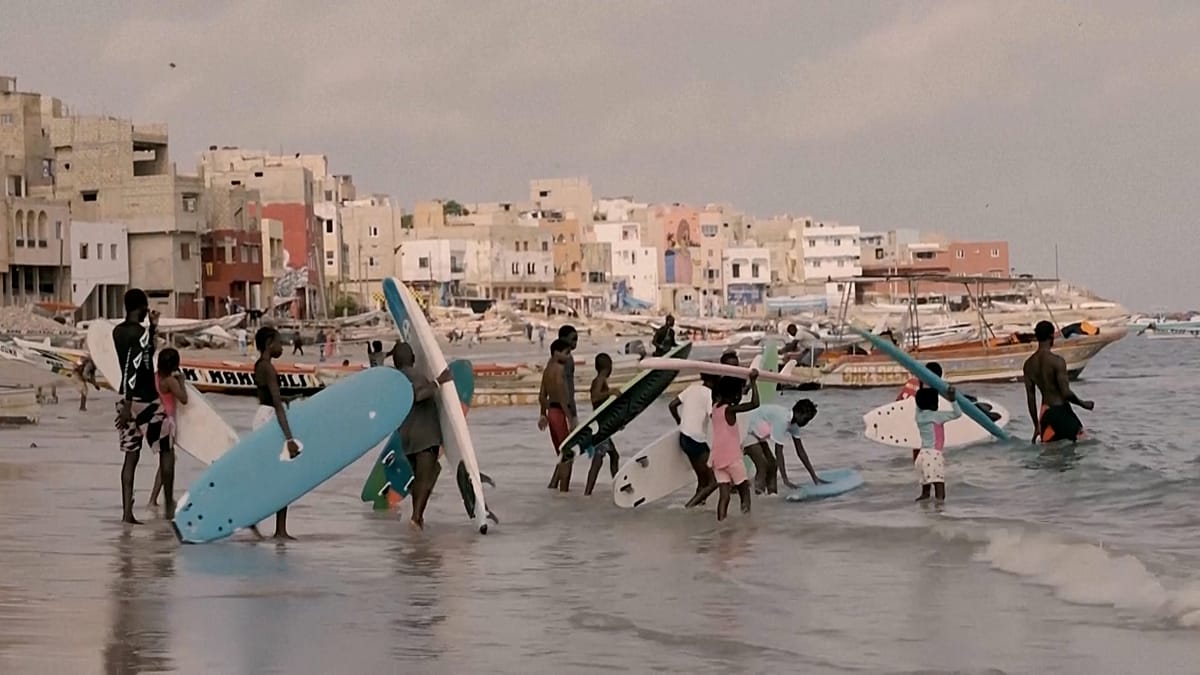
On the beaches of Dakar, a quiet revolution is taking shape. A surf school founded by Ibra Samb is giving local children the chance to ride waves that have long been the playground of foreign tourists. For Samb, who learned to surf on a homemade plywood board, the school is about more than sport—it is about reclaiming a coastline that many Senegalese youth never felt they could call their own.
From plywood to purpose
Samb grew up in the working-class neighbourhoods of the Senegalese capital, where the Atlantic surf was a daily sight but surfing itself seemed reserved for visitors from Europe and elsewhere. He taught himself using a crude board of plywood, a detail he recalls with pride. Today, his school provides proper equipment, coaching, and a safe space for children who might otherwise never step into the water.
The initiative comes at a time when West Africa's coastal communities are increasingly aware of the economic and cultural potential of their shorelines. Surf tourism is booming across the region, from Morocco to Ghana, but local participation has often lagged behind. Samb's school aims to change that by making the sport accessible from an early age.
“When I see these kids stand up on a board for the first time, I see myself,” Samb told local media. “They don't need to travel to France or California to find their wave. It's right here, in their backyard.”
More than a sport
The school's impact extends beyond the water. For many families in Dakar, surfing offers an alternative to the precarious livelihoods that push young men and women toward dangerous migration routes. The Atlantic that separates Senegal from Europe has become a graveyard for thousands of hopeful migrants; recent tragedies, such as the boat disaster off the Kébémer coast that killed at least 21 people, underscore the desperation that drives such journeys. Samb's school provides a counter-narrative: the ocean as a source of opportunity, not escape.
Local authorities have taken note. The school has received support from the Senegalese surfing federation and from international NGOs focused on youth development. Some of Samb's students have gone on to compete in national and regional competitions, and a few have even attracted sponsorship from surf brands that once only saw Africa as a market for exotic imagery.
A wider wave
The Dakar school is part of a broader movement across the continent. From Morocco's Taghazout to South Africa's Jeffreys Bay, African surfers are asserting their presence in a sport that has often been dominated by outsiders. In Senegal, the rise of local surf culture has also drawn attention from European travellers, who now come not just to surf but to learn from the community that has embraced the waves.
For Samb, the ultimate goal is simple: to see a Senegalese surfer on the World Surf League tour. “We have the talent, we have the waves, and now we have the will,” he said. “The rest is just time.”
As the sun sets over the Atlantic, the beach in Dakar fills with children carrying boards under their arms. The plywood days are over, but the spirit they represent lives on. In a city where the sea has often been a barrier, a new generation is learning to ride it.