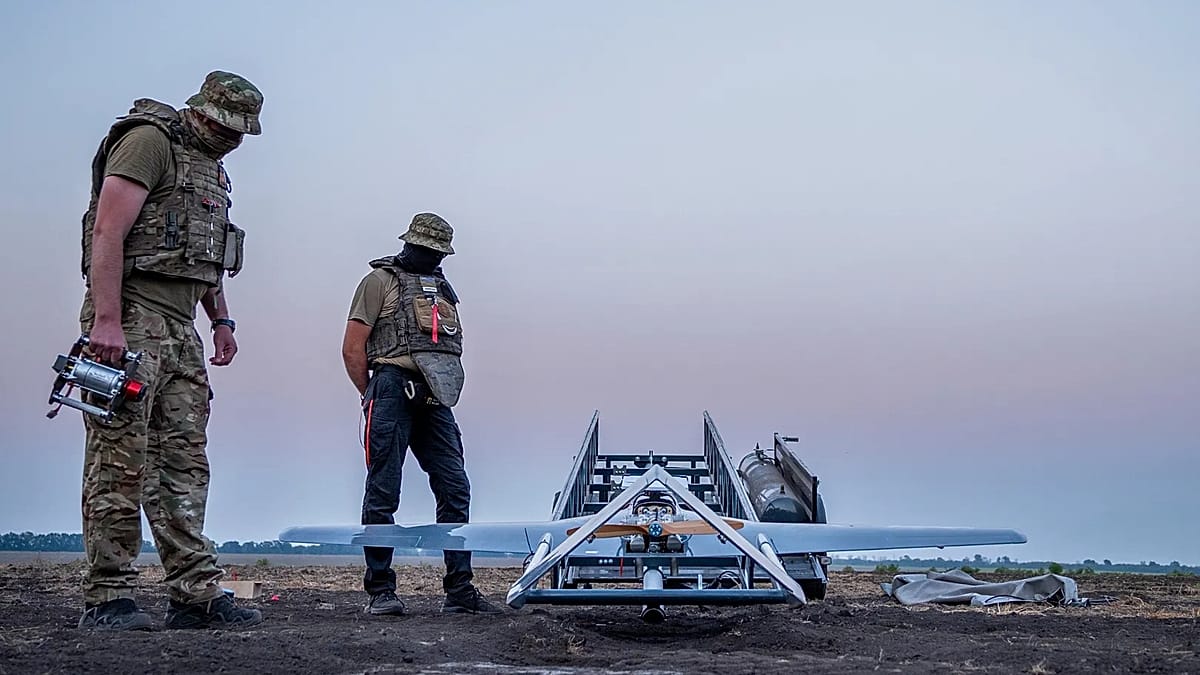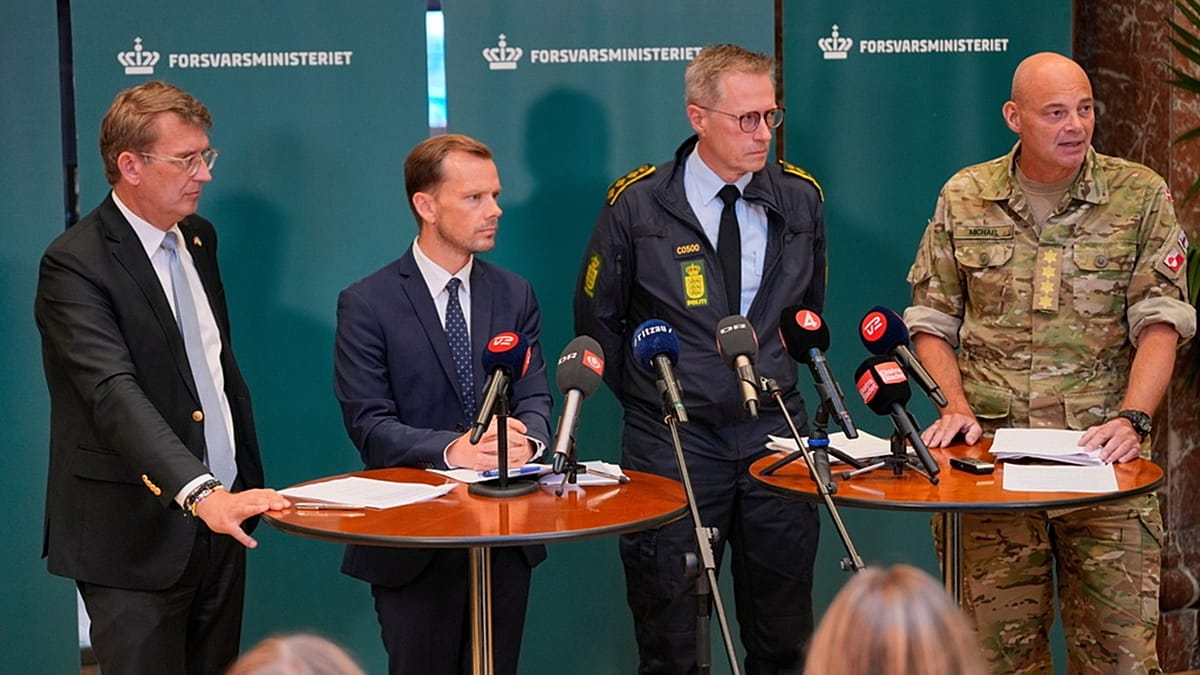
The Danish Armed Forces have acknowledged inaccuracies in their initial account of suspected drone activity over the country in the autumn of 2025, issuing a revised report on Thursday that concedes a key incident may have been misidentified.
The original report described how soldiers stationed near the Borris camp fired into the air after observing what they believed to be a drone. But that version was challenged when Danish media published witness statements that contradicted the military's narrative, prompting Defence Minister Jeppe Bruus to order a review.
In the updated report, the military now says the troops may have fired at a civilian aircraft that happened to pass overhead, a scenario previously floated by independent aviation and drone specialists. Nevertheless, the armed forces maintain that the soldiers acted on the belief they were targeting a drone, citing the object's flight pattern as a primary factor.
Context of the 2025 drone sightings
The incidents occurred in the run-up to an EU summit in Copenhagen in early October 2025, when unidentified drones were spotted over both civilian and military air bases. The sightings triggered heightened security measures, temporary airport closures and a ban on private drone flights. Among the affected sites was Skrydstrup air base in southern Jutland, where Ukrainian pilots are trained on F-16 fighter jets.
Initially, the government and military were cautious about confirming the drone flights, but by June they had publicly acknowledged that drones of unknown origin had indeed flown over Danish territory. The military also released a detailed report on its handling of the events. However, the account of the Borris incident quickly drew scrutiny.
According to the revised report, the unit deployed at Borris was tasked with a sensitive guard duty aimed at protecting Ukrainian trainees at the camp. The unit observed drones over the camp on 24, 25 and 28 September 2025. The admission that soldiers may have fired at a civilian plane underscores the challenges of distinguishing between small unmanned aerial vehicles and conventional aircraft in contested airspace.
The episode highlights broader concerns about drone incursions across Europe, particularly in the Baltic region and Ukraine, where both military and civilian authorities are grappling with the proliferation of low-cost UAVs. As Estonia's counter-drone expo recently demonstrated, European states are investing heavily in detection and interception technologies. Denmark's experience adds to the pressure on NATO members to refine their airspace monitoring and rules of engagement.
Political and security implications
Defence Minister Jeppe Bruus's decision to request a review signals the political sensitivity of the matter. The presence of Ukrainian pilots on Danish soil has made the country a potential target for Russian intelligence or proxy operations, though no conclusive link to Moscow has been established. The revised report stops short of identifying the drones' origin, leaving open questions about who was behind the incursions.
For Copenhagen, the incident also raises procedural questions about how military units communicate with civilian aviation authorities during suspected drone events. The possibility that soldiers fired at a civilian aircraft—however briefly—could have had far more serious consequences, and the military's initial failure to consider that scenario has drawn criticism from opposition lawmakers.
The Danish military's revised account is unlikely to be the final word. As drone technology becomes more accessible and the lines between civilian and military airspace blur, European capitals will need to balance vigilance with caution. The lessons from Skrydstrup and Borris will feed into ongoing discussions at NATO and the EU about counter-drone strategies, including those outlined in Ukraine's offer to share interceptor technology with allies.
For now, the Danish Armed Forces have taken the unusual step of publicly correcting their own record—a move that may bolster transparency but also exposes the difficulties of operating in an environment where the next drone sighting could come at any moment.