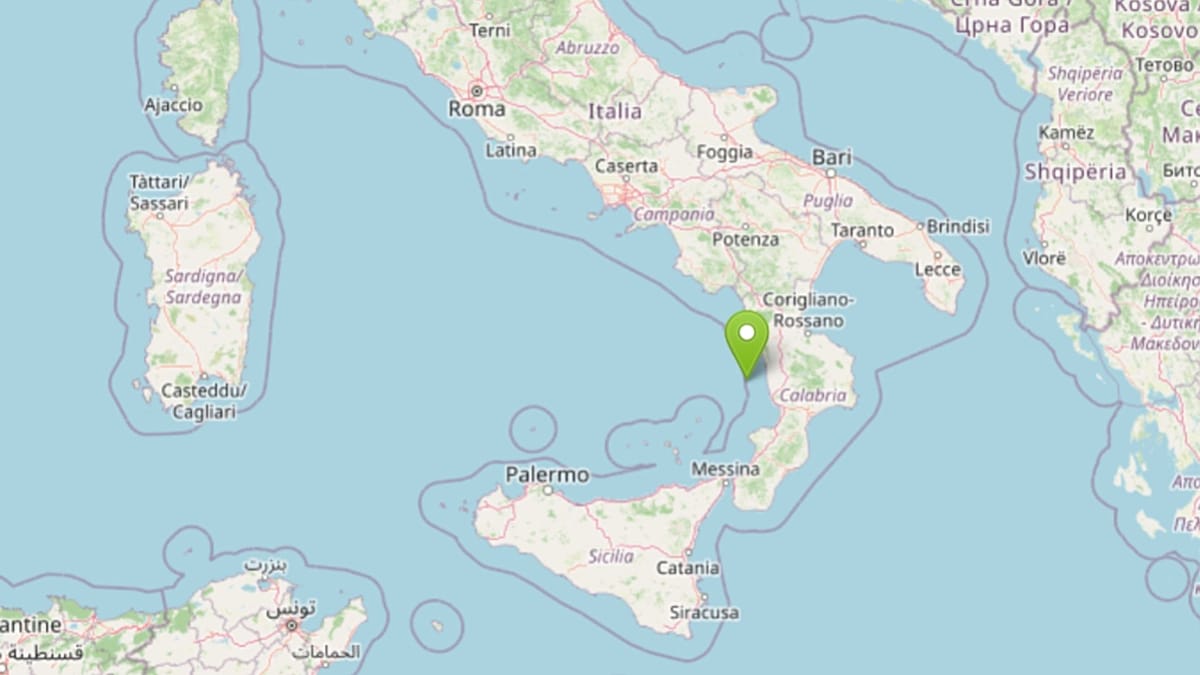
Shortly after midnight on 2 June, a strong earthquake rattled much of southern Italy, with its epicentre located offshore in the Tyrrhenian Sea. The National Institute of Geophysics and Volcanology (INGV) recorded the event as a magnitude 6.2 quake, centred near Belmonte Calabro in the province of Cosenza, at a depth of 250 kilometres.
The tremor was widely felt along the Tyrrhenian coast, from Naples and the Vesuvius area down through Calabria, Basilicata, Puglia, and Sicily. Despite its strength, no damage has been reported. Regional Civil Protection authorities promptly contacted municipalities closest to the epicentre—including Amantea, Cetraro, and Lamezia Terme—and received no reports of harm. The mayor of Cosenza, Franz Caruso, confirmed that the situation is under control. Firefighters conducted inspections along the Tyrrhenian coast of the Cosenza area to identify any potential issues, but found none.
Why a Magnitude 6.2 Quake Caused No Damage
The absence of damage is explained by the earthquake's unusual depth. At 250 kilometres beneath the surface, the quake's energy largely dissipated before reaching the ground. Although it was felt across a wide area, the deep hypocentre reduced the intensity of shaking at ground level, limiting the risk to buildings and infrastructure. This phenomenon is typical of deep seismic events in the region.
According to the INGV, the earthquake is linked to the subduction of the Ionian lithosphere beneath Calabria, a geological process characteristic of the southern Tyrrhenian Sea. The area is known for frequent deep seismic activity and has previously recorded earthquakes above magnitude 5 with similar hypocentres. This latest event underscores the ongoing tectonic forces shaping the region.
Southern Italy, particularly Calabria and Sicily, sits atop a complex plate boundary where the African and Eurasian plates converge. Deep earthquakes like this one are common in the subduction zone, but their impact on the surface is often limited. The INGV continues to monitor the area for aftershocks, though none of significance have been reported so far.
For residents of coastal towns like Amantea and Cetraro, the quake served as a reminder of the region's seismic nature. While the event caused no damage, it highlights the importance of preparedness in a country that has experienced devastating earthquakes in the past, such as the 2009 L'Aquila quake and the 2016 Amatrice disaster. Italy's robust building codes and emergency response systems have been refined over decades, contributing to resilience against such natural events.
This earthquake also comes amid broader European discussions on disaster preparedness and climate resilience. As climate change drives larger hailstones across Europe, the continent faces increasing challenges from extreme weather and geological hazards. Italy's experience with deep quakes offers lessons for other seismic-prone regions, from the Balkans to Greece.
In the meantime, life in southern Italy continues as normal. The tremor, while startling, did not disrupt daily routines. The mayor of Cosenza urged calm, noting that the situation is fully under control. For those interested in broader European affairs, the quake serves as a backdrop to ongoing cultural and economic ties, such as Kazakhstan and Italy strengthening cultural ties.