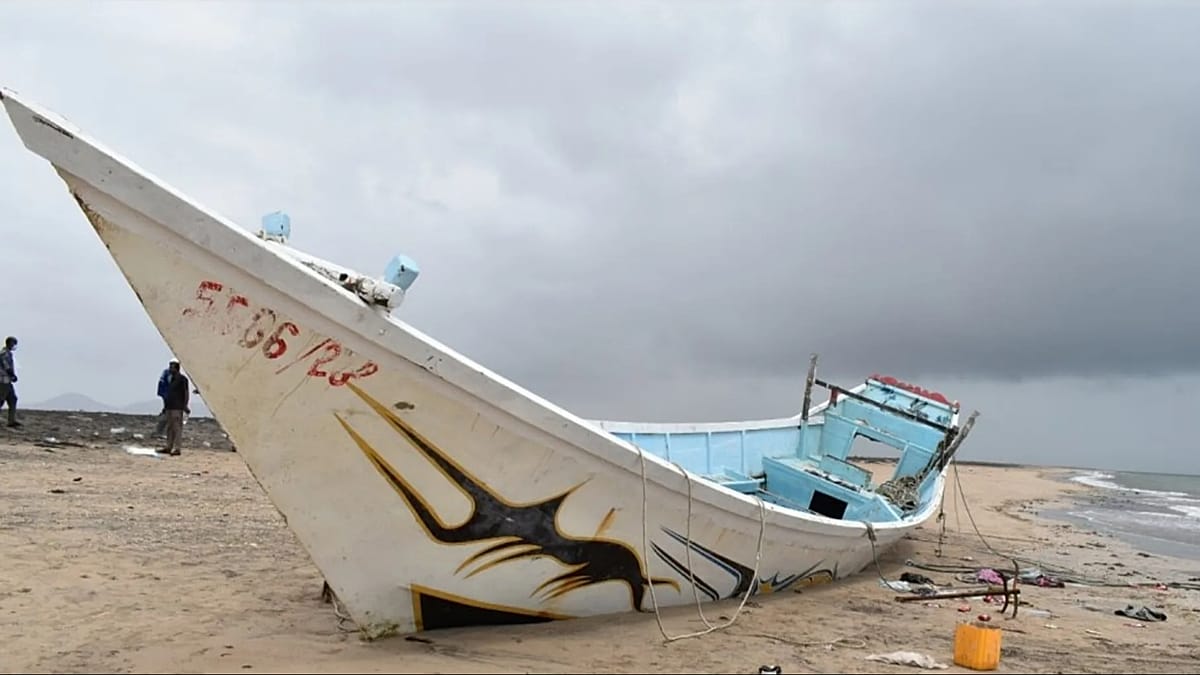
At least 139 migrants lost their lives when a boat capsized off the coast of Djibouti earlier this week, the UN's International Organization for Migration (IOM) confirmed on Sunday. A further 84 people remain unaccounted for, and search and rescue operations are continuing.
The vessel, which was carrying 305 people, went down near Guhere, north of the port town of Obock, during the night of 8 to 9 October. It had been heading from Djibouti towards Yemen. The death toll rose from an initial 109 after 30 more bodies were recovered. Among the first 109 victims identified, 52 were men, 42 were women and 15 were children, including nine girls and six boys. More than 80 people survived the sinking, all of them Ethiopian nationals, according to the IOM.
“This is a devastating loss of life. Our thoughts are with the survivors and the families who have lost loved ones or remain without news of their relatives,” said Alexandre Coissac, the IOM's chief of mission in Djibouti. “Our teams are on the ground alongside local authorities to provide emergency assistance. This tragedy is a stark reminder of the dangers faced by migrants along this migration corridor as they seek economic opportunities.”
A deadly route out of the Horn of Africa
Each year, tens of thousands of migrants from the Horn of Africa travel through Djibouti, hoping to cross the Bab el-Mandeb Strait to Yemen and eventually reach the Gulf states. The IOM attributes the flow to a combination of poverty, insecurity and the worsening effects of climate change, set against mounting instability across the Middle East.
The Bab el-Mandeb, which separates the Horn of Africa from the Arabian Peninsula, is one of the world's busiest and most dangerous maritime corridors. Migrants typically undertake the crossing in overcrowded, unseaworthy vessels, often at night, with little regard for safety. The route has become even more hazardous as regional conflicts and economic pressures push more people to attempt it.
This is not the first such disaster this year. In March, another shipwreck off Djibouti left nine migrants dead and 45 missing as they tried to reach Yemen. The frequency of these incidents underscores the limited legal pathways for people fleeing hardship in the region and the lethal risks they are willing to take.
While the immediate focus is on recovering the missing and supporting survivors, the tragedy also raises questions about the wider migration dynamics between Africa and the Arabian Peninsula. European governments have long monitored these flows, both because of their potential to reach Europe via secondary routes and because of the broader stability implications for the Red Sea and Gulf of Aden.
The IOM and local Djiboutian authorities are providing emergency assistance to those who survived. The organisation has repeatedly called for greater regional cooperation to prevent such losses and to address the root causes that drive people to embark on these journeys.
For now, the priority remains the search for the 84 people still missing. The incident serves as a grim reminder of the human cost of migration along one of the world's most perilous routes, and of the urgent need for safe, legal alternatives.



