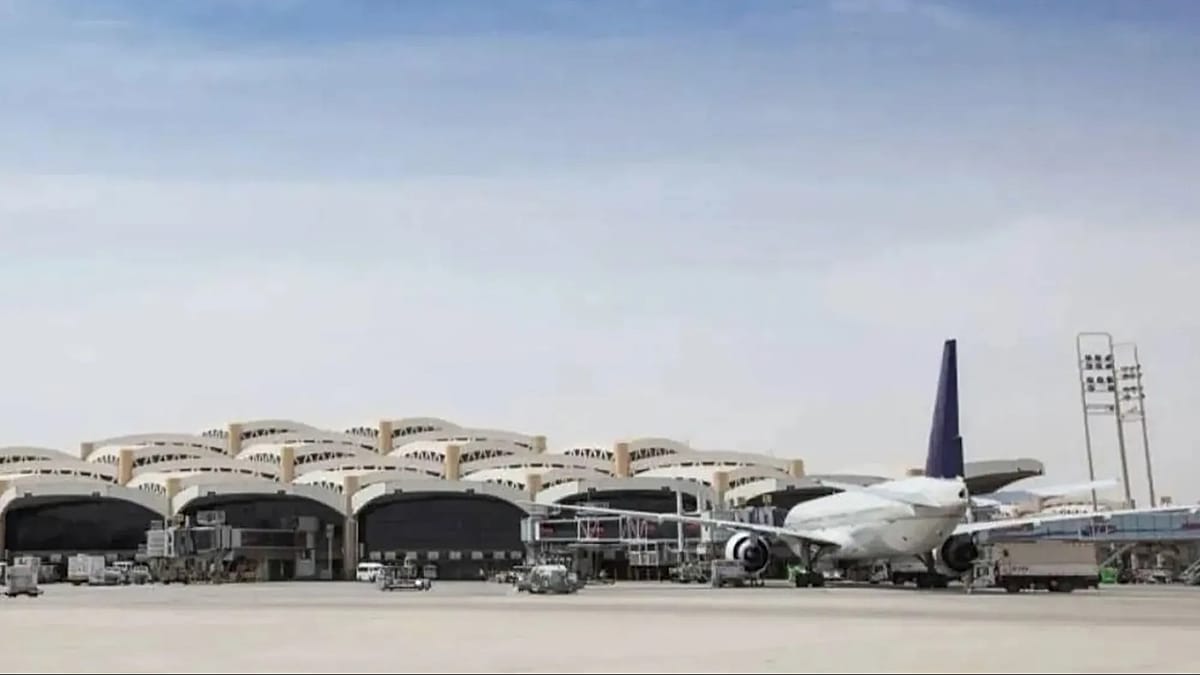
Deadly Houthi missile attacks on Riyadh's international airport have reignited calls for a unified Gulf defence strategy, with a senior Emirati official warning that no state in the region can afford to remain passive. The strikes, which killed 14 people over the weekend, have drawn broad international condemnation and renewed focus on the fragility of Gulf security.
Anwar Gargash, diplomatic adviser to the UAE president, said on Monday that attacks on Saudi Arabia undermine the security of the Emirates and every other Gulf state. Writing on X, he cautioned that “we are all targeted” and argued that shortcomings in collective defence had emboldened attackers. “Gulf security is a shared responsibility that allows no room for complacency or delay,” he wrote.
Saturday's attack on King Khalid International Airport killed 13 people and wounded more than 300, with the death toll rising after an injured Indian citizen died on Sunday. A separate strike on Sunday killed a Pakistani national and injured 11 others. Yemen's Houthi movement claimed responsibility for both incidents.
The attacks have prompted expressions of solidarity from Turkey, Egypt and Pakistan, which joined Saudi Arabia in a statement condemning the violence and backing the kingdom's right to self-defence. The three countries urged an immediate and unconditional end to Houthi attacks, while stressing that any Saudi response must comply with the UN Charter and international law. None announced new military deployments.
France also voiced support, with its foreign ministry saying it would continue to help Saudi Arabia protect its territory and infrastructure. A French national was among the wounded in Saturday's attack. Iran, meanwhile, said it remained ready to mediate between Riyadh and the Houthis, with foreign ministry spokesman Esmail Baghaei confirming that the Iranian and Saudi foreign ministers had discussed the situation by phone.
Qatar warns of energy fallout
Qatar's Energy Minister Saad Sherida al-Kaabi used a ministerial meeting of the International Energy Forum in Riyadh to warn that the wider regional conflict has triggered “by far, the world's worst energy crisis”, disrupting flows of roughly 20% of global oil and gas supplies. Al-Kaabi, who also heads QatarEnergy, said attacks on energy facilities across the region have caused tens of billions of dollars in damage and severe market volatility.
He urged the forum to explore ways to protect energy infrastructure during conflicts and safeguard supply routes. “Energy security must unite us, not divide us. It must be protected, not weaponized,” he said. His remarks underscore the broader stakes for Europe, which remains heavily reliant on Gulf energy imports and has watched with concern as regional tensions have repeatedly threatened supply lines.
The closure of Riyadh airport has been extended as Saudi authorities continue safety checks. The General Authority of Civil Aviation did not say when operations would resume, and the Saudi-led coalition said it was responding to a drone and cruise-missile threat without specifying targets or damage. Flight data from Cirium showed almost all scheduled departures and arrivals were cancelled on Sunday, with Air France, KLM and Lufthansa suspending services to Riyadh.
The attacks come as European defence officials debate how to bolster collective security in an era of proliferating missile and drone threats. Some analysts have pointed to the Gulf's experience as a case study for reshaping EU defence cooperation, though the two regions face very different geopolitical realities.
In Yemen, the Houthi-run health ministry reported that airstrikes on Sana'a around midnight killed one person and wounded 12. The Houthis blamed Saudi Arabia, which did not immediately comment. The strikes are part of an escalating cycle of violence that has drawn in regional and international powers, with Washington reportedly weighing whether to join Saudi operations.
For European governments, the immediate concern is the stability of energy supplies and the safety of their citizens in the region. The attacks on Riyadh airport have also highlighted the vulnerability of critical infrastructure to asymmetric warfare, a lesson that resonates from the Baltic states to the Balkans. As the Gulf crisis deepens, the call for stronger collective defence is likely to grow louder, not only in Riyadh and Abu Dhabi but also in European capitals that depend on the free flow of Gulf energy.