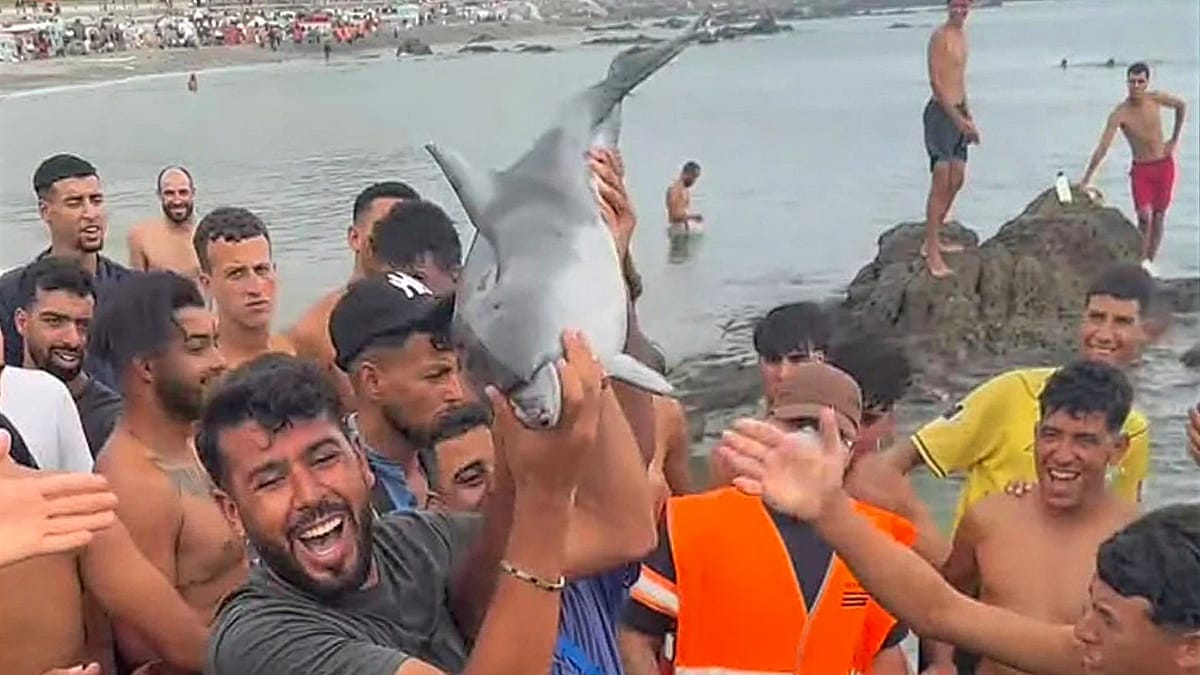
On Wednesday, a bottlenose dolphin calf was found dead on Trampolín beach in Ceuta, a Spanish enclave on the North African coast. The animal, which according to local reports reached the shore alive and disoriented, possibly due to morning fog, died after several people allegedly dragged it from the water and struck it on the head with a stick. The Association for the Defence of Urban Trees, Biodiversity and the Environment (DAUBMA) has filed a formal complaint with the Guardia Civil, urging authorities to open an investigation.
DAUBMA says it has gathered photographs, videos, and social media screenshots that show blood beneath one of the animal's eyes, as well as people attempting to wipe it away. The organisation argues that this evidence points to a deliberate attack and to manipulation of the carcass, which is inconsistent with any genuine rescue attempt. All material has been handed over to the Guardia Civil.
Video evidence and witnesses
The incident occurred on the part of the beach where migrants who entered Ceuta during the mass crossing on 30 and 31 July have been camping. A verified video, first shared on social media, shows the scene. A worker from the cleaning company Ecoservicios, who was present, warned the group to stop and to contact an environmental collection service. According to witnesses, after that warning, they tried to return the animal to the sea, but it was already dead.
So far, no one has been formally identified as responsible. DAUBMA's complaint seeks to change that. The case has ignited public anger, and a local resident, Nadia García Gómez, has launched a petition on change.org calling for the perpetrators to be found. García Gómez, who says she belongs to no association, insists on a firm response: "This cruel act must be tried and punished," she wrote, urging authorities "to do something about it." The petition notes that the bottlenose dolphin is a strictly protected species in the EU, and injuring or killing one can constitute a criminal offence.
Animal groups respond to criticism
In response to criticism that animal rights associations are absent when dead wildlife is found in Ceuta, DAUBMA and CECAM (the Ceuta Confederation of Ecological Associations) say their work focuses on documenting cases and passing them on to institutions. They lament the lack of response from authorities. More than three months ago, they submitted a dossier to the Government Delegation detailing other cases of dead or affected animals, including dolphins and turtles showing signs of having fallen victim to drift nets, which are banned in the EU. They have received no reply.
They also recount that an attempt to file a complaint with Seprona, the Guardia Civil's nature protection service, was initially not processed. They then went to the duty court with technical and graphic material; the court, according to their account, ordered the case to be provisionally closed pending a Seprona report that has still not arrived.
The incident adds to the tensions surrounding the migrant camp on the beach, which has already drawn criticism of the Spanish government's handling of the crisis. As one MEP has argued, the situation in Ceuta exposes a weak response from Madrid. The killing of the dolphin, a protected species, has become a symbol of the broader neglect and lawlessness in the area.
DAUBMA and CECAM stress that their goal is not to target migrants but to ensure that animal abuse is punished. They point out that the EU's Habitats Directive requires member states to protect strictly protected species, and that Spain has an obligation to enforce these rules. The lack of action, they say, undermines the rule of law and emboldens those who commit such acts.
The petition launched by García Gómez has already gathered thousands of signatures, reflecting widespread public concern. It calls on the Spanish authorities to identify and prosecute those responsible, and to take steps to prevent similar incidents in the future. The case also highlights the challenges of policing the migrant camp, where hundreds of people are living in precarious conditions.
As the investigation continues, the Guardia Civil has not yet commented on the complaint. The dolphin's death has become a flashpoint in the ongoing debate over migration, animal welfare, and the effectiveness of Spanish institutions in Ceuta. For now, the animal's carcass has been removed, but the questions it raises remain unanswered.