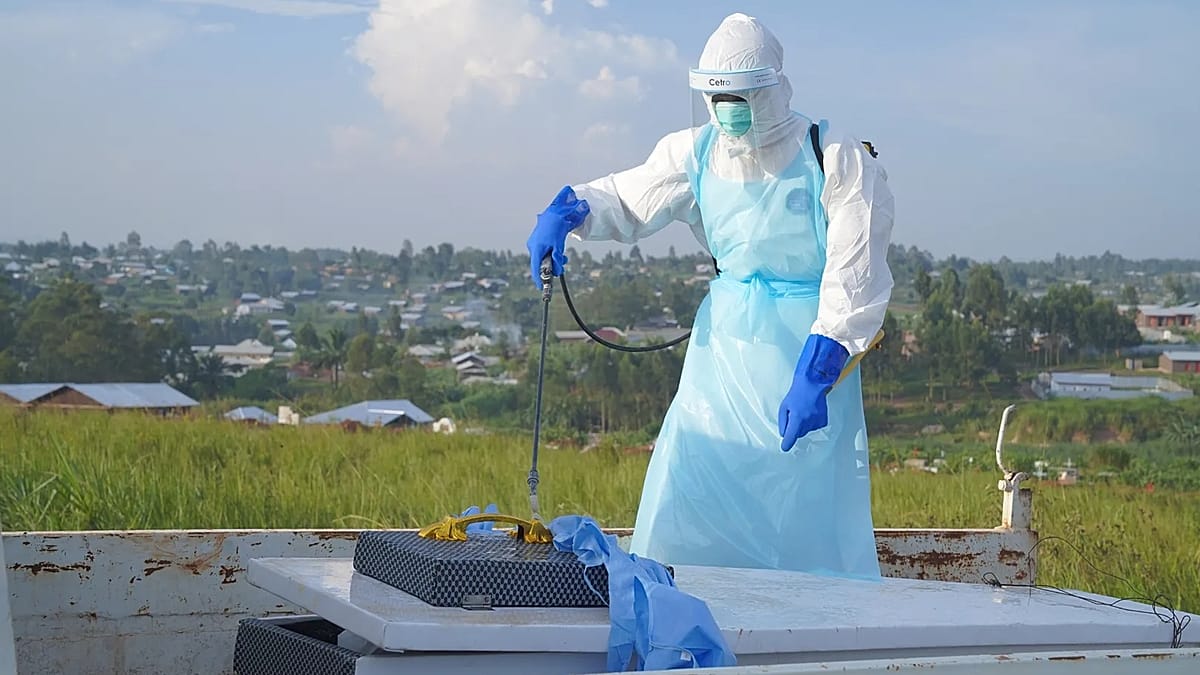
The World Health Organization has issued a stark warning: the Ebola outbreak in the Democratic Republic of Congo is on course to become the deadliest in history, surpassing the devastating West African epidemic of 2014-2016 that killed over 11,000 people. Speaking to reporters on Wednesday, WHO Director-General Tedros Adhanom Ghebreyesus said, "At its current pace, it's on track to eclipse the West African Ebola outbreak of 2014 to 2016."
The current outbreak, centered in the eastern provinces of North Kivu and Ituri, has already claimed more than 2,000 lives out of over 4,300 confirmed cases. By comparison, the 2014-2016 outbreak, which spread across Guinea, Liberia, and Sierra Leone, took about eight months to reach 1,000 deaths. This one has moved faster, despite the availability of an experimental vaccine for the Zaire strain that was used in previous outbreaks.
What makes this outbreak particularly challenging is that the virus responsible is the Bundibugyo strain, a rarer form that has no approved vaccines or treatments. The outbreak was officially declared on 15 May, but genetic sequencing has since revealed that the virus had been circulating since February, giving it a significant head start. "The outbreak had a big head start, still way ahead of us, and we're playing catch-up," Tedros admitted.
A perfect storm of conflict and mistrust
The epicenter of the outbreak lies in a remote, conflict-affected region near the borders with South Sudan, Uganda, and Rwanda. Armed groups operate in the area, and decades of instability have left health infrastructure in ruins. Many health centers are poorly equipped, and some workers have gone on strike over unpaid wages. This has allowed the virus to spread into communities that are largely unreachable for health teams.
Misinformation and community mistrust have further hampered response efforts. Some residents, wary of outsiders, have avoided clinics and even attacked health workers. This has created a situation where new cases and deaths are being reported in areas outside the reach of responders, as noted by health authorities.
Dr Abdirahman Mahamud, WHO's director for health emergency alert and response operations, said the agency expects the peak of the outbreak to occur within six months. "But ... that's the moderate scenario," he cautioned. "There is a one-case scenario where this outbreak may last nine months to 12 months."
Vaccines and treatments in the pipeline
Ebola is a severe, often fatal disease transmitted through contact with bodily fluids such as vomit, blood, or semen, as well as contaminated surfaces and materials. The current outbreak has prompted an urgent push for medical countermeasures. Clinical trials for two potential treatments began last month in Ituri, the most affected province. Additionally, two vaccines specifically developed for the Bundibugyo virus are now being tested in humans for the first time, Tedros announced on Wednesday.
The WHO is also exploring whether an existing Ebola vaccine, which targets the Zaire strain, could offer cross-protection against Bundibugyo. Animal studies have shown promising results, and human trials may follow.
The origins of the outbreak are becoming clearer. A study published in Nature Medicine on Monday provided evidence that the virus jumped from an infected animal to a person, rather than being a continuation of earlier outbreaks. Researchers found that the virus is genetically distinct from the Bundibugyo strains seen in outbreaks in 2007 and 2012.
As the international community watches with concern, the WHO and its partners are racing to contain the spread. The stakes are high: without effective vaccines or treatments, and with the virus spreading in a volatile region, the world could witness an Ebola crisis that rivals—or exceeds—the worst on record. For now, the focus remains on scaling up response efforts, building trust with local communities, and accelerating research into countermeasures.