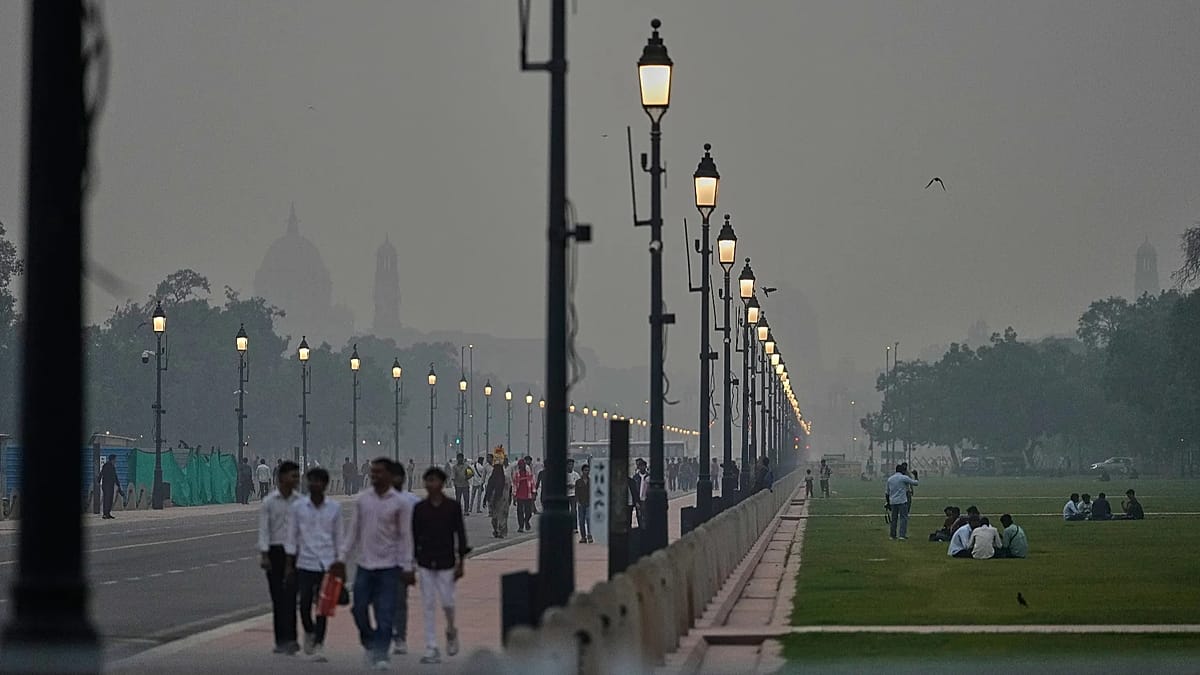
New research from the University of Cambridge, released on 10 November, underscores the immense human cost of failing to meet global air quality standards. The study, published as world leaders gather at COP31 in Türkiye to discuss climate and health, estimates that aligning with the World Health Organization’s (WHO) recommended levels for fine particulate matter (PM2.5) could prevent roughly 9.4 million deaths each year. Cutting nitrogen dioxide (NO2) pollution could avert or delay a further 1.1 million deaths.
Outdoor air pollution remains one of the most serious environmental threats to public health, contributing to heart and lung diseases, stroke, and even dementia. The WHO tightened its air quality guidelines in 2021, lowering the recommended annual maximum for PM2.5 from 10 to 5 micrograms per cubic metre (µg/m³) and for NO2 from 40 to 10 µg/m³. Yet most countries, particularly low- and middle-income nations, are far from meeting these targets. Across the 136 countries analysed, the average annual PM2.5 concentration was 30.44 µg/m³—more than six times the WHO’s recommended limit.
A heavy burden on developing nations
The study, published in the British Medical Journal, found that the potential health gains are greatest in low- and middle-income countries, which currently bear the heaviest pollution burden. Rapid urbanisation, economic growth, and rising motor vehicle use have worsened air quality in these regions. Haneen Khreis, co-corresponding author, noted: “Meeting the WHO’s air quality guideline values will not be straightforward, but low- and middle-income countries have a critical opportunity to shape healthier futures as their populations grow and their cities expand.”
Beyond preventing premature deaths, cleaner air would significantly reduce the incidence of chronic diseases. The researchers calculated that meeting PM2.5 targets could lead to 2.8 million fewer cases of chronic obstructive pulmonary disease (COPD), 1.1 million fewer cases of dementia, 7.3 million fewer cases of coronary heart disease, and 2.3 million fewer strokes each year. Since heart attacks and strokes account for most preventable deaths, the authors stress the importance of tackling air pollution as a core strategy for reducing cardiovascular disease burden.
Economic dividends of cleaner air
The benefits extend well beyond health. The study estimates that meeting WHO guidelines could generate Int$8.4 trillion in annual societal welfare gains—equivalent to 10.7% of the combined GDP of the 136 countries studied. Direct medical cost savings would be substantial: Int$11.8 billion for coronary heart disease, Int$5.9 billion for stroke, and Int$8.6 billion for dementia, with tens of billions more in preserved workplace productivity.
While the greatest gains would be in developing nations, European countries also have room to improve. Many EU member states, including Poland, Bulgaria, and Italy, regularly exceed WHO limits for PM2.5, particularly in urban and industrial areas. The European Commission has taken legal action against several countries for breaching EU air quality directives, and the revised Ambient Air Quality Directive, adopted in 2024, sets stricter interim targets for 2030, moving closer to WHO guidelines.
The findings come as six climate measures could prevent 1.6 million deaths annually, according to a separate WHO analysis. Both reports highlight the urgent need for policy action. In Europe, initiatives such as low-emission zones in cities like Berlin, Paris, and Madrid, and the EU’s Zero Pollution Action Plan, are steps in the right direction, but implementation remains uneven.
Khreis added: “Cleaner air is not just a health imperative; it is an economic one. The savings from reduced healthcare costs and improved productivity are enormous.” The study’s authors call on governments worldwide to accelerate the transition to cleaner energy, promote public transport, and enforce stricter emission standards.
As the world’s attention turns to climate negotiations, the evidence is clear: meeting air quality targets is a win-win for human health and economic prosperity. For Europe, the path forward involves not only meeting EU standards but also supporting global efforts to reduce pollution, as the continent’s own air quality is affected by transboundary pollution from beyond its borders.