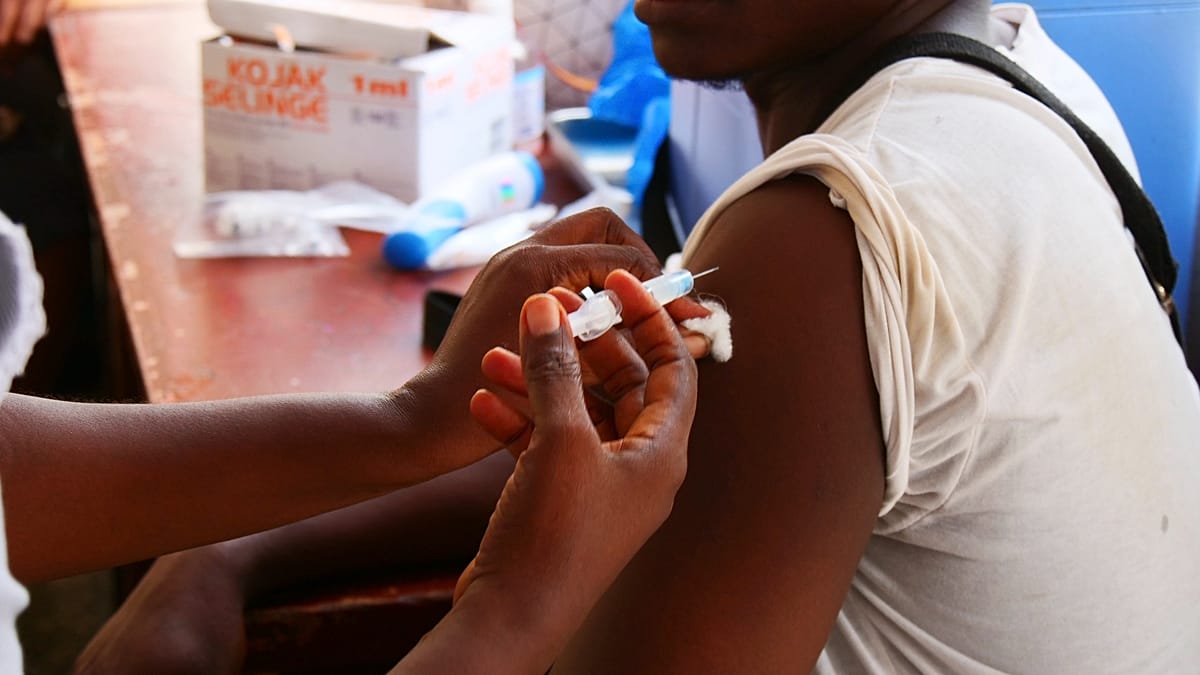
The Democratic Republic of the Congo is set to receive 70,000 doses of the Ervebo Ebola vaccine, a key tool in past outbreaks, following a request from the government. The allocation, announced by the World Health Organisation (WHO) and its partners on Thursday, comes as the country battles its deadliest Ebola outbreak on record, with the virus spreading faster than any previous episode.
The vaccine, developed by Merck, is approved for the Zaire strain of Ebola, which has caused most past outbreaks. However, the current outbreak is driven by the rarer Bundibugyo strain, for which no licensed vaccine exists. The WHO noted that while it is not yet known whether Ervebo protects against Bundibugyo, “early laboratory and animal data suggest it may provide some protection.”
The shipment includes 20,000 doses earmarked for a Phase 3 clinical trial to assess the vaccine’s effectiveness against the Bundibugyo virus. The remaining 50,000 doses will be administered to frontline and health workers, as recommended by WHO experts. The International Coordinating Group on Vaccine Provision, which includes the WHO, UNICEF, and other partners, said the doses will be released immediately.
WHO Director-General Tedros Adhanom Ghebreyesus called the approval “an important example of global solidarity in action.” He added that the agency and its partners remain committed to supporting strengthened surveillance, rapid detection, quality care, community engagement, and vaccination efforts to bring the outbreak under control.
Outbreak spiraling in eastern Congo
The outbreak, which has spread across six provinces in eastern DRC, has infected and killed people faster than any previous Ebola outbreak in history. It is spreading roughly three times faster than the 2014–2016 West Africa epidemic, which killed more than 11,000 people. The case fatality rate currently stands at 47.5%, rising to as high as 70% in areas where response efforts are more challenging, including North Kivu province.
Experts believe the virus began spreading from the mining town of Mongbwalu as early as February, months before authorities declared the outbreak on 15 May. Since then, Congo has recorded more than 5,000 cases and over 2,300 deaths, making it the country’s deadliest Ebola outbreak on record. The lack of approved vaccines or treatments for the Bundibugyo virus has been a major challenge for frontline medics.
Most new cases have been detected among people who were not being monitored, indicating that the virus is spreading faster than efforts to track it, contributing to the high death toll. The vaccine delivery is expected to provide a major boost to containment efforts, though health officials caution that vaccination alone will not be enough.
The development comes as fears grow of spillover into South Sudan, with the outbreak now reaching a sixth province. Earlier this year, the WHO warned that the outbreak could become the deadliest on record, a grim prediction now realized. The situation has also drawn attention to the broader challenges of vaccine access and public health infrastructure in the region.
While the Ervebo vaccine is a proven tool, its use against Bundibugyo is experimental. The Phase 3 trial will be crucial in determining whether it can be deployed more widely in future outbreaks. In parallel, Moderna has begun human trials for a Bundibugyo-specific vaccine, offering another potential avenue for protection.
The international response, coordinated by the WHO and its partners, underscores the importance of rapid vaccine deployment in containing deadly outbreaks. As the situation evolves, the focus remains on breaking transmission chains and ensuring that frontline workers are protected.