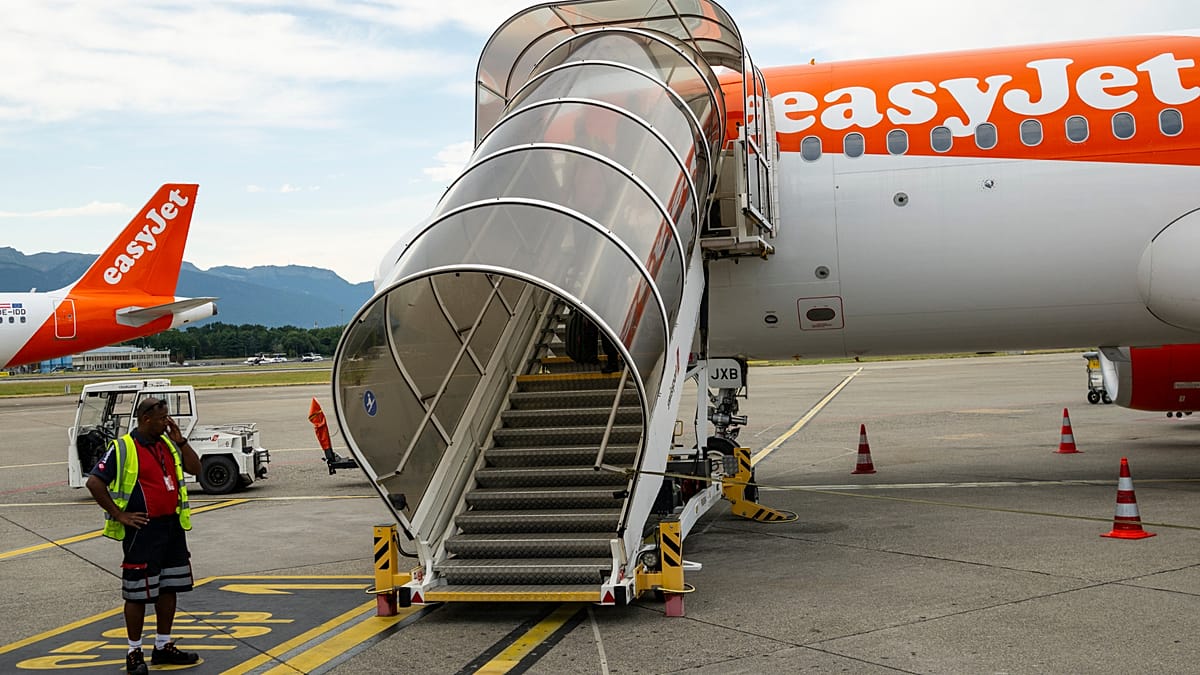
British budget carrier easyJet confirmed on Thursday that it has formally accepted a £5.7 billion (€6.6 billion) takeover bid from Apollo Global Management, the US private equity giant. The airline's board said in a statement that it was "pleased to announce that they have reached agreement on the terms and conditions of a recommended cash acquisition."
Under the deal, Apollo will pay £7.15 (roughly €8.35) in cash for each easyJet share, valuing the company at about €6.6 billion. The transaction is expected to be completed by the end of the first quarter of 2027, subject to regulatory approvals and shareholder consent.
The announcement came after rival bidder Castlelake withdrew from the race, leaving Apollo as the sole suitor. easyJet, founded in 1995 by British-Cypriot entrepreneur Stelios Haji-Ioannou, has grown from a no-frills operator flying between London Luton and Scottish cities into one of Europe's largest low-cost carriers, with a network spanning the continent and beyond.
Ownership structure designed to satisfy EU and UK rules
A key element of the deal is the ownership structure, which has been carefully crafted to comply with European and British airline regulations. Under the terms, Haji-Ioannou and his family will retain an equity stake in a new holding company, while Apollo's shareholding will be capped at 49.9%. An EU Trust will hold up to 5% of the shares, ensuring that the airline remains majority-owned by European investors as required by EU and UK law.
These restrictions are standard for airlines operating within the EU single aviation market, where foreign ownership is limited to 49% of voting rights. The structure aims to preserve easyJet's status as a European carrier, allowing it to continue flying domestic routes within member states and maintain its operating licenses.
easyJet's first flights operated between London Luton—where it remains headquartered—and Glasgow and Edinburgh, with the first international routes to Amsterdam, Nice, and Barcelona launching in 1996. Today, the airline serves more than 150 airports across Europe, carrying tens of millions of passengers annually.
The takeover comes at a time of consolidation in the European aviation sector, as carriers grapple with rising fuel costs, environmental pressures, and post-pandemic recovery. Apollo's investment is seen as a bet on the resilience of low-cost travel demand across the continent.
Analysts note that the deal could reshape the competitive landscape, particularly if Apollo seeks to expand easyJet's network or integrate it with other holdings. However, the ownership cap may limit Apollo's ability to exert full control, a factor that could influence future strategic decisions.
For passengers, the immediate impact is likely to be minimal, as easyJet's operations are expected to continue as usual. The airline's brand and management team are expected to remain in place, with Apollo providing financial backing rather than operational oversight.
The deal also highlights the ongoing interest of US private equity in European infrastructure and consumer businesses, a trend that has drawn both praise for injecting capital and criticism over potential job losses and asset stripping. easyJet's board has emphasized that the acquisition will support the airline's long-term growth and stability.
As the transaction moves toward completion, regulators in the UK and EU will scrutinize the ownership structure to ensure compliance with aviation laws. The involvement of an EU Trust is a novel mechanism designed to reassure authorities and maintain easyJet's European identity.
With the first quarter of 2027 as the target for closure, the coming months will be critical for securing approvals and finalizing the deal. For now, easyJet's future appears set under new ownership, but with the same routes, the same orange livery, and the same commitment to affordable travel across Europe.