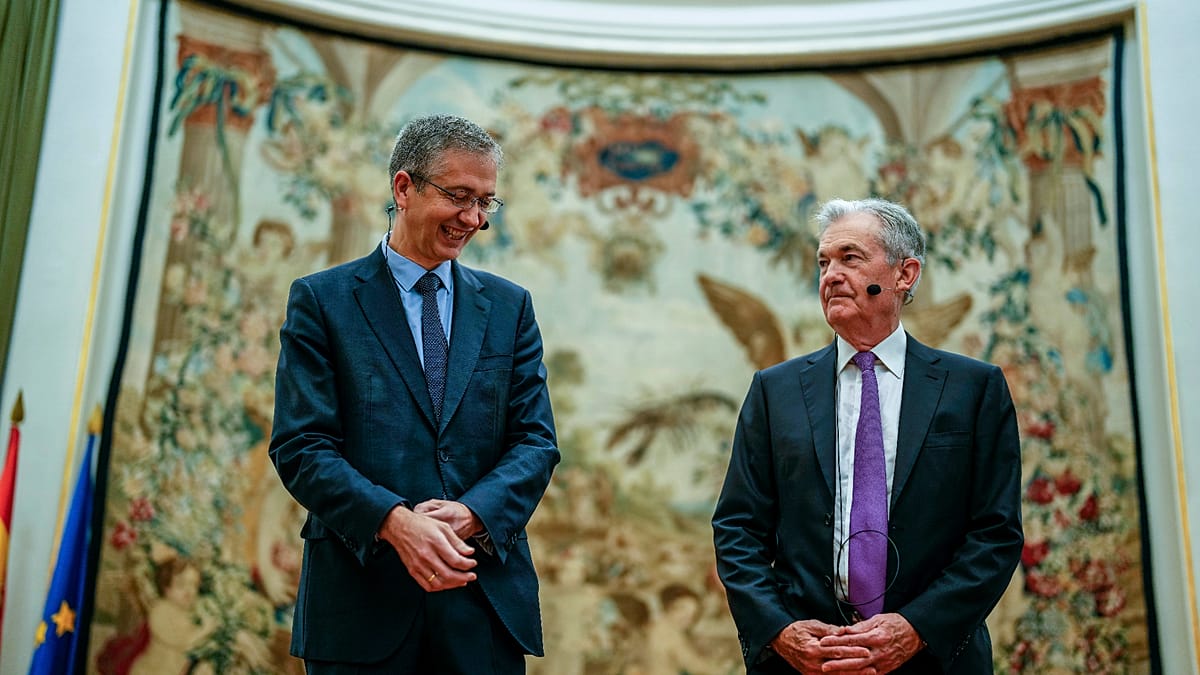
European leaders have thrown their weight behind Pablo Hernández de Cos, the former governor of the Bank of Spain, to take over the presidency of the European Central Bank (ECB) from Christine Lagarde. The appointment, which still requires formal approval, comes at a delicate moment for the eurozone, where inflation is running at twice the ECB's target and several governments are wrestling with heavy debt burdens.
Hernández de Cos, currently general manager of the Bank for International Settlements in Basel, is no stranger to Frankfurt. He sat on the ECB's Governing Council from 2018 to 2024, where he earned a reputation as a consensus-builder with a dovish tilt—someone who tends to favour lower interest rates and monetary stimulus to support growth. His backers hope that blend of technical skill and pragmatism will steady the ship as the bank navigates an uncertain economic landscape.
A more hands-on president?
Analysts broadly expect Hernández de Cos to maintain the ECB's current policy trajectory, at least in the near term. But they also anticipate a subtle shift in style. Andrew Kenningham, chief Europe economist at Capital Economics, describes him as "an economists' economist"—technically highly competent and respected. "He will be more likely to challenge advice from the Chief Economist than his predecessor," Kenningham told Euronews Business, suggesting a president who engages deeply with the mechanics of monetary policy.
Carsten Brezski, global head of macro at ING, goes further. "We will now get a president (again) who will leave a clearer personal mark on monetary policy than his predecessor," he said. Brezski expects Hernández de Cos to build on Lagarde's consensus-driven approach but to take a more active role in shaping decisions. Investors, he notes, will likely scrutinise the new president's speeches for hints about the future path of interest rates.
That prospect has markets on edge. Eurozone inflation stood at 4% in October, well above the ECB's 2% target, and the bank could still raise rates at its December meeting—the last one Lagarde will chair. Capital Economics forecasts only one more quarter-point hike before cuts begin by the end of 2027, a view that aligns with Hernández de Cos's perceived dovishness.
Dove or pragmatist?
A review of Hernández de Cos's past speeches by Commerzbank analysts suggests he sits among the monetary policy doves. In 2020, he strongly backed the ECB's pandemic bond-buying programme, which was expanded to €1.85 trillion, arguing it had "been clearly successful in curbing financial market deterioration in all euro area countries" and had lowered borrowing costs for governments and companies alike.
That record could prove reassuring for heavily indebted member states. Commerzbank analyst Marco Wagner notes that "especially against the backdrop of rising government debt in numerous countries ... many governments are likely to prefer a dovish ECB president." France, in particular, is struggling with high debt and rising interest costs, and Paris reportedly played a key role in swinging support behind Hernández de Cos after initially backing the more hawkish Dutch candidate, Klaas Knot.
Yet Brezski cautions against pigeonholing him. "It's hard to put De Cos into the dove-hawk category. In my view, he will simply be a very pragmatic central banker," he said. That pragmatism may be exactly what the eurozone needs as it juggles inflation, sluggish growth, and fiscal strains from Paris to Rome.
Two more seats on the board
The European Council has also put forward two other candidates for the ECB's six-member executive board: Laurence Boone, a former French economy minister now at Santander, and Markus Brunnermeier, a German professor at Princeton University. Boone is seen as more likely to favour lower rates than Isabel Schnabel, whom she would replace, while Brunnermeier is considered more hawkish than Philip Lane, his presumed predecessor. Kenningham expects the net impact on policy to be small, though much will depend on how they settle into their roles.
The appointments still need consultation with the European Parliament and the ECB's Governing Council before formal adoption by EU leaders. Lagarde, 70, announced in October that she would step down on 7 February 2027, roughly nine months early, saying she wanted to speak more freely on issues beyond monetary policy. Her departure clears the way for a new era at the ECB—one that may be less about grand gestures and more about the fine print of interest-rate decisions.
For a deeper look at how Hernández de Cos rose to this position, see our earlier profile on his consensus-building style. And for context on the broader economic backdrop, check our analysis of the eurozone's growth outlook.



