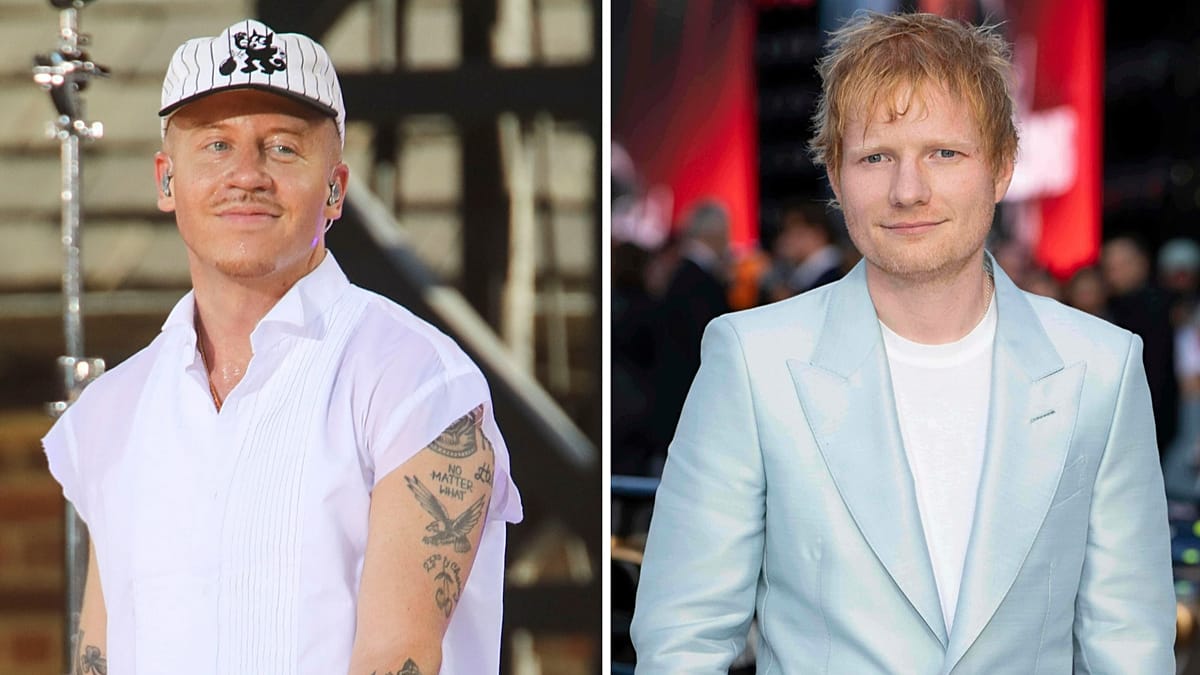
Ed Sheeran's current US tour has been thrown into turmoil after every supporting act announced their withdrawal, a collective protest against the removal of rapper Macklemore from the line-up. The decision, attributed to tour promoter Messina Touring Group, has sparked a wave of solidarity among the artists, who cite free expression and moral conviction as their reasons for leaving.
Sheeran, the British singer-songwriter, took to Instagram on Tuesday to clarify his position, stating that the promoter's decision was not his own. "Macklemore coming off tour was the promoter's decision, it was not mine," he wrote. "I would never let down the fans who had made plans, nor would I abandon the touring crew and the other support acts and musicians who rely on me for work and to make a living."
He expressed respect for Macklemore's convictions, adding, "I respect Macklemore's strength of purpose to stand up and shout for what he believes. However, there is room for multiple approaches to the same end: peace. I choose to use my fame and platform to be a place of safety and sanctuary, to maintain diplomacy and keep conversations open, not closed."
Despite Sheeran's attempts at diplomacy, his words have failed to placate the support acts. Among those who have withdrawn are Irish artists Aaron Rowe and the band Beoga, Danish group Lukas Graham, and Finneas, the American musician and brother of Billie Eilish. Each has made their stance clear on social media.
Artists speak out
Finneas, known for his own successful music career, declared on Instagram: "Artists must not be silenced when they speak up for the oppressed. I have decided to withdraw from my upcoming tour dates with Ed Sheeran. I stand with Palestine and its people."
Rowe and Beoga, both from Ireland, drew on their country's history of colonialism and struggle. "We are Irish people who understand colonialism. As founding members of the Irish Artists for Palestine movement, we are committed activists for justice and will continue to be," Beoga stated.
Rowe, who described Sheeran as a friend and credited him with changing his life, explained: "But as Irish people we know all too well about genocide, forced famine and violent occupation. I can't stand by and allow billionaires to use their position of power to silence the rightful voices of those who speak up."
The controversy began earlier this month when Macklemore, during a concert at MetLife Stadium in New Jersey, repeatedly chanted "Free Palestine!" while introducing his protest song 'Hind's Hall.' He also addressed Jewish fans directly, saying, "To all of my Jewish brothers and sisters, criticism of Israel, criticism of apartheid, being against genocide, it in no way is criticism of you."
Macklemore later claimed that several US venues, influenced by billionaire Robert Kraft, owner of the NFL's New England Patriots, had pressured the promoter to drop him. Kraft's Kraft Group also owns Gillette Stadium, where the Patriots play. In a statement, Kraft said the cancellation was due to Macklemore's "recent comments and a broader history of antisemitic rhetoric and imagery that we believe has been deeply offensive and hurtful to the Jewish community."
Old photographs of Macklemore wearing a fake hooked nose and wig have also resurfaced, for which he has previously apologised.
The mass withdrawal of support acts raises serious questions about the future of Sheeran's tour, which was scheduled to continue across the US. While Sheeran has attempted to maintain a neutral stance, the actions of his fellow artists highlight the growing intersection of music and politics, a trend that has seen similar debates play out across Europe. The situation also echoes broader cultural tensions, such as those seen in Franco-British relations, where historical grievances often resurface in modern contexts.
As the tour's fate hangs in the balance, the episode underscores the challenges artists face when navigating politically charged issues. For Sheeran, the immediate priority may be to salvage his tour, but the deeper rift between his desire for neutrality and his colleagues' calls for vocal solidarity may prove harder to bridge.