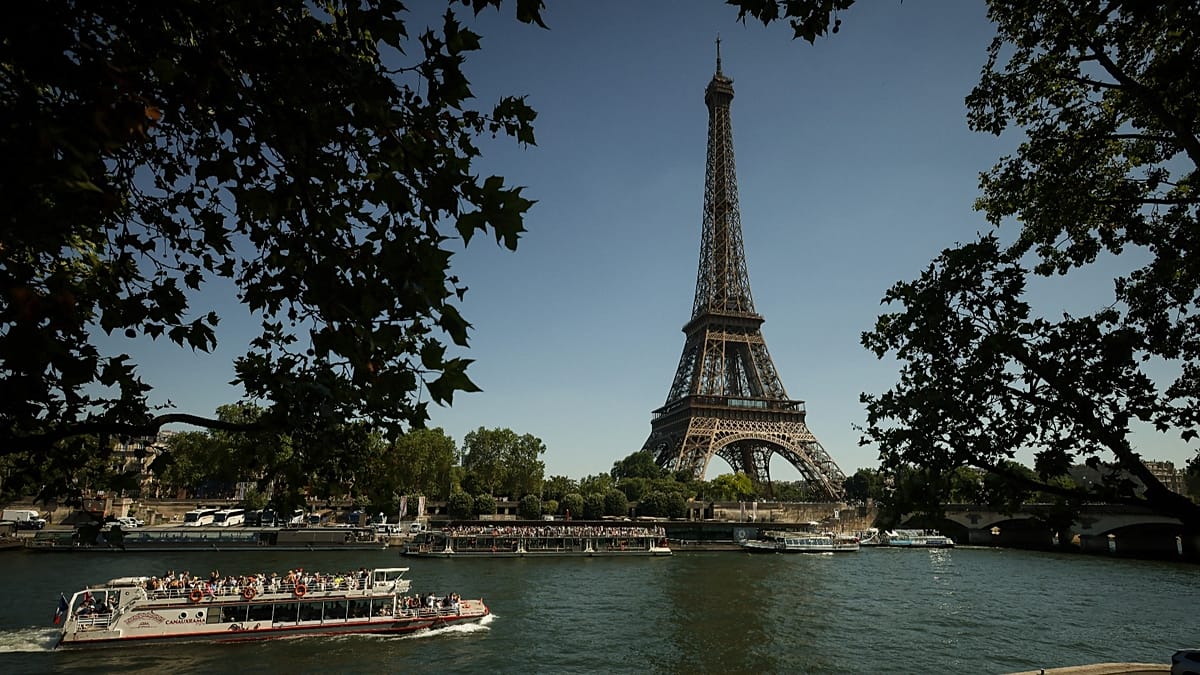
The Eiffel Tower is set to welcome visitors again on Tuesday after a one-day strike by staff who protested against the removal of female colleagues during a private visit by a Hindu religious delegation. The walk-out, which forced the Paris landmark to close on Monday, has sparked a broader debate about secularism and gender equality in France.
The operating company, Société d'Exploitation de la Tour Eiffel (SETE), acknowledged that the delegation had requested the visit be arranged to limit "interactions with women" and admitted that "these conditions should not have been accepted." In a statement, SETE said the tower would reopen following a meeting between staff and management.
The Bochasanwasi Akshar Purushottam Swaminarayan Sanstha (BAPS), the spiritual movement behind the visit, issued an apology for "any pain or inconvenience caused." In a post on X, the organisation said: "To the best of our knowledge, at no point was anyone prevented access to the Eiffel Tower. Due to the size of our delegation, the visit was arranged in conjunction with the Eiffel Tower team at the start of normal operating hours to avoid disrupting or inconveniencing others."
Staff describe 'humiliating' instructions
Staff representatives said in a statement that they condemned "professional instructions that led to female employees being sidelined, replaced and made invisible because of their sex." They detailed how women were told to leave their posts, withdraw to other areas, and in some cases were replaced by male colleagues. "All female employees were instructed not to go through or cross certain areas while the delegation was present," the statement added.
The incident has drawn sharp criticism from French politicians. Paris deputy mayor Emmanuel Grégoire promised an investigation "as soon as possible." Yaël Braun-Pivet, president of the National Assembly, said: "I refuse to accept that women should be told to step aside to meet the demands of foreign visitors. Welcoming others never means giving up our values. In France, women are fully present in public life. No one tells them to become invisible there."
The controversy comes at a time when France is grappling with questions of secularism and the place of religion in public spaces. The Eiffel Tower, a symbol of Paris and of French republican values, has become an unlikely flashpoint in that debate.
This is not the first time the landmark has been affected by industrial action. In previous years, strikes over pension reforms and working conditions have led to temporary closures. The latest dispute, however, has a distinctly cultural dimension, raising questions about how far businesses should go to accommodate the requests of foreign visitors, especially when those requests conflict with core principles of gender equality.
For many Parisians, the incident is a reminder that the city's openness to the world must not come at the cost of its own values. As one local commentator put it, "Paris is a city that welcomes everyone, but it does not ask its women to disappear."
The BAPS delegation's visit was part of a broader tour of Europe, and the group has expressed regret over the misunderstanding. However, the damage to its reputation may linger, as does the broader question of how European institutions and businesses handle such requests in the future.
For now, the Eiffel Tower is back in business, but the echoes of Monday's strike are likely to be felt for some time. The incident has also drawn attention to the treatment of women in the workplace, a topic that remains highly sensitive across Europe. As France prepares for upcoming elections, this episode may become a talking point for politicians seeking to emphasise their commitment to equality.
The reopening of the tower is a relief for the millions of tourists who flock to the monument each year, but the underlying tensions remain unresolved. The SETE has promised to review its protocols to ensure that such a situation never occurs again, but the broader societal questions it raised are unlikely to be settled so quickly.