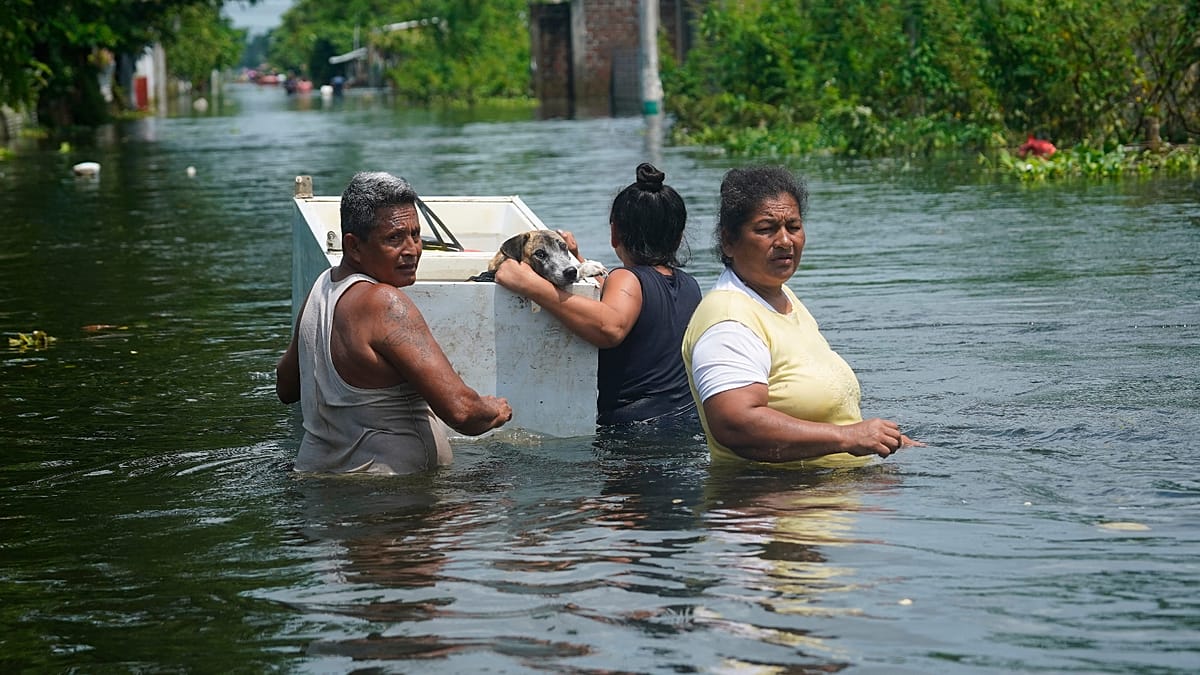
Emergency crews across northern Peru and coastal Ecuador spent the weekend evacuating residents and clearing debris after weeks of torrential rain caused rivers to overflow, inundating homes and cutting off major transport routes. The flooding has killed at least 34 people in Ecuador since late August, according to the country's risk management agency, with two more deaths reported on Friday when a landslide struck a dwelling.
Ecuador's elections disrupted
In Ecuador's northwestern province of Esmeraldas, police and firefighters rescued families after two rivers broke their banks. By Saturday morning, floodwaters and landslides had damaged more than 50 sections of road nationwide, forcing the closure of at least ten, including the main highway linking the capital, Quito, with the Pacific coast.
The severe weather has also thrown preparations for Sunday's local elections into disarray. Authorities had moved the vote forward from February to avoid the expected peak of El Niño, but the National Electoral Council said on Friday that polling stations in five provinces had been relocated because of flooding, with dozens more at risk.
Record rainfall in northern Peru
Across the border, the overflowing Tumbes River submerged a stretch of the Pan-American Highway, Peru's principal north-south artery. Police rescued seven ranchers trapped by floodwaters earlier this week. In the northwestern city of Piura, a record 143 millimetres of rain fell in 24 hours, leaving streets under waist-deep water. That figure, recorded at the city's Miraflores weather station, is more than 100 times the daily average for November, according to Peruvian media.
President Keiko Fujimori visited the affected areas on Friday evening, saying around 400 people had been rescued from flooded homes, while about a dozen remained trapped. She indicated that her government could bring forward emergency financial assistance originally scheduled for 2027 to help families recover. Fujimori has warned that Peru faces what she calls a “mega Niño” and said her administration is coordinating international aid from the United States and China.
Peruvian newspaper El Comercio reported that more than one million people in the Piura region are exposed to an elevated risk of flooding and landslides, with meteorologists warning that conditions could deteriorate further between December and February.
Economic toll and food prices
El Niño is a naturally occurring climate phenomenon marked by unusually warm surface waters in the tropical Pacific, which disrupt weather patterns worldwide. The current episode has been classified as extraordinary, with sea surface temperatures in the eastern tropical Pacific running about 5°C above the historical average for this time of year.
Even Lima, normally arid, has experienced persistent drizzle in some neighbourhoods and unusually high temperatures in others, reaching 32°C — around 10 degrees above normal. “My house is an oven,” said Cindy Cueto, a mother of three who works at a community soup kitchen.
The phenomenon is also hitting wallets. Declining agricultural output and fish catches have driven up food prices. “Things are so expensive, the money doesn't cover anything anymore,” said Elizabeth Espinoza, a mother of five who sells desserts on the outskirts of Lima. Annual inflation in Lima exceeded 5% in October, its highest level in three years. Peru's central bank estimates that El Niño could shave nearly one percentage point off economic growth this year and more than a percentage point in 2027.
The flooding in Peru and Ecuador is part of a broader pattern of extreme weather across South America, with Bolivia declaring a national emergency as El Niño brings both drought and floods. Meanwhile, the Galápagos Islands have also suffered severe flooding, underscoring the regional scale of the crisis.
Forecasters have extended a red weather alert for Peru's northern regions of Piura and Tumbes until Monday, warning that El Niño is expected to remain at extraordinary strength until February. For residents and authorities alike, the immediate priority is saving lives and restoring basic services, but the longer-term challenge of adapting to a changing climate remains.