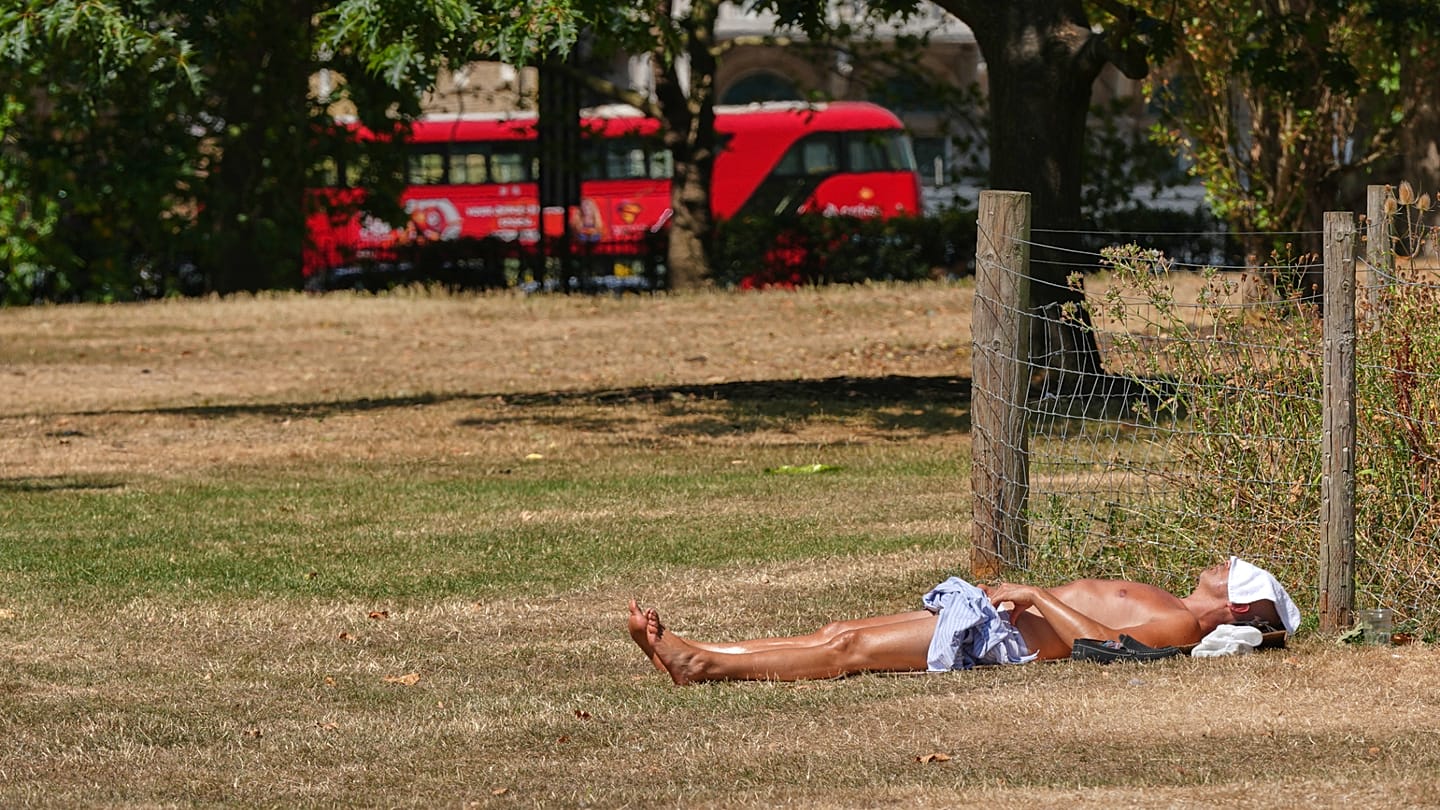
England and Wales have just recorded their driest July since national records began in 1836, according to the UK Met Office. The announcement underscores a summer of extreme dryness that is reshaping water management debates across the British Isles and drawing comparisons with drought conditions elsewhere in Europe.
The Met Office confirmed that southern England experienced its driest month ever recorded, a stark milestone that has prompted warnings from farmers, environmental agencies, and local authorities. With rainfall levels far below the long-term average, reservoirs and rivers are under visible stress, and hosepipe bans have already been introduced in several counties.
A regional drought with continental echoes
While the UK is not part of the European Union, its weather patterns are closely linked to the same atmospheric systems that have brought record heat and dryness to much of the continent. This July, parts of France, Spain, and Italy also suffered severe water shortages, and the Rhine and Danube rivers hit historic lows, forcing emergency energy measures in central Europe. The situation in England and Wales, therefore, is not an isolated anomaly but part of a broader European pattern.
Climate scientists point to a persistent high-pressure system that has deflected Atlantic rain fronts northwards, leaving the British Isles and much of western Europe under a prolonged dry spell. The Met Office's data shows that some areas in southern England received less than 10% of their typical July rainfall, a figure that has not been seen in nearly two centuries of record-keeping.
Impacts on agriculture and water supply
For farmers in the region, the lack of rain has hit crops hard. Wheat and barley yields are expected to be significantly lower than average, and fruit growers in Kent and Herefordshire are reporting sun-scorched produce. The National Farmers' Union has called for government support, warning that the drought could push some smaller operations out of business.
Water companies, meanwhile, are struggling to balance supply and demand. Thames Water and Southern Water have both imposed temporary use restrictions, and several have applied for drought permits to abstract more water from rivers. Environmental groups, however, caution that over-extraction could further damage already fragile river ecosystems, which are also suffering from low flows and higher water temperatures.
Looking ahead: a drier future?
Meteorologists note that while a single dry month does not constitute a trend, the frequency of such extremes is increasing. The Met Office's own climate projections suggest that summers in the UK will become hotter and drier on average, with more frequent heatwaves and drought episodes. This July's record may soon become the new normal, prompting calls for long-term investment in water infrastructure and more efficient irrigation techniques.
The situation in England and Wales also resonates with other parts of Europe facing similar challenges. As the Danube's record low has revealed ancient artifacts and disrupted shipping, and as wildfires have raged across southern Europe, the need for coordinated continental responses to water scarcity has never been clearer. The European Commission has already proposed a new water resilience strategy, and member states are being urged to share best practices in drought management.
For now, residents of southern England are being asked to conserve water, and many are hoping for a wetter August. But the record books have been rewritten, and the implications will be felt for months to come, from food prices to energy production, and from tourism to public health.