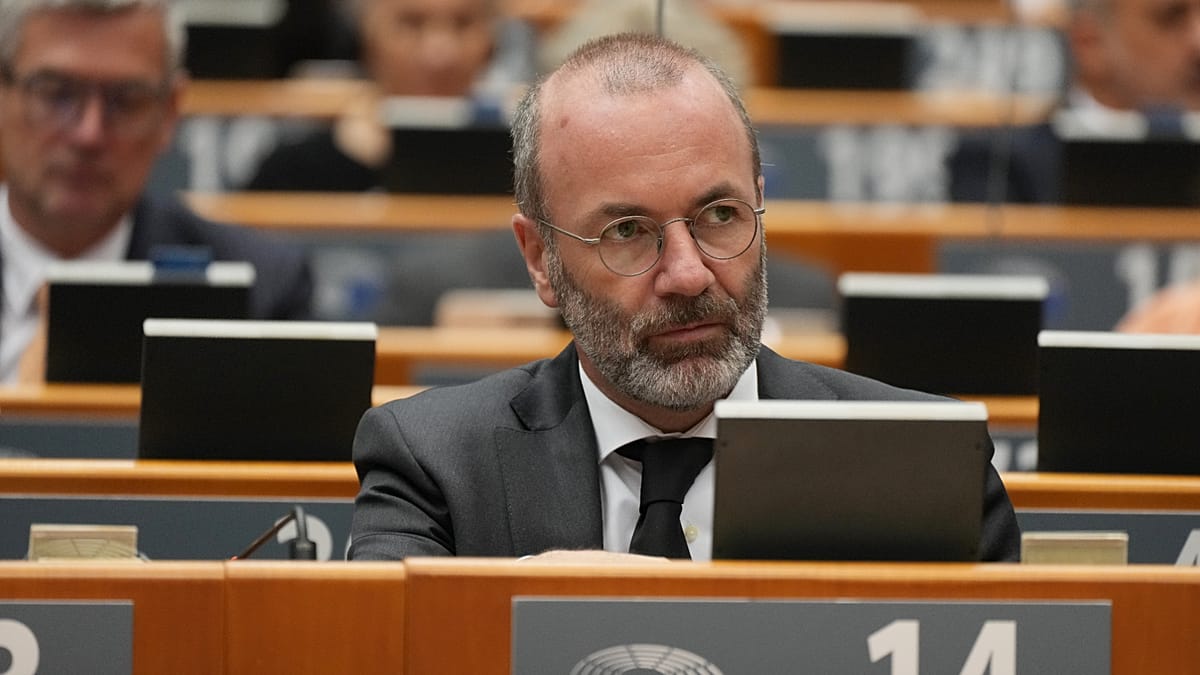
Manfred Weber, leader of the European People's Party (EPP) in the European Parliament, has issued a stark warning: the European Union must fundamentally reset its relationship with China or risk seeing key industries crippled by Beijing's overproduction and low-cost exports. In an interview with Bild am Sonntag, Weber declared that “the era of naivety is over” and called for a decisive, consistent defence of Europe's economic interests.
Weber's remarks come ahead of the EU summit on 18 June, where several member states—led by France—are pressing for a firmer line against China. They argue that Chinese overproduction is straining an already fragile European economy, undercutting domestic manufacturers in sectors from steel to electric vehicles. The European Commission acknowledged on 29 May that while China remains a critical partner, “the current state of the trade and investment relationship is not sustainable.”
A Trade Deficit That Threatens Jobs and Industry
Weber highlighted the staggering scale of the imbalance: the EU's trade deficit with China is approaching “almost one billion euros per day.” This, he warned, is jeopardising Europe's industrial base and high-quality jobs. “Either we fight back, or China will cripple parts of our industry. The EU must now use its trade policy instruments decisively and without hesitation,” he said.
As an example of the tools Brussels should deploy more broadly, Weber pointed to the recent imposition of EU tariffs on Chinese electric vehicles. He suggested that such measures could be expanded to other sectors where Chinese overcapacity is distorting markets. The message is clear: “Anyone wishing to sell in Europe must play by European rules.”
Weber also criticised a recent case where EU-backed development aid was used to procure 380 natural gas buses for Senegal, with a lower-cost Chinese bid winning over a European competitor. “European development aid funded by taxpayers must not benefit Chinese companies,” he insisted, calling for stricter safeguards to prevent a repeat.
The push for a tougher stance is not without risks. Beijing could retaliate by restricting exports of critical materials such as rare earths, which are essential for European manufacturing, particularly in Germany. Existing trade agreements with partners like Canada, the Mercosur bloc, and India may not fully offset such disruptions. As EU Trade Chief Unveils Plan to Force Supplier Diversification Away from China, the bloc is already exploring ways to reduce its dependence on Chinese supply chains.
EU Trade Commissioner Maroš Šefčovič, after meeting with Chinese trade envoy Li Chenggang in Paris on Thursday, told reporters that both sides would engage in deeper dialogue to resolve “what is becoming an unsustainable trade deficit with China.” Yet the underlying tensions remain high. Think tanks, politicians, and media across Europe have been sounding the alarm on a looming EU-China trade war, a scenario that could have far-reaching consequences for the continent's economy.
Weber's intervention reflects a broader shift in European attitudes toward Beijing. Three years after European Commission President Ursula von der Leyen first warned about China's assertive economic practices, the EU is now facing a reckoning. As Von der Leyen's China Warning: Three Years On, EU Faces Reckoning notes, the bloc has struggled to translate rhetoric into concrete action. Weber's call for a “new chapter” in EU-China relations may be the push needed to accelerate that process.
For now, the ball is in Brussels' court. The summit on 18 June will test whether member states can agree on a unified, robust approach—or whether divisions between those favouring a hard line, like France, and those more cautious, like Germany, will once again dilute the EU's response. The stakes could not be higher: Europe's industrial future hangs in the balance.



