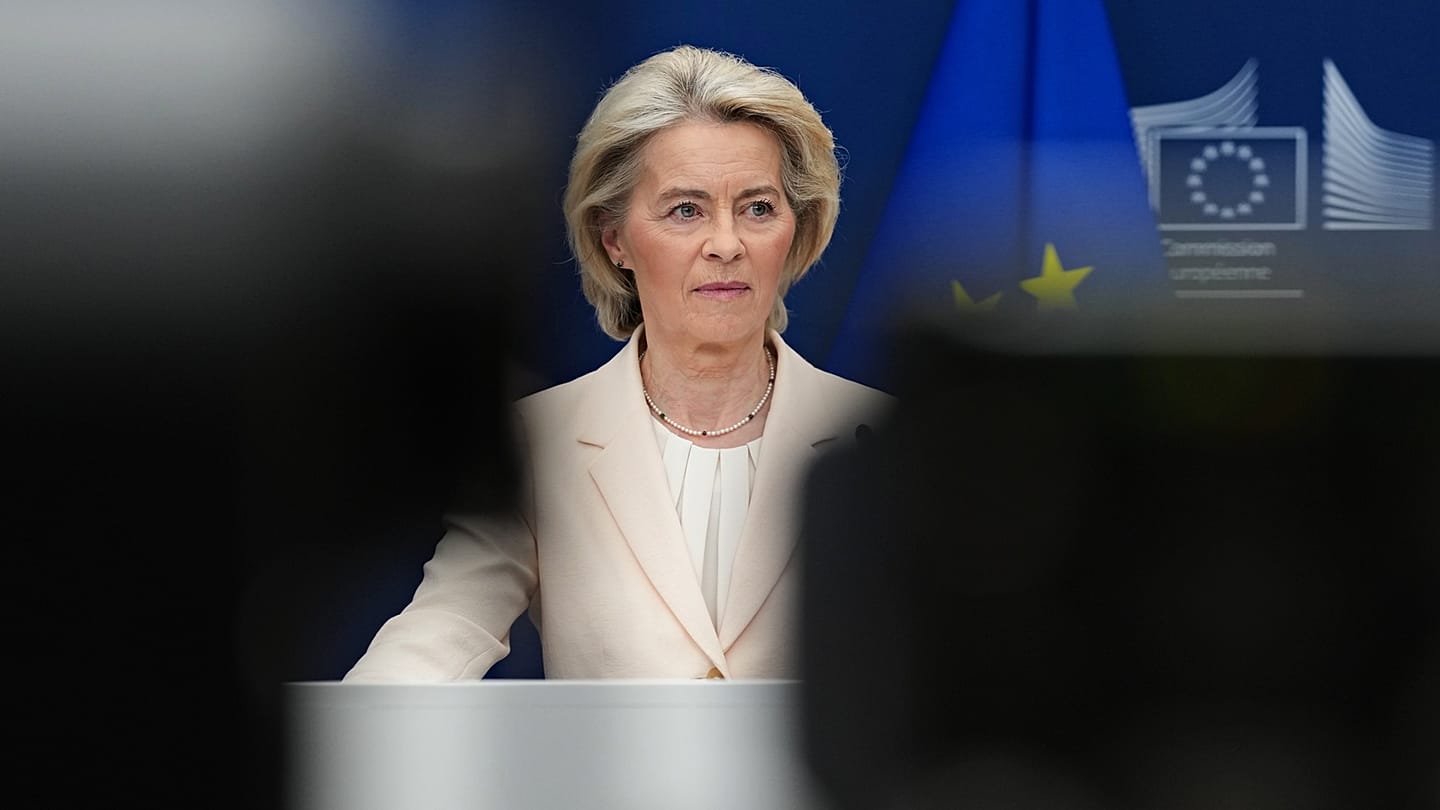
In March 2023, Ursula von der Leyen stood before the European Parliament and delivered what many saw as a watershed moment for EU-China policy. She called for a strategic recalibration — not decoupling, but de-risking. The message was clear: Europe could no longer afford naivety toward Beijing. Yet for much of the intervening period, that warning seemed to fade into the background noise of pandemic recovery, war in Ukraine, and energy crises.
Now, as the European Commission president prepares to translate rhetoric into binding measures, the question is whether the bloc has lost too much time — and whether it can overcome its own internal fractures.
A Shift in Tone, A Lag in Action
Von der Leyen's 2023 address at the Élysée Palace, co-hosted with French President Emmanuel Macron, outlined a three-pronged approach: reduce strategic dependencies, defend economic security, and engage China where interests align, such as climate and trade. But implementation has been uneven. While the EU unveiled a tech sovereignty plan to challenge US and Chinese dominance, concrete steps on supply chain diversification and investment screening have moved slowly.
Critics point to Germany's reluctance. Berlin, heavily reliant on Chinese markets for its automotive and machinery sectors, has often blocked or watered down proposals. The Bundestag's industrial lobby remains powerful, and Chancellor Olaf Scholz has pursued a more cautious line than von der Leyen. Similarly, southern member states like Italy and Greece have courted Chinese investment in ports and infrastructure, complicating a unified stance.
The Geopolitical Push
External events have accelerated the debate. Russia's full-scale invasion of Ukraine exposed the risks of energy dependence, and the EU has since applied that logic to China. The bloc's sanctions envoy recently noted that China remains a 'very big problem' for Russia measures, as Beijing continues to supply dual-use goods that Moscow uses in its war effort. This has sharpened the argument for tighter export controls and investment vetting.
Meanwhile, the EU Trade Chief unveiled a plan to force supplier diversification away from China, targeting critical raw materials, semiconductors, and pharmaceuticals. The proposal, still under negotiation, would require member states to identify and reduce reliance on single-source suppliers, with China as the primary concern.
Internal Resistance Remains
Yet the path to implementation is strewn with obstacles. Several member states fear retaliation from Beijing. China is the EU's second-largest trading partner, and any move perceived as hostile could trigger tariffs or investment freezes. The European business community, too, has warned against abrupt measures. The European Chamber of Commerce in China has argued that de-risking should not become a euphemism for decoupling, which would harm European exporters.
Moreover, the EU's institutional machinery is slow. The European Commission can propose, but the Council and Parliament must approve. With elections looming in 2024, some governments are wary of taking unpopular stands. The rise of far-right parties in several member states, often skeptical of EU integration and protective of national industries, adds another layer of complexity.
What Has Changed?
Despite the inertia, there are signs of movement. The EU has imposed anti-subsidy tariffs on Chinese electric vehicles, a sector where European automakers feel threatened. It has also launched an anti-coercion instrument to deter economic bullying. And von der Leyen herself has become more vocal, using her State of the Union address to warn that "the era of unconditional engagement with China is over."
But the gap between words and deeds remains. A recent study showed that EU fossil fuel imports have dropped only marginally since the Iran war began, highlighting how hard it is to shift entrenched supply chains. The same inertia applies to China: despite the rhetoric, EU imports from China rose in 2023, driven by demand for solar panels and batteries.
The Road Ahead
Von der Leyen's challenge is to turn a strategic vision into operational reality. She has the backing of the European Parliament and key member states like France and the Netherlands. But she needs to bring Germany and others on board. The upcoming EU-China summit, expected later this year, will be a test of whether the bloc can speak with one voice.
For now, the answer remains uncertain. Europe listened to von der Leyen's warning, but it has yet to act decisively. The question is not whether the EU will change its China policy — it already has, in tone. The real test is whether it can translate that into policy that protects European interests without triggering a trade war. The clock is ticking.