The European People's Party (EPP), the largest political group in the European Parliament, has called on Climate Action Commissioner Wopke Hoekstra to significantly revise the bloc's Emissions Trading System (ETS). In an internal document seen by Euronews, the EPP urges the European Commission to extend free pollution allowances for heavy industry beyond 2030, ahead of a formal proposal due on 15 July.
The EPP argues that protecting Europe's industrial base is now as critical as cutting emissions. "The system has achieved these emission reductions in a market-based and economically efficient manner," the document states. "Nevertheless, further adjustments are needed to safeguard industrial competitiveness and to ensure a more effective and economically sustainable decarbonisation pathway."
The ETS, launched in 2005, requires companies to pay for their carbon emissions, aiming to reduce pollution and spur investment in greener technologies. It has cut covered greenhouse gas emissions by roughly 50 percent, making it the EU's most effective climate policy tool. However, energy-intensive industries that compete globally against countries with weaker climate rules receive free allowances, or "pollution permits," to ease the transition.
EPP's Push for Extended Free Allowances
The EPP wants the Commission to slow the annual decline in free allowances—known as the Linear Reduction Factor—already from 2030, aligning with the European Climate Law's 85 percent domestic ambition. The party also seeks to extend free allocations beyond 2039 for sectors where emissions cannot yet be eliminated and where international competitors face weaker climate obligations. This effectively backs the Commission's May proposal to extend polluting credits between 2026 and 2030, but goes further by pushing beyond that timeline.
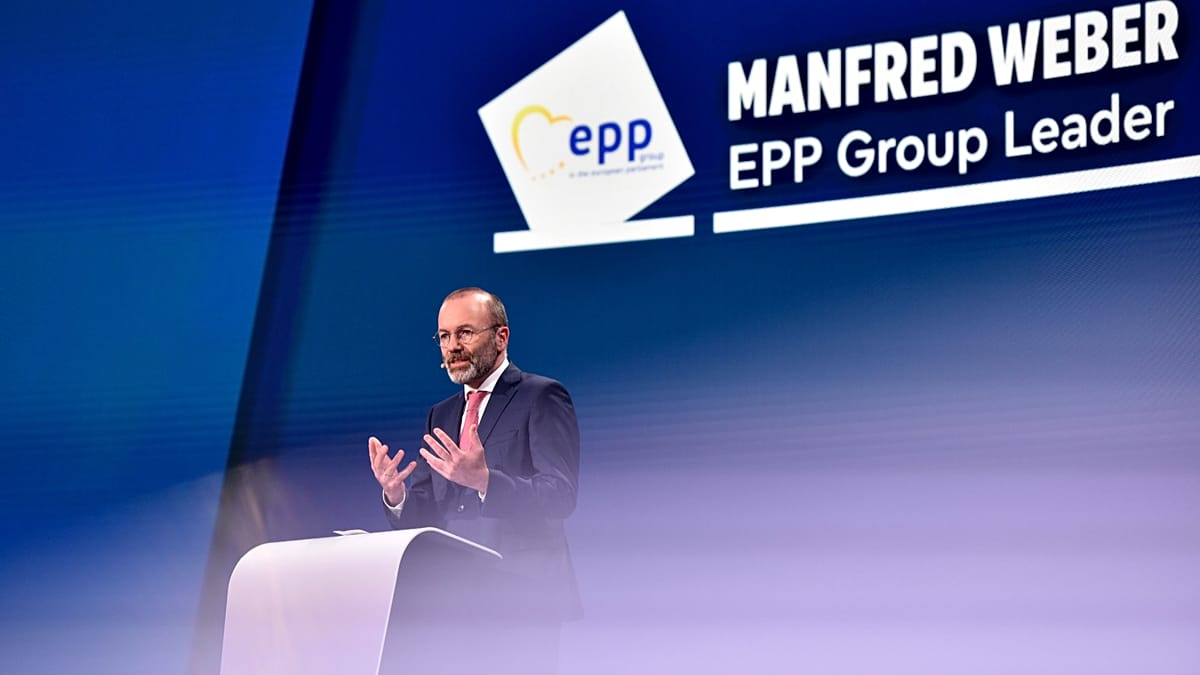
Under the current 2026-2030 plan, industry would receive free allowances covering about 75 percent of its emissions, with the Commission estimating a financial loss of around €4 billion. EPP President Manfred Weber told Euronews that the EU cannot "kill its industry due to climate change." The position has already drawn support from some EU countries and industry sectors, prompting EU leaders to reconsider the decision to cut polluting permits, as noted in the June European Council conclusions.
However, the battle over the ETS is more nuanced than it appears. Several heavy industry players—the very sectors the EPP aims to shield—are publicly opposing any weakening. Six European steelmakers, including Outokumpu Corporation, SSAB, Salzgitter AG, Saarstahl, Dillinger, and SHS–Stahl-Holding-Saar, have lobbied the Commission to "defend the integrity" of the carbon market. In a joint statement on 30 June, they argued: "Weakening the ETS would not strengthen Europe’s competitiveness. On the contrary: It would erode investment certainty, penalise early movers and delay the industrial transformation Europe needs." They contend that the primary pressure on competitiveness comes from high electricity costs due to fossil fuel dependencies, infrastructure gaps, and global steel overcapacity—not from carbon pricing.
Watchdog SteelWatch has highlighted that the bloc's three largest steelmakers—ArcelorMittal, thyssenkrupp, and voestalpine—received €25.7 billion in free ETS allowances but invested only €3.2 billion in decarbonisation. The group warns that prolonging free allocation would be counterproductive for green investment.
A new poll by YouGov, commissioned by the civil society network Beyond Fossil Fuels, surveyed 6,156 adults across France, Germany, Italy, the Netherlands, Poland, and Spain. It found that 72 percent of European adults—including voters from parties often sceptical of EU climate policy—support the "polluter pays" principle underpinning the ETS. Boris Jankowiak, steel transformation policy coordinator at Climate Action Network Europe, dismissed the idea that the ETS is causing industrial decline, arguing that Europe is already losing industrial ground for other reasons.
The debate comes amid broader European challenges, including NATO's drone challenge and heatwaves testing Europe's resilience. As the Commission prepares its proposal, the EPP's push highlights the tension between climate ambition and industrial competitiveness—a defining issue for the continent's economic future.