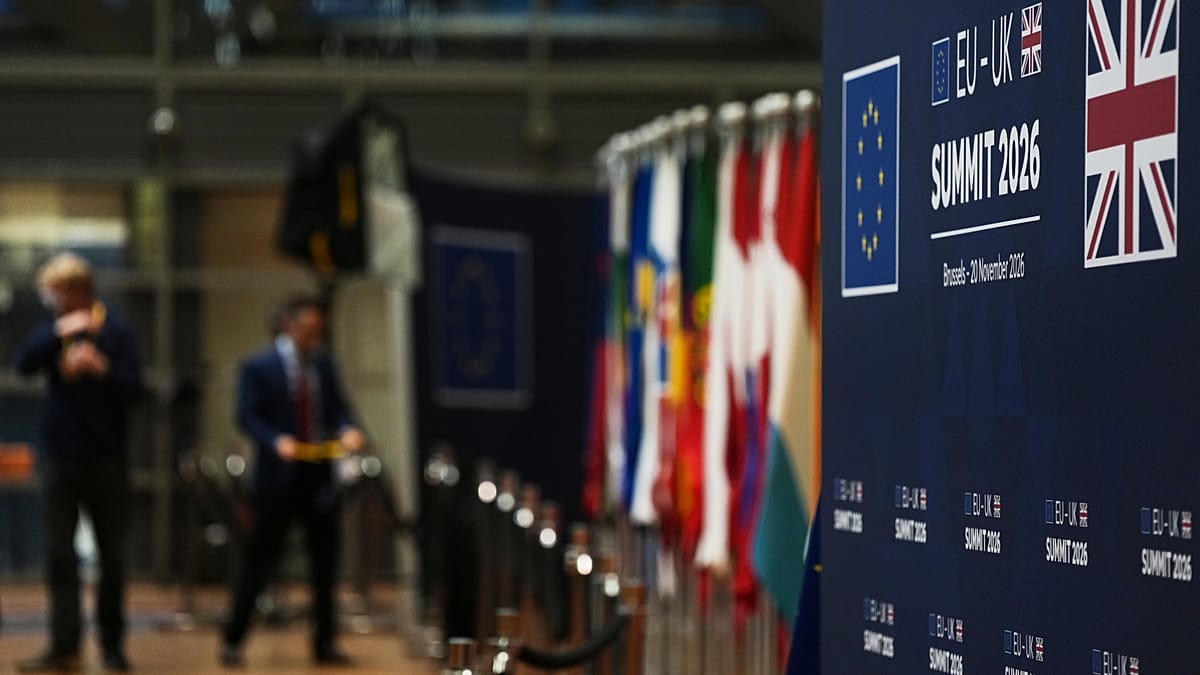
At a summit in Brussels on Friday, the European Union and the United Kingdom took a significant step toward resetting their post-Brexit relationship by agreeing on a youth mobility scheme. The Youth Experience Scheme (YES) will permit 100,000 young Europeans to live in the UK and a similar number of Britons to live in the EU, for up to three years. The scheme is expected to launch by January 2030 at the latest.
This agreement is part of a broader effort to rebuild ties between the two sides, which have been strained since Brexit. An EU official described the scheme as "important in terms of people-to-people contacts on both sides of the channel."
However, the two sides failed to resolve the contentious issue of university fees. Instead, they committed to reaching a deal within six months. The UK, which hosts significantly more EU students than it sends to the bloc, has proposed simply lowering fees. The EU, on the other hand, wants its students to be treated equally to British students at UK universities, a status they enjoyed before Brexit under EU rules prohibiting discrimination on grounds of nationality.
The post-Brexit increase in fees has had a dramatic impact on EU student numbers. According to the University of Oxford's Migration Observatory, the number of EU students starting a course at UK universities fell by 57% between 2020/21 and 2023/24. The EU official noted, "Since Brexit, the level of students from both sides studying on the other side has decreased, notably EU students in the UK. We think that this is something that makes our relationship poorer, and we want to address this."
Beyond fees: other agreements
In addition to the youth scheme, the EU and UK agreed on several other measures, including aligning agrifood standards and linking their carbon markets. These steps are part of a wider effort to deepen cooperation on issues of mutual interest, from trade to climate change.
The UK has also agreed to rejoin Erasmus+, the EU's exchange programme for education and vocational training, with participation starting on 1 January 2027. This move is seen as a positive signal for young people on both sides, offering more opportunities for study and work abroad.
While the delay on university fees is a setback, the overall momentum toward closer ties is clear. The youth mobility scheme, once operational, will provide a valuable channel for young Europeans to experience life in the UK and vice versa. As the EU official emphasised, the goal is to restore the richness of cross-channel exchanges that were lost after Brexit.
For now, prospective students from EU countries will have to wait a little longer for clarity on tuition costs. The next six months will be crucial in determining whether the UK and EU can bridge their differences and deliver a fair deal for students on both sides.