Brussels is hosting a pivotal summit on Friday between the European Union and the United Kingdom, a decade after the Brexit referendum tore the continent's political landscape. The meeting aims to translate the so-called 'reset' into concrete agreements covering trade, defence industry cooperation, agrifood standards, youth mobility, economic security, and access to the EU's electricity market. Both sides have signalled a willingness to move beyond the acrimony of the divorce, but the path remains fraught with political sensitivities.
A fragile thaw after years of friction
The summit comes after years of tense relations, marked by disputes over Northern Ireland, fishing rights, and the implementation of the withdrawal agreement. The draft communiqué, seen by European Pulse, outlines a series of confidence-building measures, but also reveals the limits of the reset. While London and Brussels are eager to present a united front on issues like Ukraine and economic security, deep disagreements persist on regulatory alignment and the role of the European Court of Justice.
For the EU, the summit is an opportunity to stabilise a relationship with a major neighbour and security partner. For the UK, it is a chance to demonstrate that Brexit has not left it isolated. The deals on defence industry cooperation and youth mobility are particularly significant, as they touch on areas where both sides have clear mutual interests. The UK's participation in the EU's electricity market would be a major step towards energy integration, but it would also require accepting EU rules and oversight.
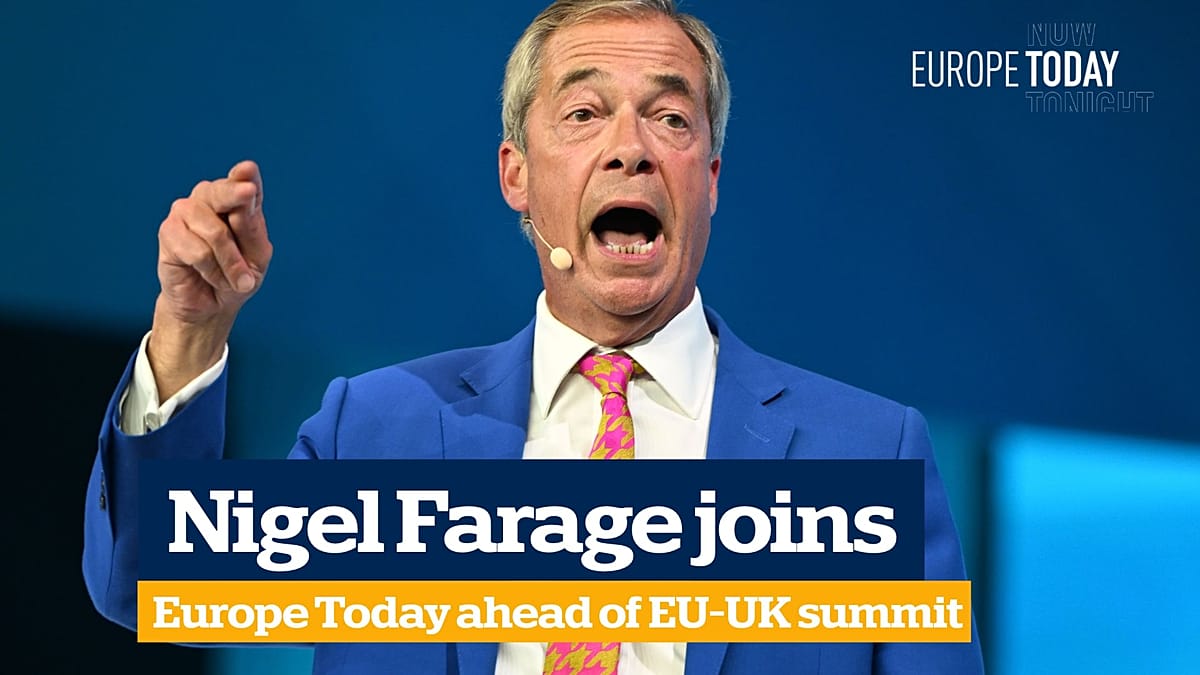
Reform UK leader Nigel Farage, the man who did more than anyone to make Brexit happen, has been a vocal critic of the summit. In an interview with Europe Today, Farage argued that the reset is a betrayal of the Brexit vote, claiming that the UK is being drawn back into the EU's orbit without having a say in its rules. 'This is not a reset; it is a surrender,' he said. 'The British people voted to take back control, and this summit is about handing it back to Brussels.'
Farage's comments reflect a broader unease among Brexit hardliners, who fear that the Conservative government is quietly reversing the 2016 decision. However, opinion polls suggest that a majority of Britons now believe Brexit was a mistake, and that closer ties with the EU are welcome. The summit's focus on practical cooperation, rather than grand political gestures, may be an attempt to sidestep the ideological battles that have dominated the past decade.
Global power plays: Shenzhen trilateral
While Brussels and London are trying to mend fences, the world's major powers are recalibrating their relationships. On Thursday, US President Donald Trump, Russian President Vladimir Putin, and Chinese President Xi Jinping met in Shenzhen for their first trilateral summit. The meeting, which was initially expected to focus on trade and security, has been overshadowed by the ongoing war in Ukraine and the escalating competition over artificial intelligence.
Former US Army Europe commander General Ben Hodges, speaking on Europe Today, offered a sober assessment of the Shenzhen meeting. 'This is a gathering of three leaders who have very little in common, but who all want to reshape the global order to their advantage,' Hodges said. 'The danger is that they will make deals that come at the expense of Europe and the transatlantic alliance.'
Hodges pointed to the trilateral summit in Shenzhen as a sign that the US is willing to engage with autocrats in ways that could undermine European security. He noted that Trump has repeatedly questioned the value of NATO and has expressed admiration for Putin, raising concerns that Washington might be willing to sacrifice European interests in exchange for a deal on Ukraine.
Ian Lesser, a distinguished fellow at the German Marshall Fund, offered a more nuanced view. 'The Shenzhen meeting is not necessarily a threat to Europe, but it is a reminder that the transatlantic relationship cannot be taken for granted,' Lesser said. 'Europe needs to invest in its own defence and develop a more coherent foreign policy, because the US is no longer a reliable partner in the way it once was.'
The clash between Trump and Xi on AI governance at the summit highlights the growing importance of technology in geopolitics. Europe, which has been a leader in AI regulation with its AI Act, is watching these developments closely. The EU's approach, which emphasises ethical standards and human rights, contrasts sharply with the more laissez-faire attitudes of the US and China.
For European leaders, the twin challenges of the EU-UK summit and the Shenzhen trilateral are a reminder that the continent must navigate a complex and rapidly changing global landscape. The draft of the EU-UK summit shows that while progress is possible, the limits of the reset are clear. Europe cannot rely on others to define its future; it must take its own destiny in hand.
As the day unfolds, Europe Today will bring you the latest from Brussels and reactions from across the continent. The summit may not resolve all the issues, but it is a step towards a more pragmatic relationship. Whether that is enough to satisfy both sides remains to be seen.