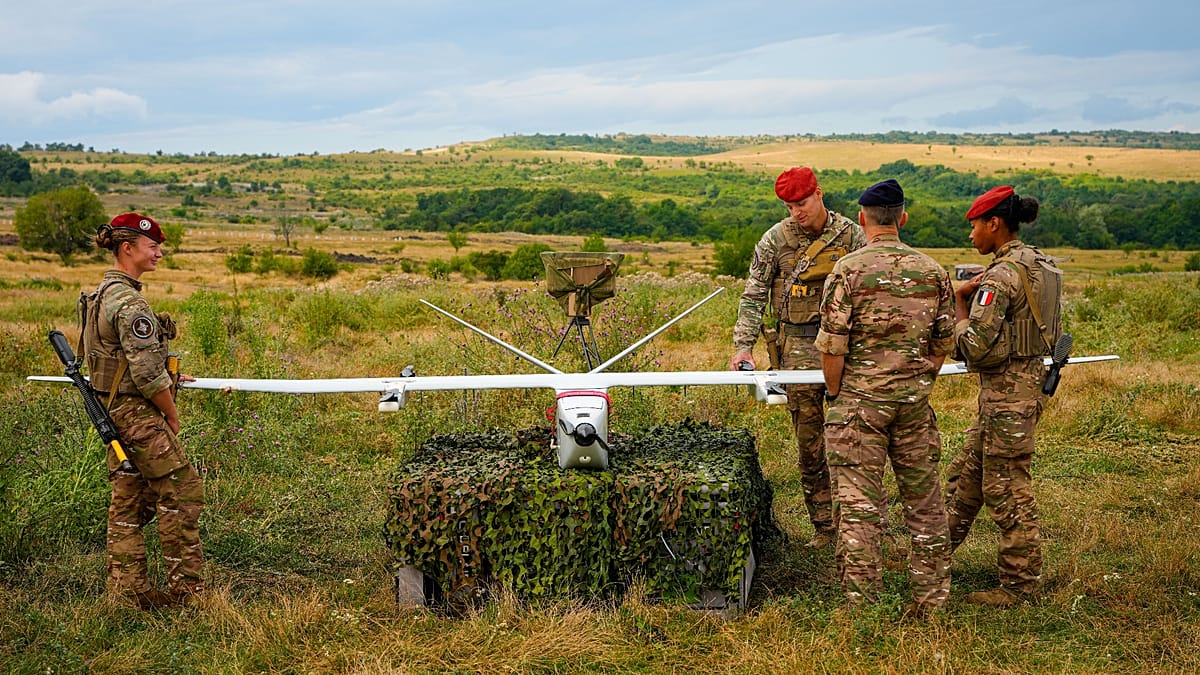
The European Commission is injecting an additional €130 million into drone technology as part of a wider effort to reinforce the bloc's external borders and counter hybrid threats. The announcement came during a meeting of EU justice and home affairs ministers in Luxembourg, their first in-person discussions on migration and border controls since the Ceuta crisis this summer.
Magnus Brunner, the European Commissioner for Internal Affairs and Migration, highlighted the importance of new technologies in border protection. "Another important topic today is how we work with new technologies, drones. That is important also for border protection, but also for protecting our critical infrastructure," he said on Thursday.
The funding tops up an action plan unveiled in February, which included a €250 million call for national authorities to invest in land and maritime border surveillance. The scheme covers up to 90% of project costs, including the purchase of drones and counter-drone systems, their integration into national surveillance networks, and other technologies aimed at countering hybrid threats.
Brunner explained the decision to expand the initiative: "Due to the high demand actually and the excellent quality of many proposals in the member states, we will be topping up the initiative with another 130 million." He also referenced a recent visit to a counter-drone centre in Munich, noting the progress being made across the Union.
Brussels has separately allocated €170 million to Frontex and national authorities under the Border Management and Visa Instrument for uncrewed surveillance equipment. With the latest top-up, total EU investment in new border-surveillance technology now exceeds €500 million, reflecting a growing emphasis on security.
Member states back asylum suspension proposal
Meanwhile, Greece has proposed temporarily suspending the right to apply for asylum during emergencies involving mass arrivals of irregular migrants. The idea has gained support from several member states, including Poland, Germany, Austria, and Denmark.
The push for enhanced border surveillance comes amid broader debates about migration and security across the continent. Recent incidents, such as drone activity near Danish airspace, have underscored the need for robust counter-drone capabilities.
European defence and security experts have also pointed to the lessons from Ukraine, where drones have become a central tool in modern conflict. The Tallinn expo showcasing counter-drone tech highlighted the rapid evolution of these systems, which are now being adapted for border surveillance.
The Commission's move signals a strategic shift towards technology-driven border management, with drones expected to play an increasingly prominent role in monitoring the EU's external frontiers. As Brunner noted, the progress made by national authorities across the Union is evident, and the additional funding will accelerate these efforts.
Critics, however, have raised concerns about the implications for privacy and fundamental rights. The use of drones for surveillance, they argue, must be balanced with safeguards to prevent misuse. The Commission has stressed that all projects will comply with EU data protection and human rights standards.
With the new funding, the EU is positioning itself at the forefront of border security innovation, while also navigating the complex political landscape of migration policy. The coming months will show how these technologies are deployed and whether they deliver the promised security benefits.