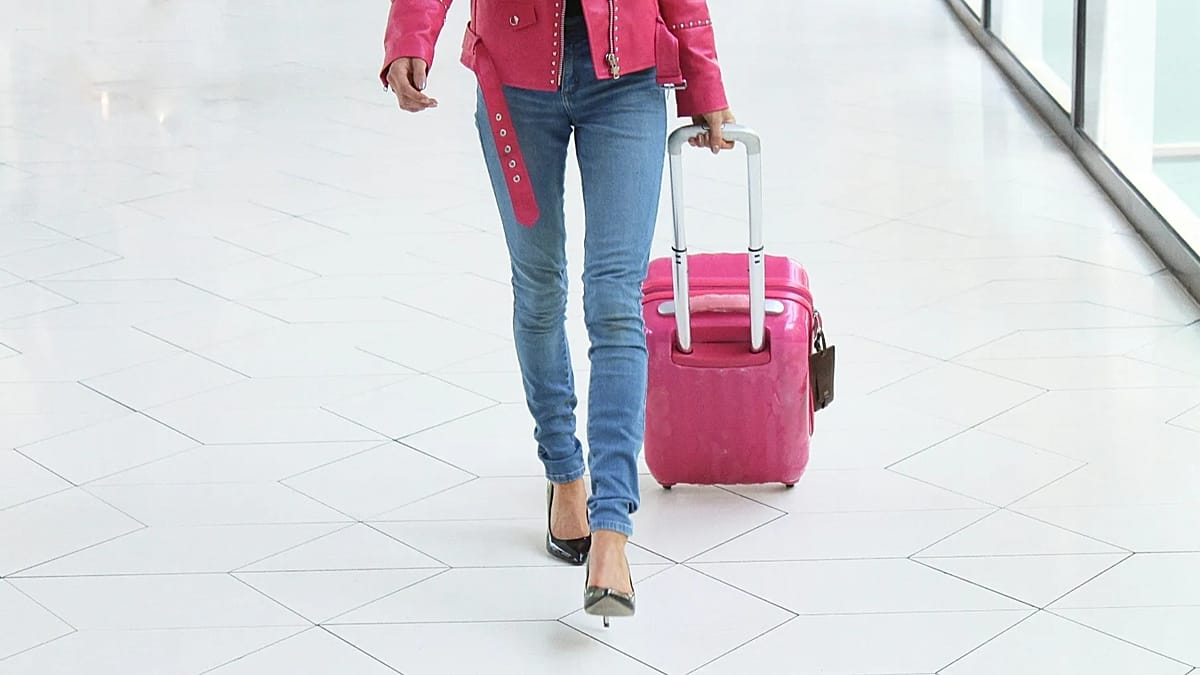
Flying within the European Union is set to become simpler and cheaper for passengers, thanks to a long-awaited overhaul of air passenger rights. Under a provisional agreement reached between the European Parliament and EU member states in June, airlines will be required to include two pieces of hand luggage in every standard ticket – at no extra cost.
The new rules, which represent the first major update to EU aviation legislation since 2004, are designed to end the patchwork of baggage fees that have frustrated travellers for years. For passengers, the key change is straightforward: a standard fare will have to cover both a small personal item and a larger cabin bag.
What exactly will passengers get?
According to the European Parliament, each traveller will be entitled to one personal item – such as a handbag, laptop case, or small backpack – that must fit under the seat in front. In addition, they will be allowed one larger cabin bag weighing up to 7kg, with combined dimensions (length, width, and height) not exceeding 100cm.
The Parliament has stressed that these items must be carried “without additional fee”, effectively banning the common practice of charging for overhead-locker space. Airlines will still be permitted to offer cheaper fares to passengers who choose to travel without any hand luggage, though the exact pricing structure remains to be clarified.
The changes are part of a broader revision of EU passenger rights, which also covers delays, cancellations, and compensation. The aim is to create a more transparent and consumer-friendly environment for air travel across the continent.
When will the new rules take effect?
The earliest possible start date is October 2027, though the legislation still needs to complete the remaining steps of the EU’s legislative process. That includes formal approval by both the Parliament and the Council, followed by a transition period for airlines to adapt their booking systems and pricing models.
Once in force, the rules will apply to all flights departing from EU airports, as well as flights arriving from outside the bloc, as long as the operating carrier is based in the EU. This means that a flight from Paris to Berlin, or from Rome to Lisbon, will automatically include the two-bag allowance.
Why UK passengers are left out
For British travellers, the news is less encouraging. Since Brexit, the UK is no longer part of the EU’s legal framework, and the new rules will not apply to flights departing from UK airports. easyJet UK, one of the country’s largest carriers, has confirmed that passengers on outbound journeys will not benefit from the free hand luggage allowance, according to a report by consumer group Which?.
The airline said the rules will apply to UK passengers “only on return flights from EU countries”. This means a traveller flying from London Heathrow to Madrid will still have to pay for a cabin bag, while the return leg from Madrid to London will include it free of charge.
The same applies to all UK-based airlines, including British Airways and Jet2. For passengers flying from other non-EU countries, such as Switzerland or Norway, the situation will depend on their bilateral agreements with the EU.
What does this mean for the wider European travel market?
The new rules are likely to intensify competition among airlines, particularly low-cost carriers that have built their business models around ancillary fees. While some budget airlines may respond by raising base fares, the overall effect should be greater transparency for consumers.
The changes also highlight the growing divergence between the EU and the UK on consumer protections. As Brussels moves to strengthen passenger rights, London has chosen a different path, leaving British travellers at a disadvantage on short-haul routes.
For now, passengers flying within the EU can look forward to a simpler, fairer system – but they will need to wait until 2027 to see it in action.