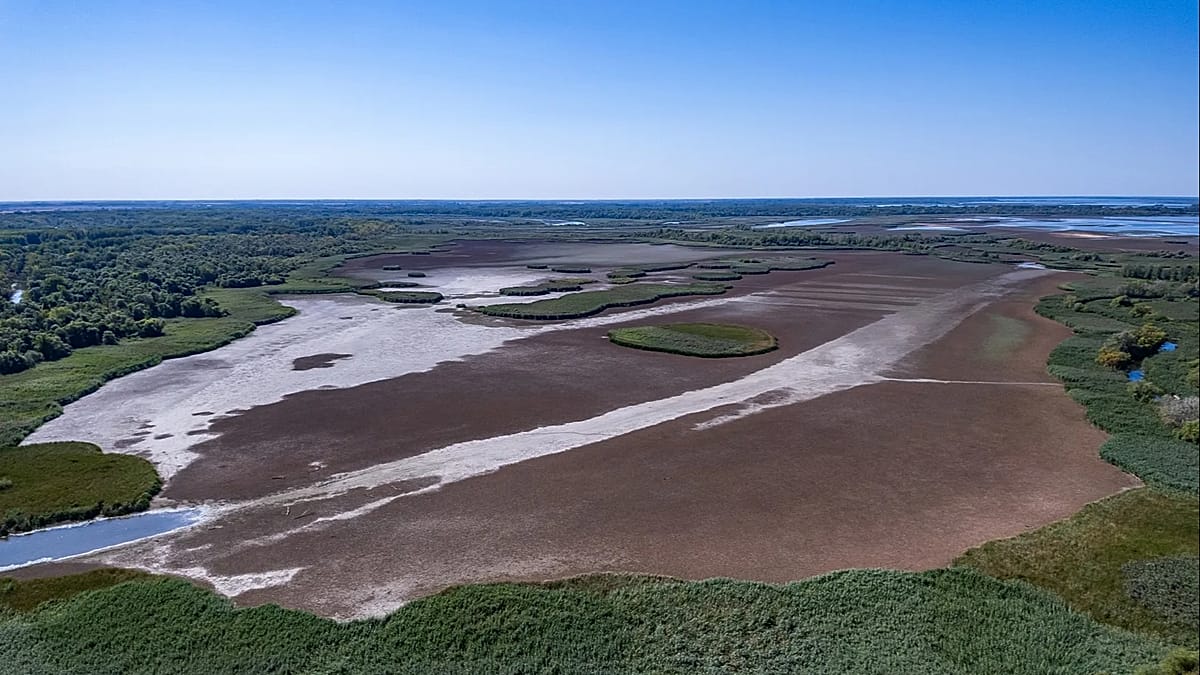
After a summer marked by record heat, wildfires and drought across the continent, environmental researchers are pressing EU governments to finalise their nature restoration plans before the 1 September deadline. The appeal comes as a new analysis identifies a €65 billion annual gap in funding for restoring ecosystems, raising doubts about whether the bloc can meet its biodiversity targets.
The European Commission has mandated that all 27 member states submit draft national restoration plans by the end of August. These plans are the operational backbone of the Nature Restoration Regulation, which aims to rehabilitate degraded habitats, from peatlands and forests to rivers and coastal zones.
The urgency is underscored by recent climate extremes. In Spain and France, wildfires consumed thousands of hectares, while Hungary and Romania were forced to reduce output at nuclear power plants because the Danube fell to record lows. Such events illustrate how degraded ecosystems amplify the impacts of a warming climate.
Restoration as climate defence
Researchers from Biodiversa+, a European partnership supporting biodiversity research, argue that healthy ecosystems are not merely a conservation concern but a critical form of climate resilience. Restored wetlands can buffer floods, forests can moderate drought and fire risk, and intact soils improve water retention.
"Nature restoration is one of the most cost-effective investments we can make in adapting to climate change," said Rainer Sodtke, co-chair of Biodiversa+. "The science is clear and the tools are available. Member states must now translate their commitments into concrete action."
The group also recommends using nature-based solutions in urban areas to manage stormwater and reduce flooding, and integrating climate-risk assessments into restoration projects to ensure they remain effective as conditions evolve.
However, fewer than one in ten national restoration policies currently address potential health or social consequences, and private investment remains limited. Biodiversa+ notes that 72% of non-financial corporations and nearly 75% of euro-area bank loans are tied to sectors with high or moderate dependence on nature. "Engaging the private sector in restoration is not just philanthropy, but an economic necessity," the group stated.
EU lawmaker Jutta Paulus (Greens/EFA, Germany) called the plans "critical" for the upcoming Multiannual Financial Framework negotiations, which will set the bloc's budget from 2028. "Securing funding is key to the law's success," she said. "Member states must act quickly to meet the targets and safeguard both food security and climate resilience."
Her colleague Terry Reintke (Greens/EFA, Germany) warned that missing the deadline would have consequences beyond regulatory failure. "If we miss the deadline for nature restoration, we are not just failing a regulation, we are fuelling the next heatwaves and floods," she told Euronews.
Most EU countries have either submitted their plans or are on track to do so, though the Commission has not specified which ones remain outstanding. Final plans are due in 2027, with the first revision not until 2032, meaning decisions made now will shape the continent's environmental trajectory for decades.
Meanwhile, the Commission's proposal for the 2028-2034 budget has raised concerns. It suggests phasing out the LIFE programme, the EU's flagship environmental fund, and folding nature restoration into a broader Competitiveness Fund. Spain warned environment ministers in June that LIFE could lose impact if absorbed into larger funding structures, and Madrid also noted that proposed biodiversity allocations may fall below the current €5.4 billion for 2021-2027.
As Europe emerges from a summer of climate shocks, the restoration plans are more than paperwork. They are a test of whether the EU can turn policy into resilience. The coming weeks will show whether member states are ready to meet that challenge.