The European Commission's proposal to overhaul the EU's Emissions Trading System (ETS), unveiled on 17 July, has reignited a fierce debate that pits climate ambition against industrial survival. The ETS, a cap-and-trade mechanism that has been the bloc's flagship climate tool since 2005, is now at the centre of one of the most consequential policy battles in Brussels.
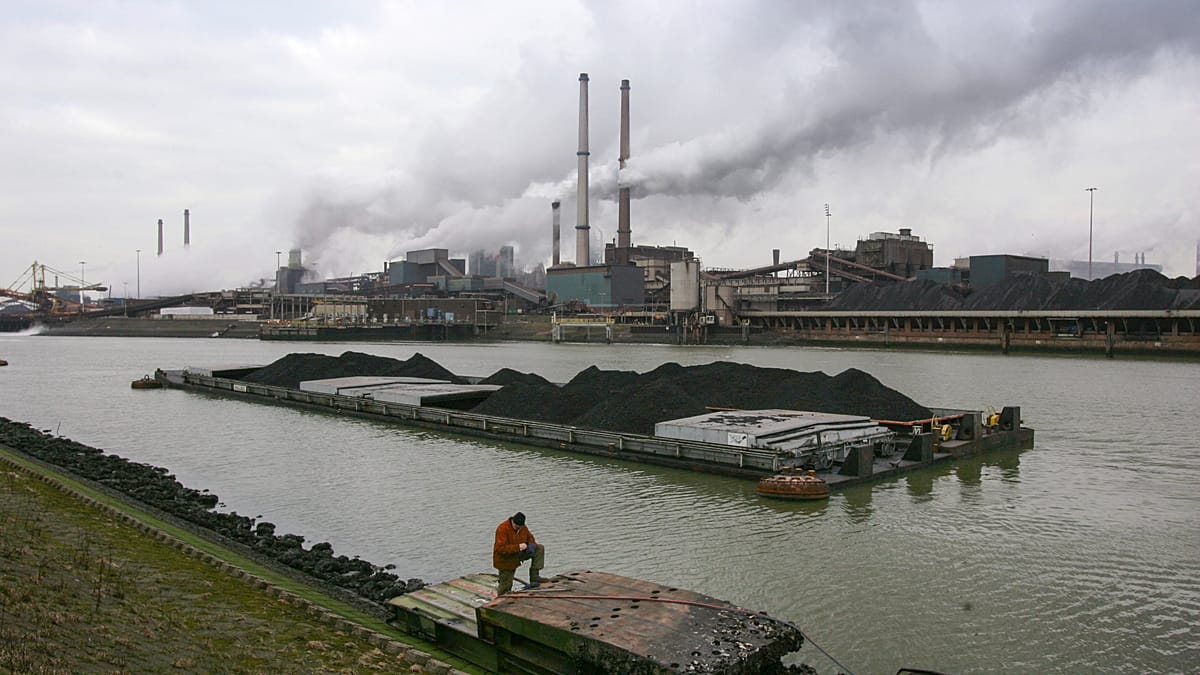
At its core, the ETS requires around 10,000 installations in heavy industry—steel, cement, chemicals, oil refining, paper, glass, ceramics, and aluminium—to surrender an allowance for every tonne of CO2 they emit. These allowances are bought at auction, and the total number is reduced each year, creating a shrinking cap that pushes emissions down. The system also covers aviation within the European Economic Area, and since 2024, shipping companies calling at EU ports have been gradually brought into the fold.
The Commission's latest revision is designed to align the ETS with the EU's newly adopted 2040 climate target of cutting net emissions by 90% compared to 1990 levels. That means extending the system beyond its current horizon, which was set to phase out free allowances by 2039. The proposal would keep some free allocations for industry, but with conditions, to prevent so-called carbon leakage—the risk that factories relocate to jurisdictions with laxer environmental rules.
"Predictability and stability are essential for investment decisions," a Commission official said. "The ETS must evolve to meet the 2040 goal while keeping European industry competitive."
Who pays and who benefits?
Since its inception, the ETS has generated over €265 billion in auction revenues. In 2025 alone, more than €43 billion flowed into national treasuries, with about €24 billion going directly to member states. But not all of that money has been spent on green projects. Many finance ministries have used the income to plug budget gaps, a practice the Commission now wants to curb.
The new proposal would require member states to earmark at least 50% of ETS revenues for industrial decarbonisation. That could be a hard sell in capitals like Rome, Warsaw, or Prague, where the funds have become a convenient source of general revenue.
The political fault lines are clear. Italy has openly called for scrapping the ETS, backed by Austria, the Czech Republic, Slovakia, Hungary, and Poland—countries that remain heavily reliant on fossil fuels. They argue that carbon costs are pushing up electricity prices, making European factories uncompetitive against Chinese and American rivals, especially after the loss of cheap Russian gas.
On the other side, Portugal, Spain, Denmark, and Finland—nations with abundant renewable energy—are lobbying to keep the system robust. They point to the billions in revenue that can be channelled into clean tech and the energy transition. Interestingly, some heavy-industry players that have already invested in green technologies also support a stronger ETS, fearing that scrapping it would undermine their investments and create regulatory uncertainty.
The controversy is not just about the environment; it's about who bears the cost of the transition. As global markets waver and energy prices remain volatile, the ETS revision will have ripple effects across the continent's economy.
The Commission's proposal is now heading to the European Parliament and the Council, where negotiations are expected to be tough. The outcome will determine not only the pace of Europe's green transition but also the future of its industrial base. As the debate heats up, one thing is certain: the ETS is no longer a technical footnote—it's a political battleground.