The global apparel industry's greenhouse gas emissions climbed 6.3% in 2024, according to a new assessment from the Apparel Impact Institute, undercutting the European Union's efforts to make fashion more sustainable. The rise, driven largely by increased fibre consumption—especially polyester—pushes the sector further from the EU's goal of cutting emissions 45% by 2030 from 2019 levels.
The findings pose a political challenge for Brussels, which has made textiles a testing ground for its broader shift from a linear economy—make, sell, throw away—to a circular one. But with roughly 80% to 90% of the EU's fashion footprint occurring outside Europe, according to the European Environment Agency, the bloc's sustainability laws are designed to penalise outsourced pollution through mechanisms like extended producer responsibility and import restrictions.
Waste policy alone won't solve the climate problem
Each year, the EU generates about 12.6 million tonnes of textile waste. To tackle this, Brussels has introduced a package of measures aimed at changing how clothes are designed, sold, and discarded, including making fashion companies financially responsible for the waste they create. However, the industry's rising emissions suggest that waste policy alone will not address the climate impact.
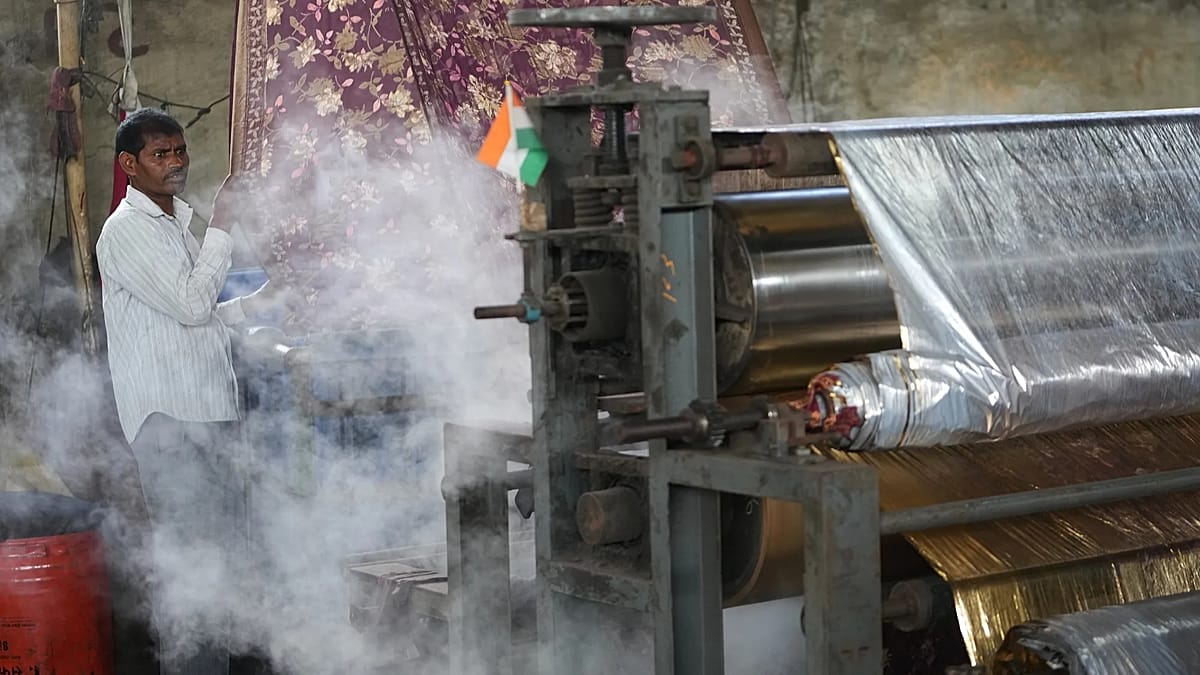
According to the Apparel Impact Institute, textile processing accounts for about 51% of apparel emissions, followed by raw-material production at 26%. This puts the spotlight on factories producing fabrics and fibres, many of which are outside the EU. The bloc can regulate what is sold on its single market, but most emissions associated with European consumers' clothes occur in global supply chains, creating a clash between EU industrial and climate policy.
China remains the top textile exporter to the EU, with over €26.5 billion in apparel—roughly one-third of all textile and clothing products sold in Europe. Bangladesh ranks second, followed by Turkey, India, Pakistan, Vietnam, and Morocco. These countries often lack the financing to invest in energy efficiency and renewable power, while clean electricity and alternatives to coal can be unavailable or too expensive.
European policymakers are under pressure to decarbonise supply chains while responding to industry concerns about regulation, costs, and competitiveness. The report argues that brands need to share the financial and operational burden with suppliers through longer-term purchasing commitments, project financing, and closer partnerships. It also calls for climate targets to be converted into actual factory-level investment, particularly in energy- and heat-intensive textile processing.
“This includes improving access to appropriate finance, sharing project costs and risks, providing stable and longer-term purchasing commitments and aligning commercial relationships with decarbonisation objectives,” reads the report.
Some progress is visible. Swedish retailer H&M reduced the number of supplier factories using on-site coal boilers from 118 in 2022 to just 10 by the end of 2025. Industrial electrification is also emerging, with heat pumps being deployed for laundry, dyeing, and drying. Lenzing, a producer of wood-based cellulosic fibres, and power company VERBUND have commissioned a 14 MW power-to-heat facility in Austria that uses renewable electricity to provide industrial heat.
Yet under business-as-usual assumptions, apparel emissions could reach 1.277 gigatonnes in 2030, compared with the 489 million tonnes needed to stay on a 1.5°C-compatible trajectory under the Paris Agreement. The EU's circular fashion rules, while ambitious, may prove insufficient without addressing the growth in material volumes that can outpace efficiency gains.
As the bloc tightens its levy on ultra-fast fashion, the industry's rising emissions highlight the need for a more holistic approach. The challenge is not just about waste management but about transforming the entire supply chain—a task that requires cooperation between brands, suppliers, and governments across the globe.