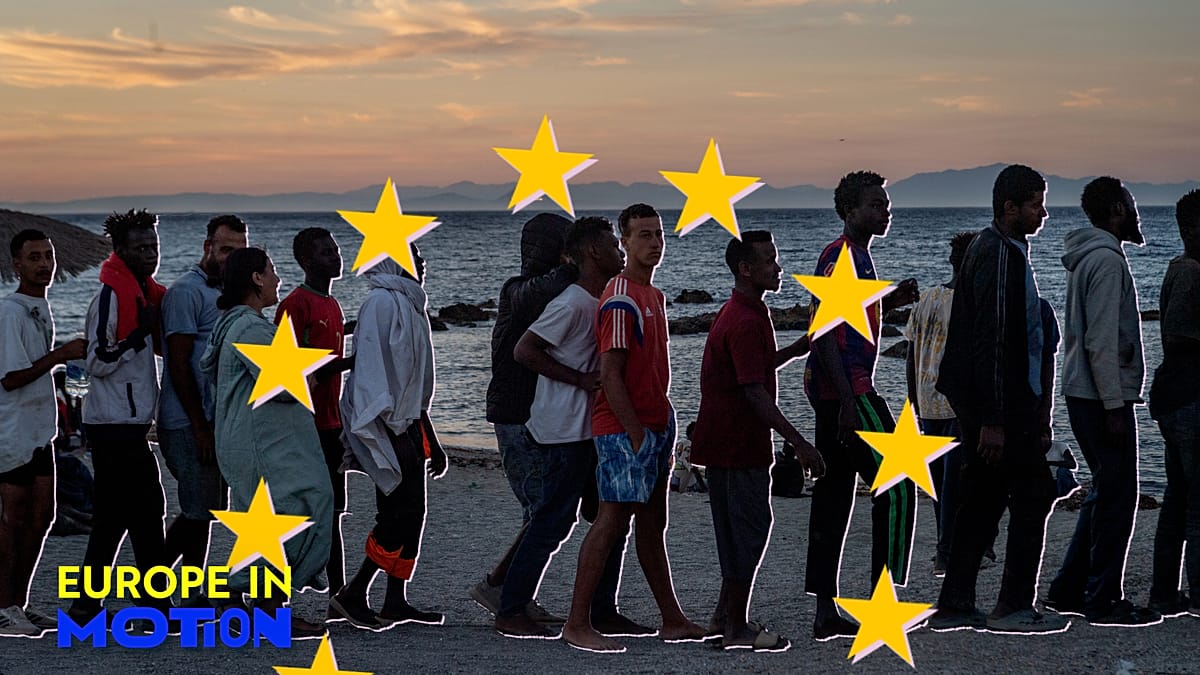
Migration has once again moved to the top of Europe's political agenda after the surge of migrants into the Spanish enclave of Ceuta, where around 80,000 people crossed from Morocco in just 48 hours at the end of July. The episode, which left thousands of minors unprotected, has reignited a continent-wide debate about solidarity, border control, and the credibility of asylum claims.
According to the UN Refugee Agency (UNHCR), the global number of refugees fell by 3% in 2025 compared with the end of 2024. Yet public interest in the issue has not waned: Google searches on the topic have risen by 150% over the past five years. A new Ipsos survey, Global Attitudes Towards Refugees 2026, offers a detailed snapshot of how EU citizens view those fleeing war and persecution.
Strong support, but with caveats
Overall, support for offering refuge remains robust. In Sweden, the Netherlands, and Spain, nearly eight in ten respondents agree that people should be able to seek asylum to escape war or persecution. At the other end of the spectrum, Hungary and Poland show the least support among EU member states, with only 54% in each country holding that view.
However, support is often conditional. More than half of respondents in Hungary, Belgium, and Germany say their country should close its borders to refugees entirely and accept none at this time. This sentiment is particularly striking in Germany, a country that has taken in over a million asylum seekers since 2015.
Attitudes are not static. In France, support for accepting refugees has climbed to 68%, up from 43% in 2019. This shift suggests that public opinion can evolve, influenced by political leadership and media coverage.
Doubts about genuine need
One of the survey's most revealing findings is the widespread skepticism about whether people claiming refugee status are truly in need. Around 54% of German respondents believe many claimants are not genuine, pointing to factors such as the ability to pay smugglers or owning smartphones. In the Netherlands, 46% argue that genuine refugees would seek asylum in the first safe country they reach, rather than traveling further.
In Germany and Ireland, more than six in ten respondents think most refugees come for economic reasons or to take advantage of welfare services. In contrast, Swedish and Italian respondents are least likely to agree with that notion, suggesting a more trusting view of asylum seekers' motivations.
These doubts have real-world consequences. They feed into political narratives that portray refugees as a burden rather than a protection obligation, and they complicate efforts to build a common EU asylum policy. As EU experts arrive in Ceuta to assess the situation, the gap between public perception and legal reality remains a challenge for policymakers.
Who should help?
The survey also asked respondents who should bear the responsibility for assisting refugees globally. In Germany, three in ten say that governments of wealthier nations should contribute more. In other countries, the majority point to international organizations such as the United Nations and the World Bank as the primary actors.
This divergence reflects differing views on burden-sharing. While some Europeans see their own governments as having a moral duty, others prefer to delegate responsibility to multilateral bodies. The debate is not merely academic: as Spain insists on its sovereignty over Ceuta and Melilla, the EU is struggling to agree on a unified approach to migration.
The Ceuta crisis has also highlighted the vulnerability of unaccompanied minors, a group that often falls through the cracks. Thousands of minors remain unprotected, and their fate is a test of Europe's commitment to human rights.
As the EU continues to negotiate its New Pact on Migration and Asylum, these public attitudes will shape the political feasibility of any reform. The survey suggests that while Europeans are not opposed to helping refugees, they want assurances that the system is not being abused. Bridging that trust gap may be as important as any legal change.