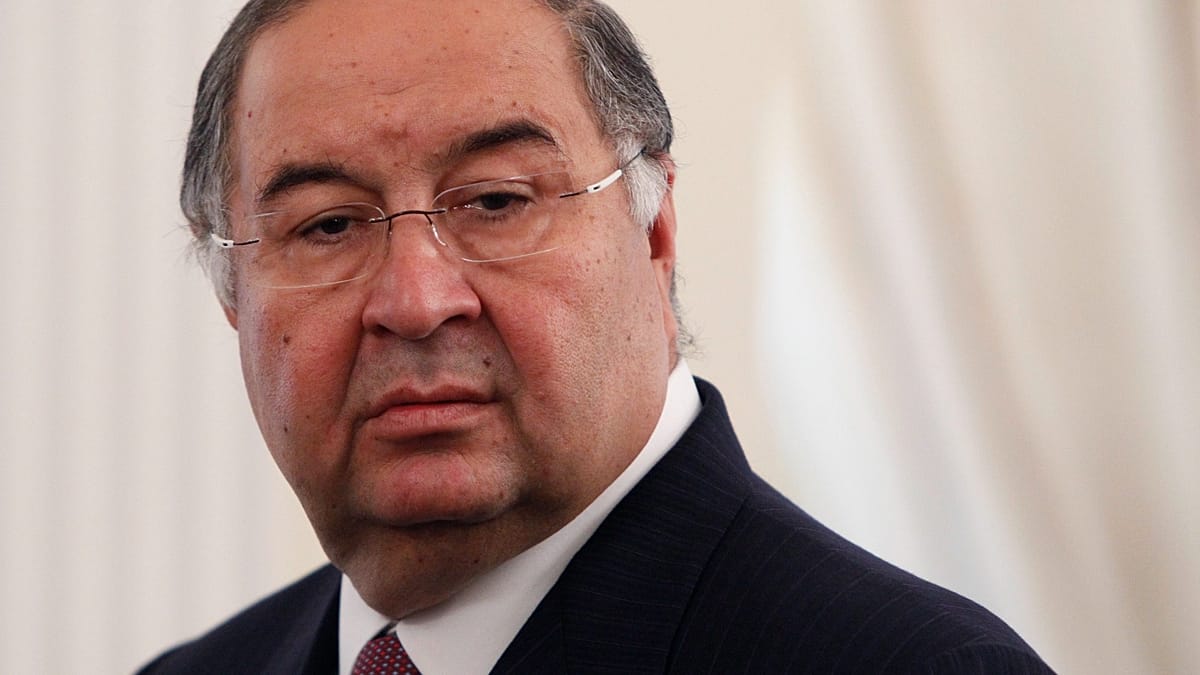
European Union ambassadors are edging toward a compromise that would renew the bloc's sanctions on Russia while accommodating a French request to remove billionaire Alisher Usmanov from the blacklist. The deal, still under negotiation, is tied to the release of two French nationals imprisoned in Azerbaijan, according to diplomats familiar with the talks.
The Irish presidency, which holds the EU Council's rotating chair, has proposed a package that would delist Usmanov and fellow Russian businessman Mikhail Fridman in exchange for an unprecedented 36-month extension of the sanctions regime. The longer renewal period is designed to prevent the recurring six-month deadlocks that have plagued the process, diplomats told Euronews.
Ambassadors met on Monday morning but failed to reach an agreement. They are scheduled to reconvene at 14:00 CET, with pressure mounting as the current sanctions mandate expires at midnight on Tuesday. Unanimity among all 27 member states is required for renewal, and the French position has brought negotiations to the brink.
“The contours of a deal are emerging,” one diplomat said, reflecting cautious optimism after days of intense consultations. Another diplomat noted that “multiple ideas are floating around,” suggesting that a solution is within reach even if politically uncomfortable for some capitals.
Usmanov's delisting and the Azerbaijan connection
Alisher Usmanov, a 73-year-old businessman with Russian and Uzbek citizenship, was sanctioned by the EU in the early days of the full-scale invasion of Ukraine over his alleged “close ties” to President Vladimir Putin and his interests in “key sectors” of the Russian economy that provide “substantial” revenue to the state. Usmanov denies the allegations.
Uzbekistan, along with other Turkic states, has lobbied for two years to have Usmanov removed from the sanctions list, appealing to EU institutions and multiple member states. His lawyers have also pushed for his delisting.
Euronews understands that Uzbek authorities and France have reached a behind-the-scenes agreement: Usmanov would be removed from the list in exchange for Azerbaijan releasing two French nationals from prison. Azerbaijani President Ilham Aliyev is expected to issue a pardon as part of the deal. The arrangement has angered several member states, which fear the precedent it could set.
France has not confirmed the swap, and French officials have declined to comment beyond referring to a national security issue without providing details. Since September 2024, Paris has warned its citizens against travelling to Azerbaijan, citing the “risk of arrest, arbitrary detention and unfair trial.” The French foreign ministry's advisory remains active, noting that “in the event of arrest or detention, respect for fundamental rights is not guaranteed.”
The potential delisting of Usmanov has drawn sharp criticism from Ukraine. Vladyslav Vlasiuk, sanctions advisor to the Ukrainian president, said on Monday: “How can anyone seriously discuss sanctions delisting while Russia's war continues?” Ukraine has formally asked allies to keep both Usmanov and Fridman on the blacklist.
The sanctions regime, which targets more than 2,600 individuals and entities accused of supporting Russia's war effort, is a cornerstone of EU policy. A failure to renew would mark a significant setback, especially as the bloc grapples with broader economic pressures. The ongoing energy shock and inflation have already strained member states, and a collapse of the sanctions framework would send a troubling signal to Kyiv and Washington.
Negotiators are exploring various mechanisms to make the delisting more palatable, including possible conditions or a phased approach. Some diplomats have suggested that the deal could be framed as a humanitarian gesture, given the release of the French prisoners, but others warn that it sets a dangerous precedent of linking sanctions relief to bilateral issues.
The earlier deadlock over Luxembourg's demands has already tested the bloc's unity, and this latest impasse underscores the fragility of the consensus-based approach. If the deal is struck, it would mark the first time a major oligarch has been removed from the EU sanctions list since the invasion began, a move that could have ripple effects across the continent.
As the clock ticks down, EU capitals are watching closely. The outcome will not only determine the fate of the sanctions regime but also signal how the bloc handles internal divisions in the face of external threats. For now, the contours of a deal are emerging, but the final shape remains uncertain.