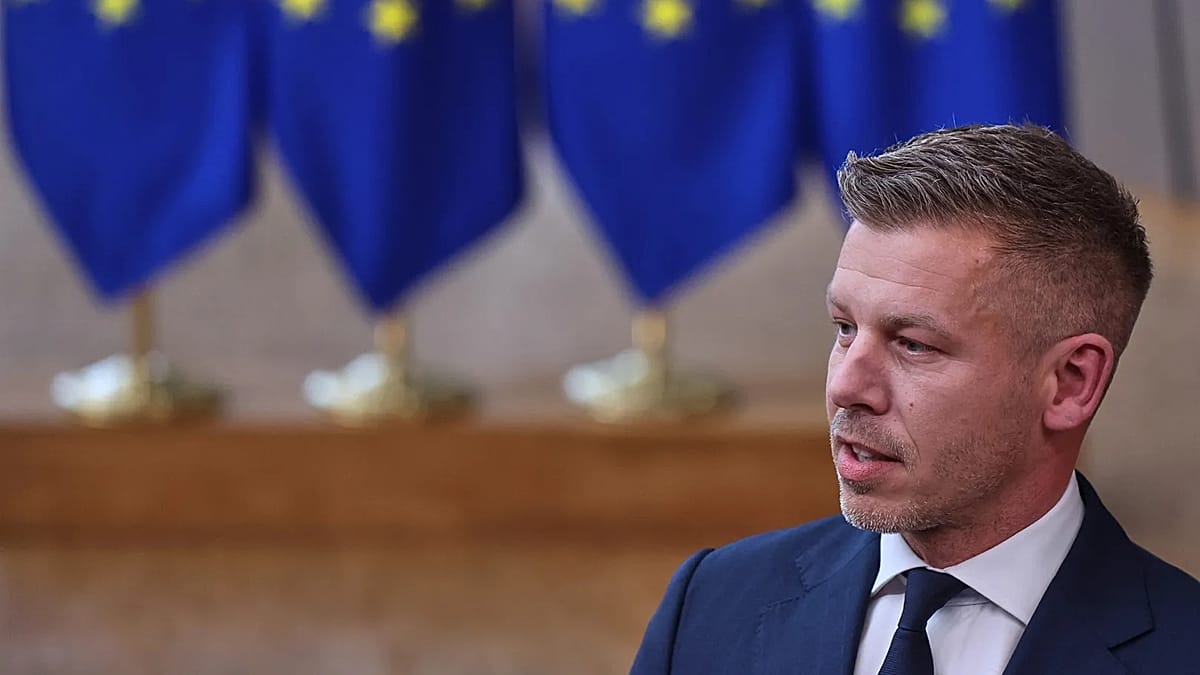
In a significant development for Hungary's new government, the European Commission has given its approval to Budapest's revised recovery plan, a document that could unlock €10 billion in EU post-pandemic funds. The decision was announced as Prime Minister Péter Magyar participated in his first European Council summit, marking a potential shift in Hungary's relationship with Brussels.
The revised plan, submitted just nine days ago after weeks of intensive negotiations with the Commission, includes investments in rail projects, energy infrastructure, and housing schemes. However, the funds are not yet guaranteed: the plan must still receive the unanimous approval of all EU member states in the Council of the European Union in July.
Super Milestones and Conditionality
To access the full €10 billion, Hungary must meet 27 so-called "super milestones" by the end of August. These conditions are designed to ensure that the funds are used effectively and in line with EU rule-of-law standards. The approval of the plan is a crucial step, but the real test will be whether Budapest can deliver on these commitments in the coming months.
In May, Magyar reached a preliminary agreement with European Commission President Ursula von der Leyen to unlock a total of €16.4 billion in funds that had been frozen during the tenure of former Prime Minister Viktor Orbán. The freeze was imposed due to concerns over corruption and the erosion of democratic norms in Hungary. The new government's willingness to engage with Brussels has been seen as a positive sign by many EU officials.
The timing of the approval is notable: it came as Magyar attended his first EU summit, where leaders discussed a range of issues including Ukraine, China trade imbalances, and the bloc's €2 trillion budget. The summit also saw Spanish Prime Minister Pedro Sánchez championing deeper European integration, a stance that contrasts with the more eurosceptic approach of Orbán's era.
Magyar's debut at the summit has been closely watched. In a related development, our analysis of Péter Magyar's EU summit debut marks a shift in Hungary's European policy, highlighting the new government's efforts to rebuild trust with EU institutions.
The approval of the recovery plan is a key part of this strategy. The funds are intended to help Hungary's economy recover from the pandemic, but they also serve as a test of the new government's commitment to reform. If Budapest fails to meet the super milestones, the funds could remain frozen, potentially straining relations with other member states.
Hungary's revised plan includes a focus on sustainable infrastructure and energy independence, aligning with broader EU priorities. The rail and energy projects are expected to improve connectivity and reduce reliance on fossil fuels, while the housing schemes aim to address affordability issues in urban areas.
The Commission's rapid approval of the plan suggests a willingness to give the new government the benefit of the doubt. However, the real challenge lies ahead. As one EU diplomat noted, "The plan is just a piece of paper. The implementation will determine whether Hungary can truly turn a new page."
The next few months will be critical. With the July Council vote and the August deadline for super milestones, all eyes will be on Budapest to see if it can deliver on its promises. For now, the approval marks a cautious step forward in Hungary's relationship with the European Union.