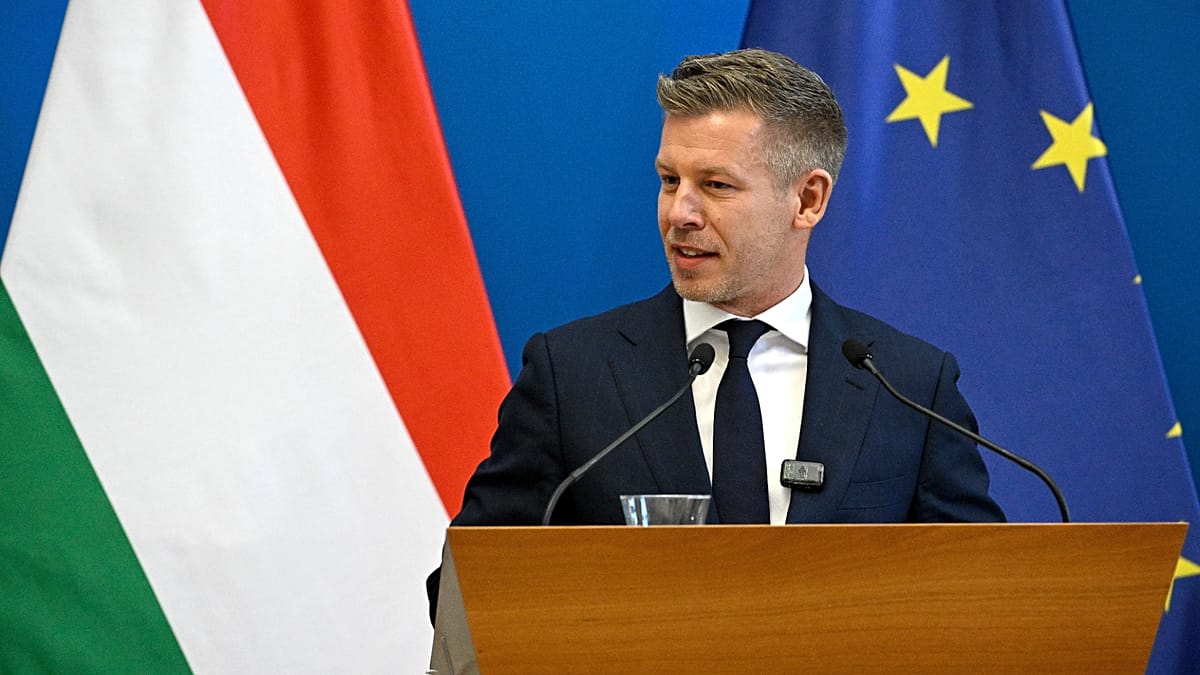
Brussels welcomed a new Hungarian prime minister this week, as Péter Magyar attended his first European Council summit, signaling a departure from the combative style of his predecessor, Viktor Orbán. The change of guard in Budapest has been met with cautious optimism among EU institutions, which have long struggled with Hungary's obstructionist tactics.
Magyar, who took office in early May after defeating Orbán's Fidesz party in April elections, promised a more constructive approach. “We will represent Hungary in a different way. We will certainly not agree on everything. I can promise one thing: I will represent only the interests of Hungary and the Hungarian people. We will not oppose or veto proposals for domestic political or party-political reasons,” he told reporters upon arrival at the summit on Thursday.
The new prime minister participated in a meeting of the European People's Party (EPP), where he held talks with Greek Prime Minister Kyriakos Mitsotakis, EPP President Manfred Weber, and European Parliament President Roberta Metsola. Metsola expressed satisfaction with the encounter, stating, “I had a great meeting with the new Hungarian prime minister, whom I know very well, and I am happy to work with him.”
A Hungarian diplomat present at the EPP gathering, speaking on condition of anonymity, noted that most leaders expressed relief at Hungary's return to the European mainstream. “Several leaders said the EU must take account of the rapid changes taking place in Hungary in its ongoing proceedings,” the diplomat told Euronews.
On the sidelines of the summit, Magyar also met his counterparts from the Visegrád Group and took part in discussions among the “Friends of Cohesion” — a coalition of member states advocating for the preservation of EU agricultural and cohesion funding in the next seven-year budget, negotiations for which are now underway in Brussels.
Reservations on Ukraine's Accession
Repairing Hungary's relationship with the EU and unlocking frozen funds were central to Magyar's election campaign. In late May, he reached a political agreement with European Commission President Ursula von der Leyen to unfreeze €16.4 billion in previously blocked funds. Shortly thereafter, Hungary lifted its veto on opening the first cluster of Ukraine's EU accession talks, reversing Orbán's longstanding opposition to Kyiv's membership bid, which he had argued would harm European security and economic interests.
However, arriving at the summit, Magyar made clear that Budapest retains reservations about the pace of the accession negotiations now formally under way. “We have reservations about opening all the other negotiating chapters after the first cluster has been opened. And we are not alone in this — there are other member states who say the same thing. We stand for a merit-based, performance-based accession process,” he said.
A diplomat told Euronews that Magyar and Ukrainian President Volodymyr Zelenskyy had a brief one-on-one conversation. A second diplomat expressed optimism that Hungary will facilitate the opening of the remaining clusters for EU accession negotiations “sooner than you think.”
The shift in Hungary's stance comes as EU leaders grapple with broader challenges, including trade imbalances with China and the bloc's next budget, as discussed in the Brussels summit.
Orbán's Parallel Summit
While Magyar engaged with mainstream European leaders, Viktor Orbán was also in Brussels, convening fellow leaders of the far-right Patriots for Europe grouping on Thursday afternoon. This was his first foreign trip since his election defeat ended 16 years in power. “The defeat of Fidesz does not change what I believe to be a historically deterministic fact — that the advance of patriots in Europe will continue. No electoral defeat will overwrite this,” Orbán told reporters at a press conference on Wednesday.
Yet the damage was palpable. His defeat cost the Patriots group one seat at the European Council, where the group is now represented solely by Czech Prime Minister Andrej Babiš. The grouping also lost its traditional Brussels venue — the House of Hungary, a city-centre building acquired and renovated by the Orbán government during Hungary's EU Council presidency in 2024. From now on, Patriots will convene at the Brussels headquarters of their Belgian affiliate, the far-right Vlaams Belang party, a much smaller venue.
Orbán used his press conference to send a public message to his successor, urging Magyar to veto the EU's next seven-year budget in order to recover approximately €2 billion that Hungary forfeited after missing deadlines for the EU Recovery Fund. “If we veto the seven-year budget at the end of the year and make it clear that they will not release that two billion, then there will be no new seven-year budget in sight. That is how they will hand it over. We expect the current Hungarian government not to leave a single penny on the table,” Orbán said.
Magyar's debut suggests a reset in Hungary's European policy, but the path ahead remains fraught with challenges, including balancing domestic expectations with EU demands and navigating the complex dynamics of Ukraine's accession process. The coming months will test whether the new prime minister can deliver on his promise of a no-drama relationship with Brussels.