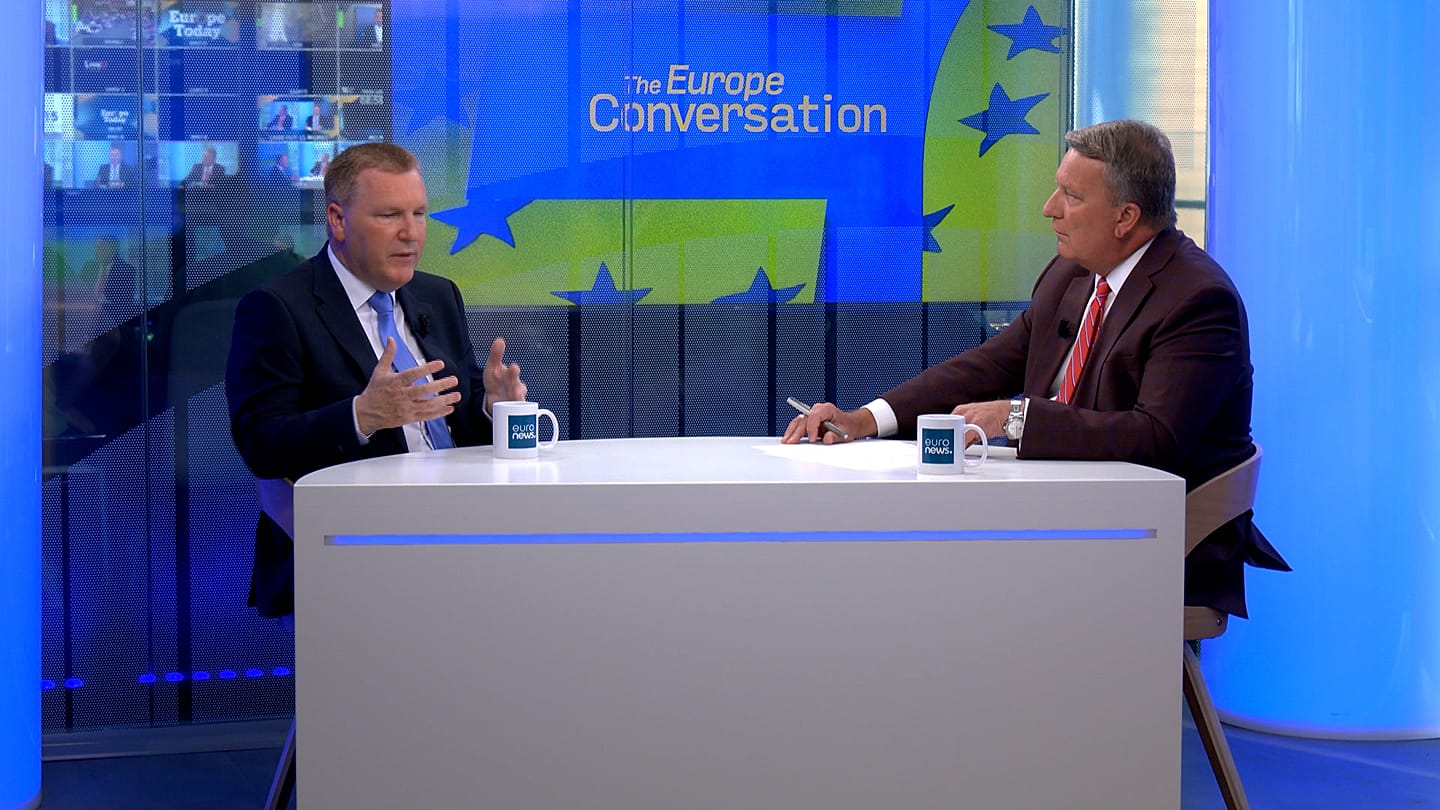
Budapest's hopes for a swift release of billions of euros in frozen EU funds have been dealt a blow by the bloc's Justice Commissioner, Michael McGrath. In a wide-ranging interview with Euronews, the Irish commissioner made clear that the onus is on Hungary to demonstrate genuine commitment to rule-of-law reforms—not for the sake of unlocking European money, but for the well-being of its own people.
Reforms Must Be Genuine, Not Transactional
McGrath, who took office in December 2024, emphasised that the European Commission's position on Hungary has not softened. "The reforms that are needed are reforms that are in the interests of the Hungarian people," he said. "They are not reforms that are being demanded by the European Union for the sake of it."
The commissioner's remarks come as Hungary's new Prime Minister, Péter Magyar, prepares to visit Brussels in an effort to reset relations with EU institutions. Magyar has signalled a more conciliatory tone than his predecessor, Viktor Orbán, but the Commission remains cautious. Magyar's trip to Brussels is widely seen as a test of whether Budapest is willing to make concrete changes.
At stake are approximately €17 billion in cohesion funds and recovery money that the EU has frozen under its conditionality mechanism, which links disbursements to respect for judicial independence, anti-corruption measures, and democratic standards. The Commission has also withheld funds under the Recovery and Resilience Facility (RRF), pending progress on 27 so-called "super milestones."
No Quick Fix for Frozen Funds
McGrath poured cold water on any expectation of a rapid thaw. "We are not at the point where we can say that the conditions have been met," he stated. He acknowledged that Hungary has taken some steps—such as establishing an independent anti-corruption authority and reforming the judicial appointments process—but insisted that implementation on the ground remains insufficient.
The commissioner's caution echoes the European Parliament's stance. In a resolution passed earlier this year, MEPs called on the Commission to maintain pressure on Budapest, warning that partial compliance should not trigger fund releases. Previous assessments of Hungary's rule-of-law progress had raised hopes, but McGrath's interview suggests that the bar remains high.
One key sticking point is the independence of Hungary's judiciary. The Orbán-era government was accused of packing courts with loyalists and undermining the Constitutional Court's authority. While Magyar has promised to reverse these measures, critics argue that the new administration has yet to produce a credible roadmap.
Broader European Context
The Hungarian case is part of a wider EU effort to enforce rule-of-law standards across the bloc. Similar procedures are underway against Poland (under the new Tusk government) and, more recently, against Slovakia over concerns about media freedom and judicial reforms. McGrath stressed that the Commission applies the same criteria to all member states. "There is zero tolerance for corruption anywhere in the European Union," he said, reiterating his earlier stance.
The commissioner also touched on the broader geopolitical implications. With Russia's war in Ukraine ongoing, the EU needs unity and trust among its members. Hungary's repeated vetoes of EU sanctions against Moscow and its delays in ratifying Sweden's NATO membership have strained relations. McGrath hinted that releasing funds without genuine reform could undermine the bloc's credibility both internally and externally.
For now, Budapest faces a choice: either deliver the structural changes that the Commission demands—and that many Hungarian civil society groups have long called for—or continue to see its EU funding frozen. As McGrath put it, "The ball is in Hungary's court."