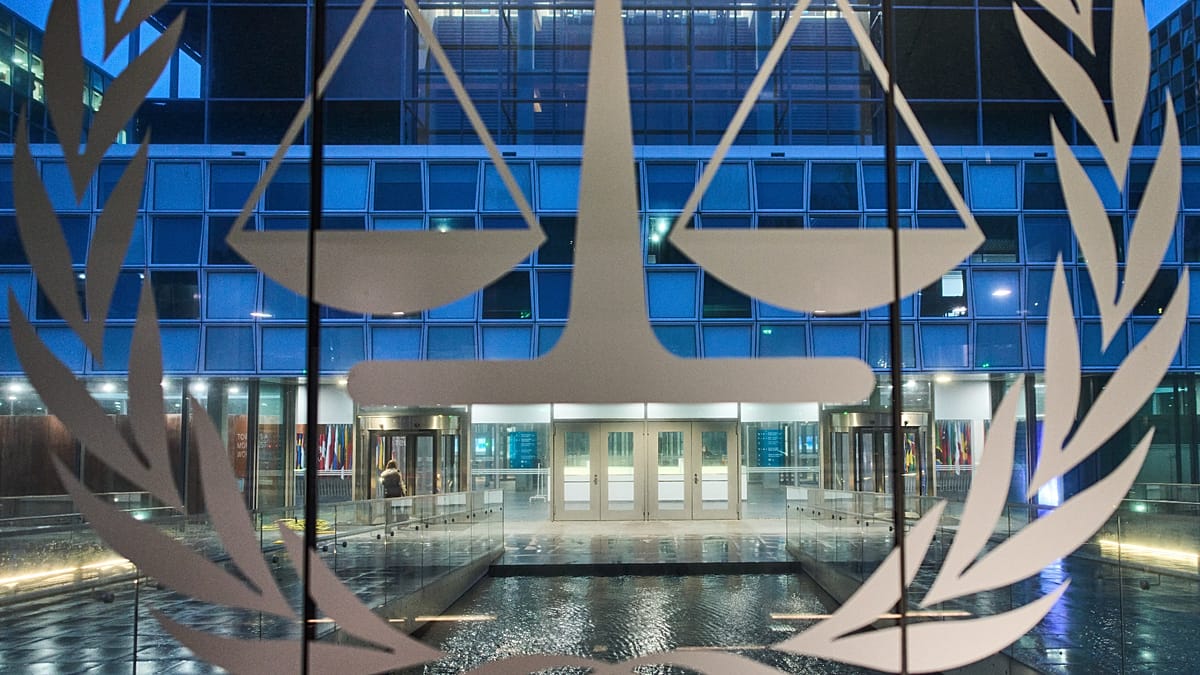
The European Union has sharply criticised the United States' decision to impose sweeping sanctions on the International Criminal Court (ICC), describing the move as "deeply regrettable" and signalling that it may take countermeasures to shield the tribunal and European companies from the fallout.
In a statement issued on Friday, the European Commission said it would "work closely with the ICC to ensure it continues to operate effectively" and expressed hope that the six-month grace period before the sanctions take full effect leaves "room for dialogue." The EU also said it was "ready to take any necessary measures to enable the court to carry out its work."
One option under consideration is the activation of a legal instrument known as the "blocking mechanism," which would prohibit European firms from complying with the US sanctions, either actively or by deliberate omission. Such a move would cushion the impact on European businesses that might otherwise be forced to sever ties with the ICC.
Dutch Foreign Minister Tom Berendsen described the mechanism as the "nuclear option," but confirmed that the Netherlands has asked Brussels to prepare it. The Netherlands hosts the ICC in The Hague, making the sanctions a direct concern for the Dutch government and the broader European legal order.
What triggered the US sanctions?
The Trump administration announced the sanctions on Friday, accusing the ICC of political bias and of unfairly targeting American and Israeli nationals over alleged war crimes. US Secretary of State Marco Rubio unveiled the measures in a video address, stating: "We will ban transactions with this rogue court, cutting off their resources and crippling its ability to operate against us. The United States and the American people are not subject to the jurisdiction of this fake ICC."
The sanctions freeze any ICC assets held in the United States and give US companies and individuals six months to end their business dealings with the court. The decision was made before the Nobel Peace Prize was awarded to South African prosecutor Navi Pillay, a former ICC judge, on the same day.
Israeli Prime Minister Benjamin Netanyahu welcomed the sanctions, which come after the ICC issued an arrest warrant for him over alleged crimes committed in Gaza. In a post on X, Netanyahu's office said: "The ICC is not a court. It is a political body that poses a mortal threat to law abiding democracies worldwide and to the very idea of national sovereignty."
ICC hits back
The ICC condemned the sanctions as an attack on the rule of law and the international legal order. In a statement, the court said: "It is an attempt to obstruct the course of justice and to prevent the court from doing what it was created to do. It is an assault on the rule of law and on the very foundations of the international legal order which strikes at the simple principle that no one stands above the law."
The ICC was established to prosecute war crimes and crimes against humanity that might otherwise go unpunished. Its mandate has become increasingly contentious, with the United States and Israel rejecting its jurisdiction, while many European governments remain steadfast supporters.
The EU's response is being closely watched in capitals from Berlin to Paris, where officials have long championed the ICC as a cornerstone of international justice. The bloc's willingness to consider the blocking mechanism signals a hardening stance against what many European leaders view as an unacceptable attempt to undermine a court that the EU has helped fund and sustain.
As the six-month window opens, the EU is expected to engage in intensive diplomacy with Washington, but the possibility of a formal countermeasure remains on the table. For now, the message from Brussels is clear: the ICC's work must continue, and Europe will not stand idly by.