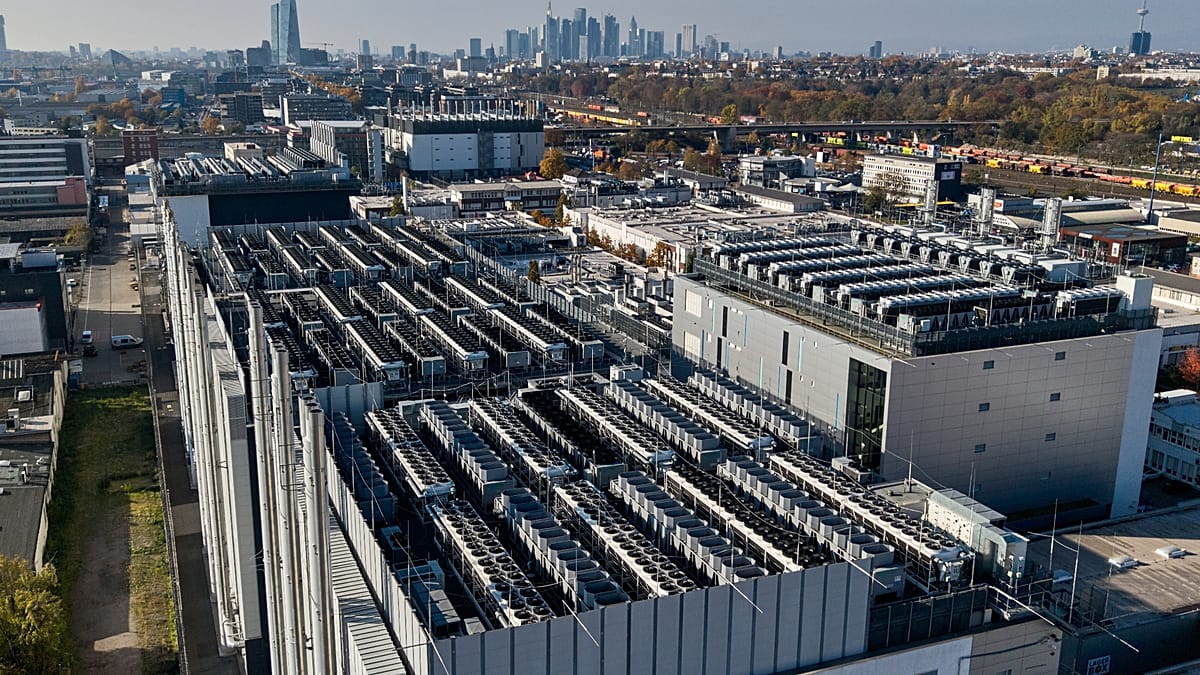
Europe is on the cusp of a digital infrastructure boom. With only about 2,269 data centres compared to over 5,000 in the United States, the EU holds just 15% of global IT power capacity, while the US commands roughly 44%. To close this gap and bolster its artificial intelligence ambitions, Brussels has set a goal to triple data centre capacity by 2030. But this rapid expansion comes with a heavy environmental price tag, forcing regulators to craft a framework that balances growth with sustainability.
Why data centres matter
Data centres are the backbone of modern life. They process contactless payments, run online banking, store electronic health records, and power everything from video conferencing to digital IDs. As Michael Winterson, Secretary General of the European Data Centre Association (EUDCA), puts it: “Every element of our lives has a digital element, and every one of those digital elements lives in a data centre. A data centre is like a little brain, and we have all these nerve endings that connect to our phones and our computers.”
Keeping these facilities within Europe is not just about speed—though proximity reduces latency. It is also a matter of sovereignty. Storing data inside the EU ensures compliance with the General Data Protection Regulation (GDPR) and shields sensitive information from foreign surveillance laws. This is why the bloc is pushing to build its own capacity rather than relying on non-European tech giants.
The environmental strain
Yet the expansion is straining local resources. In Dublin, Amsterdam, and Frankfurt, electricity grids are already at capacity, forcing utilities to impose waiting lists or outright bans on new connections. Data centres consume vast amounts of power around the clock, and upgrading high-voltage transmission lines takes years. This often pits them against housing developments and public transport electrification for limited electricity.
Water is another flashpoint. Traditional cooling systems evaporate millions of litres of fresh water daily, a concern in drought-prone regions of Southern and Western Europe. Winterson acknowledges the issue: “The water debate is real. Europe is suffering serious water scarcity. We, as an industry, are looking into ways to reduce our water consumption, and in fact, we are now measuring water consumption publicly, and we use water at a rate of 0.4 L per kilowatt of energy.”
Environmental groups also point to carbon emissions from fossil-fuel backup generators and the rapid replacement cycles of servers, which generate electronic waste. Land scarcity adds another hurdle, as developers struggle to find large plots near cities for both the warehouses and the underground corridors needed for power lines and fibre-optic cables.
An economic imperative
Despite these challenges, the EU has strategic reasons to press ahead. Homegrown AI requires massive computing power, and without local data centres, European researchers and startups risk falling behind the US and China. Winterson argues that building capacity at home could turn “Europe from a net importer of digital services today to a net exporter.”
The economic stakes are high. Industrial electricity prices in Europe are significantly higher than in the US, raising both construction and operating costs. Yet the potential payoff—in jobs, innovation, and digital sovereignty—makes the investment worthwhile.
How the EU plans to regulate
To ensure this boom does not come at the expense of the environment, the EU is introducing a range of measures. A new EU rating scheme will grade data centres on their energy efficiency, water usage, and carbon footprint. The bloc is also pushing for mandatory reporting on resource consumption, as well as incentives for using renewable energy and waste heat recovery.
Some member states are already taking the lead. Spain has mandated that 80% of data centre power must come from renewables, setting a benchmark for others. Meanwhile, the International Energy Agency warns that data centre power use could double by 2030, straining grids across the continent. This has prompted calls for better grid planning and cross-border cooperation.
The EU’s approach is not just about restrictions. It also involves funding and streamlining permits for sustainable projects. The goal is to create a regulatory environment that encourages innovation while holding operators accountable. As Winterson notes, the industry is already measuring water consumption publicly—a sign that transparency is becoming the norm.
But critics argue that more needs to be done. They want binding targets for renewable energy use, stricter limits on water consumption, and penalties for non-compliance. The debate is far from over, and the final shape of the regulations will determine whether Europe can achieve its digital ambitions without sacrificing its environmental commitments.
For now, the EU is walking a tightrope. It must accelerate construction to stay competitive in AI, yet it cannot ignore the building boom's environmental footprint. The next few years will show whether the bloc can turn its data centre expansion into a model of sustainable digital growth.