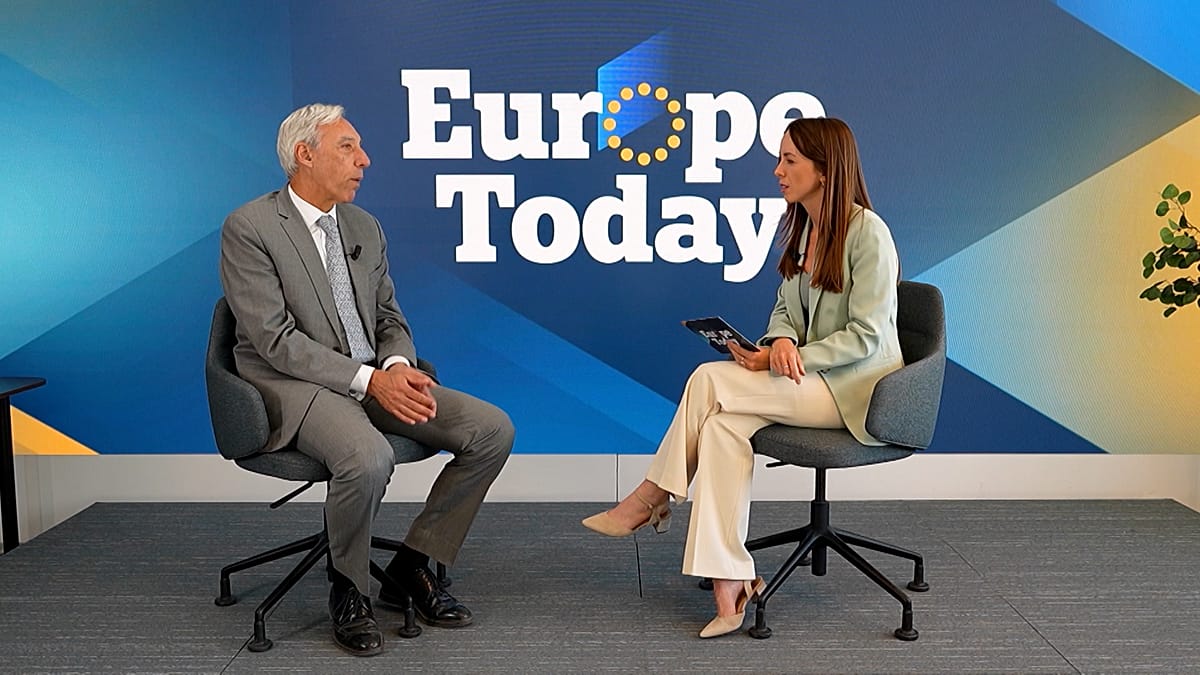
João Cravinho, the European Union’s Special Representative for the Sahel, has acknowledged that Brussels fundamentally misread the region’s dynamics, contributing to a sharp decline in European influence as Russia and China expand their presence. In an interview with Europe Today, Cravinho offered a blunt self-critique: “We have not been – and it's a mea culpa here – capable of listening and understanding properly. We have not been capable of explaining what our interests are in the region.”
Since taking up his post in November 2024, Cravinho has worked to rebuild ties with the military-led governments of Mali, Burkina Faso, and Niger. He noted that dialogue has improved: “I think there’s quite a lot of recognition. Our relations with those regimes now have bridges which did not exist some time ago.”
The admission comes days after coordinated attacks by separatist and jihadist groups in northern Mali, which saw militants seize large areas and kill the country’s defence minister. France’s Foreign Ministry has urged French nationals to leave Mali. The country’s military leader, Assimi Goïta, has vowed to “neutralise” the rebel threat, while Russia claimed its paramilitary forces—supporting the Malian army—had prevented a coup.
Cravinho described the situation as “terrible” for Malian civilians and warned that such violence “could happen again.” He stressed that the attacks demonstrate “there is no military solution to the situation in the Sahel as a whole, including Burkina Faso and Niger.”
A Reassessment of European Strategy
The envoy suggested that Mali’s leadership must now reconsider its approach. “The Malians are going to have to do some reassessments. It's theirs to do, and I can't tell them what to do, but I think that it's obvious, due to the tremendous security failures of the past week,” he said. He added pointedly: “It's very clear that there is no solution through military means alone. The Russians only offer military support. They offer nothing else.”
European credibility in the Sahel has eroded rapidly in recent years. France completed its withdrawal of troops from Mali in 2022 after a decade of military intervention, amid growing anti-Western sentiment. Russia, and to a lesser extent China and Iran, have filled the vacuum. Cravinho acknowledged that “we have no monopoly in the region,” but insisted that “no other part of the world has the same level of direct interest” in the Sahel as Europe does.
The EU launched a fresh strategy for the Sahel in December 2025, shifting its emphasis from military security to human security and socioeconomic development. Counterterrorism and curbing migration toward North Africa and the Mediterranean remain central pillars. Yet the bloc’s attention is divided. With war in Ukraine and rising instability in the Middle East, Cravinho noted that European ministers often tell him the Sahel is “geopolitically strategic, and yet they don't have time.” He added that Europe is nonetheless preparing for greater intervention.
The EU’s struggle to maintain influence in the Sahel mirrors broader challenges in its foreign policy. As the bloc seeks to unlock frozen funds for Hungary under incoming Prime Minister Péter Magyar, it must also balance relations with China—a dynamic that has seen China hawks gain influence in the European Commission. Meanwhile, the departure of a second US envoy to Ukraine in under a year highlights the volatility of international diplomacy in regions where Europe has vital interests.
Cravinho’s frank assessment underscores a painful lesson for Brussels: that listening, not lecturing, is the first step toward rebuilding trust in a region where European influence is no longer taken for granted.