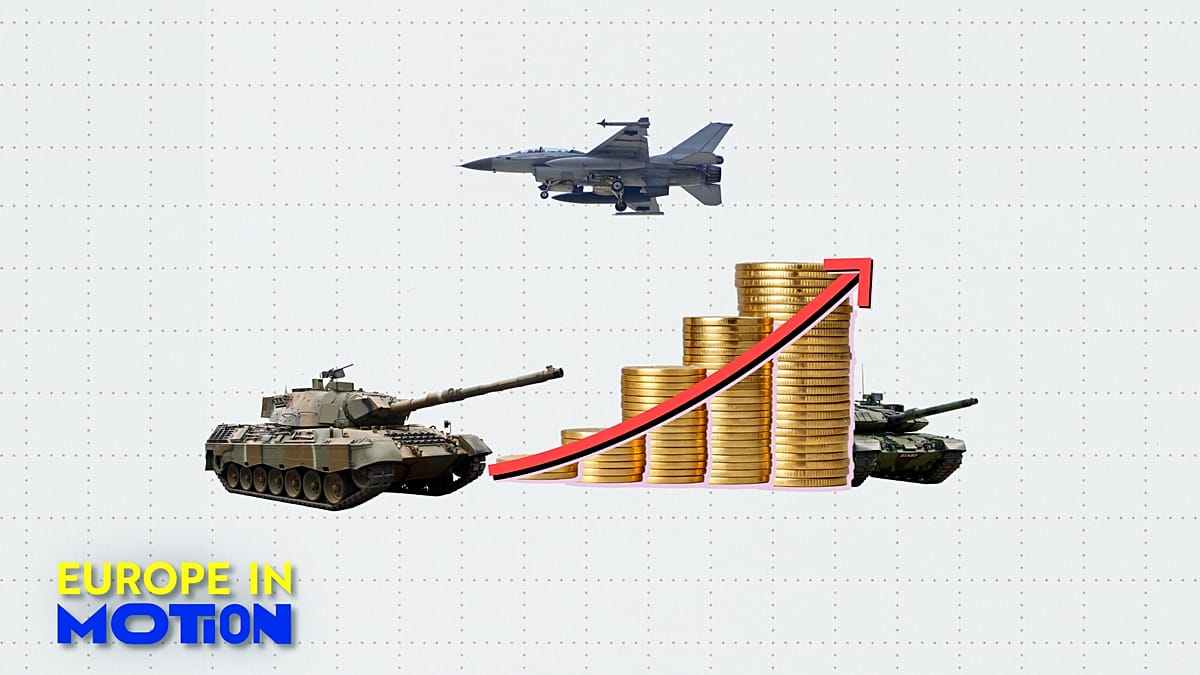
European NATO members have translated rhetoric into action, with military spending surging by 14% in 2025 to reach €739 billion, according to the Stockholm International Peace Research Institute (SIPRI). This marks the steepest annual increase since the 1950s and doubles the expenditure of a decade ago, as the continent responds to US pressure and the ongoing war in Ukraine.
The growth, which outpaces all other continents, comes after President Donald Trump repeatedly criticised NATO allies for failing to meet defence spending targets. Many member states are now moving toward the new 5% of GDP target set for 2035, a significant jump from the previous 2% benchmark.
Germany Overtakes the UK
Germany invested approximately €97 billion in defence last year, a 24% increase from 2024. This leap has propelled Berlin past London to become Europe's largest defence spender and the world's fourth-largest, trailing only the United States ($854 billion), China ($336 billion), and Russia ($190 billion).
Colonel (ret.) Ralph Thiele, Chairman of EuroDefense Germany, outlined the Bundeswehr's ambitious modernisation plans. With 153 major projects underway, Germany aims to acquire new weapon systems, modernise equipment, and strengthen infrastructure and cybersecurity. The goal, Thiele said, is to build "the strongest conventional armed force in Europe."
The Bundeswehr is reinforcing its infantry brigades with additional Puma fighting vehicles and a multibillion-euro order for 237 Future Infantryman (Infanterist der Zukunft) systems by 2029. These modular, integrated systems are designed to enhance lethality, survivability, mobility, battle command, and training for soldiers.
Air defence gaps are also being addressed, with plans to acquire up to 600 Skyranger 30 anti-aircraft gun tanks and 20 new Eurofighters. Significant investments in guided-missile systems include "major orders for Patriot, IRST and Meteor," Thiele noted. The navy will expand with up to 42 manned vessels integrated with 50 unmanned systems, including new corvettes and submarines. Strategic priorities extend to military space programmes, with investments in spy satellites, space aircraft, and laser-based defence systems.
This push aligns with broader European efforts to bolster collective defence, as discussed in debates around the European Defence Union.
Italy and Spain Ramp Up Spending
Italy increased its military budget by 20%, reaching €41 billion and placing it neck and neck with Israel. Spain, long a NATO underperformer, posted a dramatic 50% jump, bringing its spending to the alliance's former 2% of GDP target for the first time since the early 1990s.
Spending as a Share of GDP
Defence spending as a percentage of GDP offers a clearer view of national priorities. Excluding Ukraine (estimated at 40%), Poland leads Europe with 4.5% of GDP allocated to weapons and defence infrastructure. Latvia follows at 3.6%, Estonia at 3.4%, and Norway at 3.3%. At the bottom, Iceland spends virtually nothing, Ireland 0.2%, and Switzerland 0.8%.
Among the continent's five largest economies, the UK remains the biggest investor relative to GDP at 2.4%, despite a slight decrease in 2025. Germany spends 2.3%, Spain 2.1%, France 2%, and Italy 1.9%.
Several European countries are also reviving conscription to address manpower shortages, as explored in Europe's Military Conscription Revival.
Impact of the War in Ukraine
The US reported a 7.5% drop in total military expenditure, primarily because no new financial military assistance for Ukraine was approved in 2025, contrasting with $127 billion allocated over the previous three years. Washington still accounts for 33% of global defence spending among the top 15 nations, followed by China (12%) and Russia (6.6%).
"Despite ongoing economic pressures and sanctions, Russia has so far managed to increase its military expenditure year-on-year since 2022, albeit with shifting procurement and operational strategies," SIPRI noted.
The EU's mutual defence clause has also been discussed as a complement to NATO, as highlighted by Kaja Kallas.