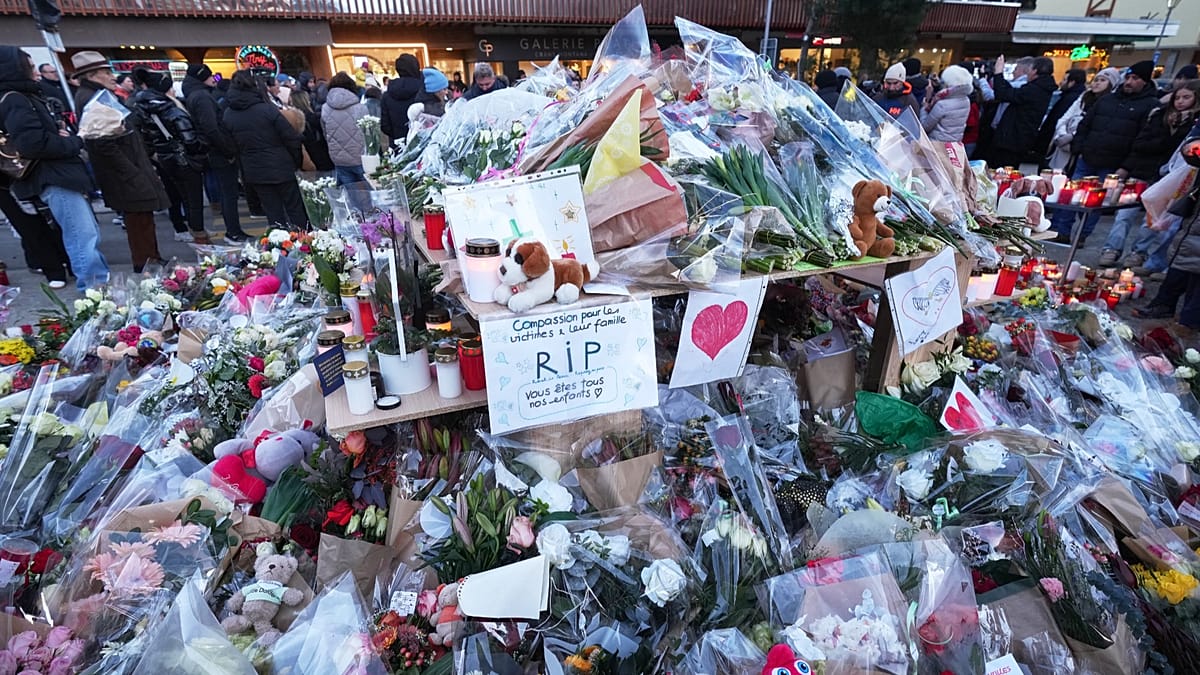
The deadly New Year's Eve fire at the Le Constellation bar in the Swiss ski resort of Crans-Montana, which killed 41 people — many of them young — has taken a diplomatic turn. Six Italian teenagers were among the dead, and at least 13 Italian nationals required hospital treatment for severe burns. Months later, families of some victims received what appeared to be medical bills from a hospital in Sion, the capital of the canton of Valais, where several victims were treated.
Italian Prime Minister Giorgia Meloni expressed shock on 21 April after reports emerged that three families had been sent documents listing treatment costs ranging from 17,000 CHF to 68,000 CHF (€17,700 to €71,000). The invoices, published by Italian news agency ANSA, included a note stating they "does not have to be paid." However, the gesture sparked a wave of criticism in Italy, with many questioning why such documents were sent at all.
Diplomatic Fallout and Legal Framework
Italy's ambassador to Switzerland, Gian Lorenzo Cornado, told Italian news agency AGI that he had spoken with the president of the canton of Valais, Mathias Reynard, who indicated the documents were issued in error. Swiss authorities later confirmed to Euronews that victims would not have to pay any medical costs, with bills covered by insurance and victim support centres. A spokesperson for the Swiss Federal Department of Home Affairs (FDHA) explained that families received copies of invoices for "information purposes" as per Swiss law, but were not required to pay.
Despite this, Domenico Radice, a lawyer representing some victims, described the documents as "inappropriate." He argued that, given what he called "alleged public responsibilities," the costs should be covered by Swiss authorities and that there was no need to send such documents.
Under European rules on social security coordination, people injured while temporarily staying in another EU or EFTA country — including Switzerland — are entitled to necessary medical treatment without being charged directly. Hospitals in the host country later seek reimbursement from the patient's home country's health system. This system is used routinely across the bloc and the wider European Economic Area.
But the question of whether Switzerland has an ethical responsibility to cover the costs remains a political debate. Meloni revisited the matter days later, citing media reports that Switzerland might seek reimbursement from Italy for what she described as "exorbitant" medical expenses, including for short hospital stays. She made clear that Rome would oppose any such request.
Ambassador Cornado told Euronews that Italy would ask Switzerland to waive the reimbursement fees, citing a reciprocal gesture: "Italy will not ask Switzerland to reimburse it for the helicopter that was sent to transport two Italian victims to a hospital in Milan, where they were treated for two months. And Italy asks Switzerland to do the same."
Italy argues that the canton of Valais bears a level of responsibility for the tragedy, alongside the owners of Le Constellation bar, where the fire broke out. The investigation into the fire continues, with 13 suspects being interrogated on charges including negligent homicide, negligent bodily harm, and negligent arson. Several current and former officials of the Valais canton have reportedly been questioned. Italy has also joined the Swiss criminal probe as a civil party, seeking accountability.
The incident highlights the complexities of cross-border healthcare cost-sharing within Europe, even as the human toll of the disaster remains raw. For the families of the victims, the invoices — even if sent in error — have reopened wounds. The diplomatic row underscores the need for clearer communication and perhaps a more compassionate approach in the aftermath of such tragedies.