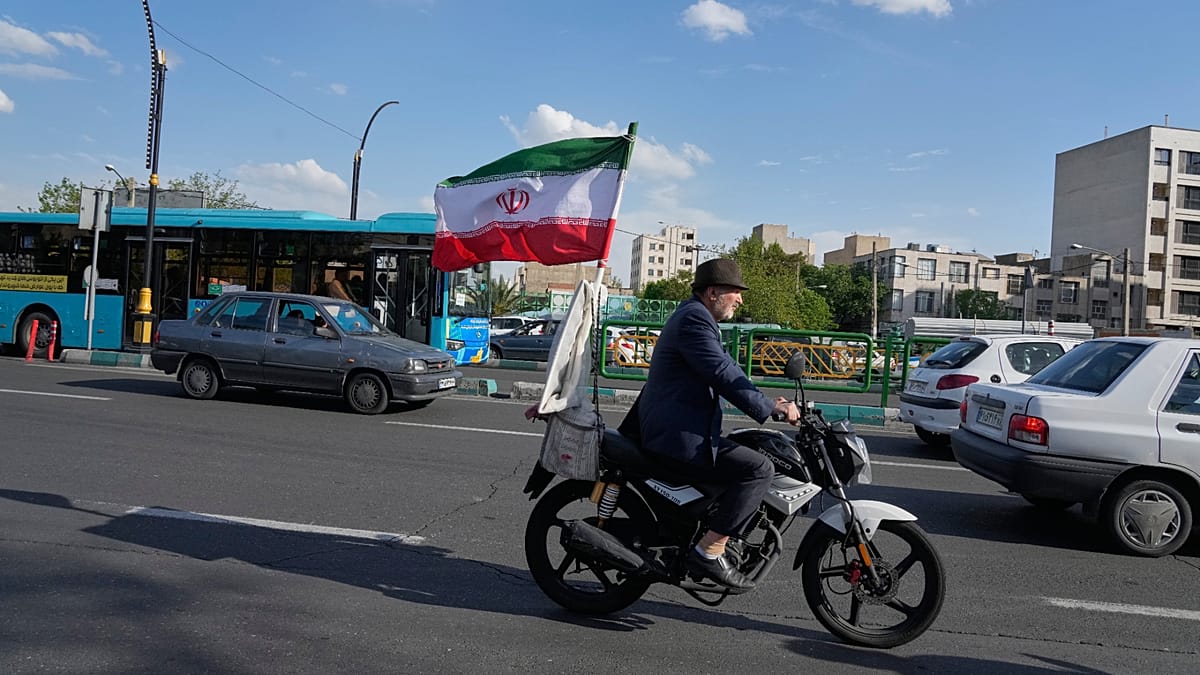
The economic dimension of the conflict between the United States and Iran has intensified sharply, with the Iranian rial plunging to a record low of 1.8 million against the US dollar on Wednesday. The collapse comes as the Trump administration has privately discussed sustaining its naval blockade of Iranian ports for months, according to White House officials.
President Donald Trump told Axios on Wednesday that he has no intention of lifting the blockade, rejecting Tehran's proposal to reopen the Strait of Hormuz in exchange for an end to the US naval siege. "The blockade is somewhat more effective than the bombing," Trump said. "They are choking like a stuffed pig. And it is going to be worse for them. They can't have a nuclear weapon."
The White House confirmed that Trump and senior officials met with oil executives this week to discuss prolonging the blockade "for months if needed" to maximize economic pressure on the Iranian regime while limiting the impact on US consumers. The euro now trades at 2.1 million rials, reflecting the accelerating devaluation.
Currency Freefall and Inflation Crisis
When the war began on 28 February, the rial had remained relatively stable as markets shut down and trading activity dried up. But as businesses have reopened, suppressed demand has collided with tighter sanctions, sending the currency into freefall over the past two days. This latest drop follows a currency shock several months ago, when the rial fell from around 1.4 million to 1.6 million per US dollar in under a week.
That initial collapse was one of the triggers for nationwide protests in January, which Iran's security forces suppressed with mass killings and arrests. The new fall could further deepen an inflation crisis already at historic levels. Iran's Statistical Centre reported last month that annual inflation reached 53.7% in Farvardin — the highest rate recorded since 1943. Point-to-point inflation stood at 73.5%, meaning purchasing power has roughly halved in under a year.
Food prices are rising sharply. According to unofficial figures published in Iranian media, the price of chicken rose 75% in the past month alone, beef and lamb by 68%, and many dairy products by as much as 50%. Imported goods priced in dollars — including medicine and raw materials — are also rising as the currency declines.
The economic warfare has global implications, particularly for European economies reliant on stable energy markets. The blockade of Iranian ports and the Strait of Hormuz threatens oil supply routes, a concern for EU member states like Germany, France, and Italy. The Trump administration's stance has also strained transatlantic relations, as seen in Trump's threat to cut US troops in Germany amid a dispute with Chancellor Merz.
Meanwhile, European banks have benefited from the volatility. Deutsche Bank, Santander, and UBS posted record profits amid the Iran conflict, as trading volumes and hedging activity surged. The crisis also underscores the fragility of the global financial system, with the rial's collapse echoing past currency crises in emerging markets.
The US naval blockade, which began after Trump cancelled talks with Iran, has effectively cut off Iran's oil exports, a key revenue source. Tehran's offer to reopen the Strait of Hormuz in exchange for lifting the blockade was dismissed by the White House. The standoff shows no signs of resolution, with the economic pressure likely to intensify in the coming months.