The Netherlands is experiencing an unexpected recruitment boom for its military reservists, driven in part by the enlistment of Queen Máxima and her eldest daughter, Princess Catharina-Amalia. The royal involvement has sparked what defence officials call the 'Amalia effect,' leading to a surge in applications that now exceeds the military's capacity to train, equip, and house new recruits.
In February, images of Queen Máxima training with a pistol at a shooting range circulated globally, lending a powerful symbolic endorsement to the reservist programme. Since then, the number of applicants has risen sharply, forcing the Ministry of Defence to accelerate its efforts to provide uniforms, weapons, and training facilities.
'We have more applications than we can handle,' said Derk Boswijk, State Secretary for Defence. 'We have a lack of training capacity, a lack of housing, you have to give them all uniforms, you have to give them weapons, you have to give them the training, you need space to train. But it's a luxury problem, because we are really working hard to fix all these issues.'
Reservist Expansion as Part of Broader Military Buildup
The Netherlands currently has around 9,000 reservists, with a target of 20,000 by 2030. This forms part of a larger government plan to increase total military personnel from 80,000 to 120,000 by 2035—a goal that enjoys broad political backing. The country never fully abolished conscription, but call-ups have been suspended since 1997, and there are no immediate plans to reintroduce them.
Reservists commit to 300 hours of service annually, including regular weekend exercises. Traditionally, they focus on securing domestic sites and are not deployed to combat missions abroad, though they can be called upon for national emergencies, such as reinforcing flood defences with sandbags.
The recruitment drive reflects a wider European trend as nations reassess their military readiness in light of Russia's war in Ukraine and shifting US commitments under President Donald Trump, who has expressed scepticism about NATO. New NATO plans emphasise mobile forces capable of rapid deployment, requiring allies to prepare for large-scale battles.
A corporal in the reserve battalion of the 10th Infantry Battalion Guard Security Corps National Reserve, speaking during a weekend exercise in Havelte, noted a shift in mindset. 'When I first joined, there was almost no risk or almost no threat... and now it's changing, so we are more aware of it,' she said. 'We are here to defend our country and to make sure to keep the threat down.'
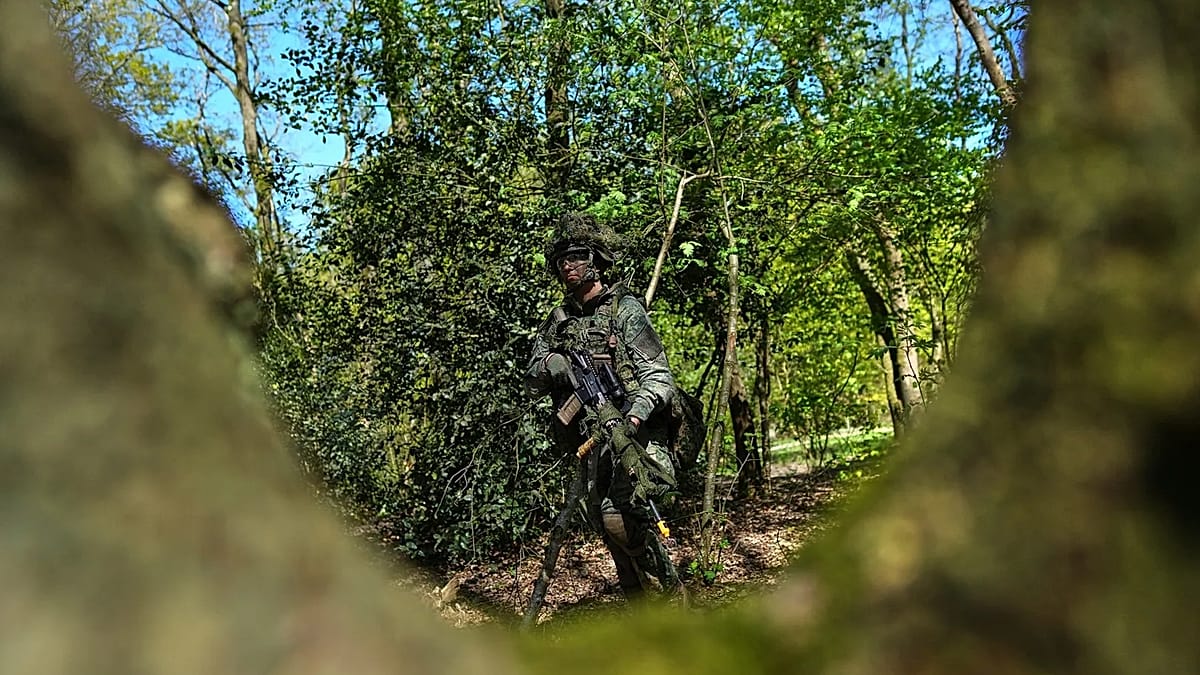
Her unit, faces daubed with camouflage and carrying Colt C7 rifles, emerged from a forest during a training exercise, scanning for threats—a scenario that EU and NATO officials now consider all too real.
Other European Nations Pursue Similar Paths
Germany is considering a government plan to improve pay and conditions for short-term recruits, offering better training and flexibility on service length, while keeping the option of limited compulsory recruitment if volunteer numbers fall short. Conscription for men was suspended in 2011.
France is launching a programme in September to recruit 3,000 volunteers aged 18–25 for a 10-month uniformed service on its mainland and overseas territories, with an ambition to reach 50,000 volunteers per year by 2035.
In northern and eastern Europe, where the perceived threat from Russia is most acute, some nations maintain conscription. Finland has a draft for all males and a voluntary system for women. Sweden reinstated a gender-neutral partial military service in 2017, using a lottery if volunteer numbers are insufficient.
The Netherlands' experience underscores a broader challenge: as European countries seek to bolster their defences, the logistics of training and equipping a larger force remain a significant hurdle. For now, Dutch officials are grappling with what they describe as a 'luxury problem'—an influx of motivated recruits that they are determined to accommodate.