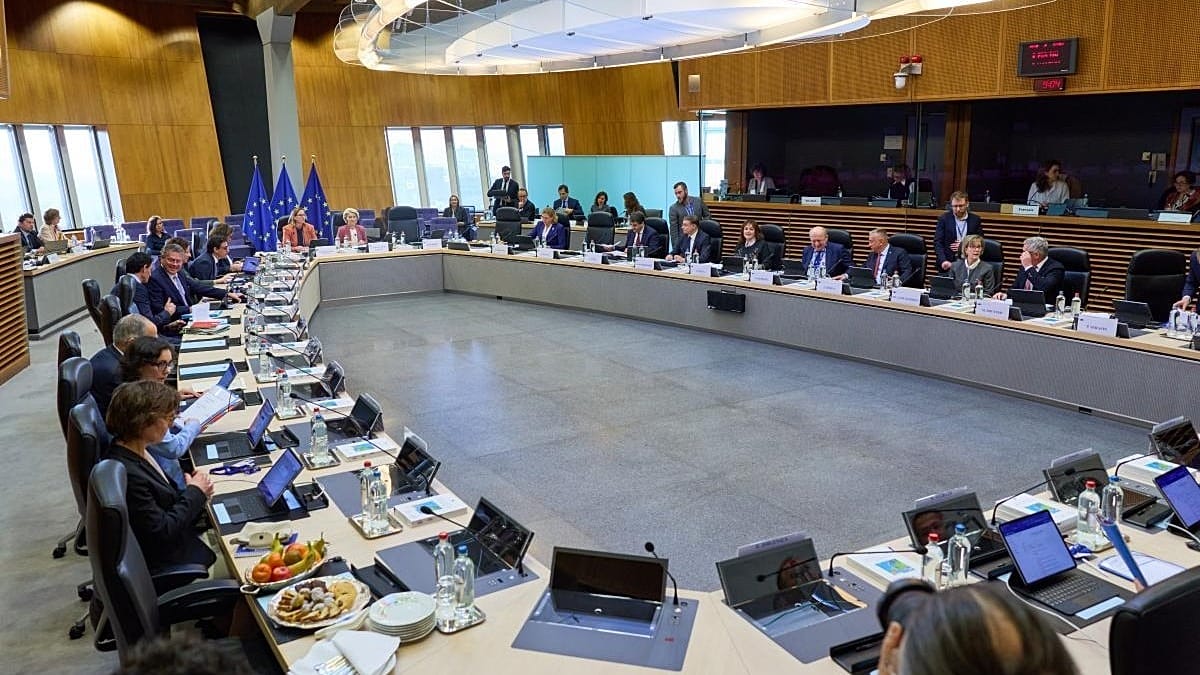
At the Annual EU Budget Conference in Brussels, top officials from the European Commission, Parliament, and European Investment Bank urged member states to approve a bold long-term budget for 2028–2034, including new sources of revenue known as own resources. The push comes as negotiations among the twenty-seven member states remain deadlocked over the size and funding of the nearly €2 trillion package.
Commissioner Serafin Challenges Frugal Camp
European Budget Commissioner Piotr Serafin used the conference to push back against the so-called frugal countries—led by Sweden, the Netherlands, and Austria—that advocate for a smaller EU budget. “We need to be mindful of the link between having a frugal budget and having a modern budget,” Serafin said. He argued that a reduced EU budget would not necessarily lower costs for taxpayers, as national budgets would have to fill the gaps, leading to duplication and inefficiency.
The debate centers on own resources: EU-wide taxes that would replace a portion of national contributions. The Commission first proposed a budget in July 2025, prioritizing economic competitiveness and defense while cutting agricultural and regional funding. Since then, member states have split into two camps: the frugals, who want to limit overall spending, and the “friends of cohesion,” who defend traditional funding for farms and regions.
With key countries—France, Italy, and Poland—heading toward elections in 2027, pressure is mounting to finalize the budget by the end of 2025. The next high-stakes discussion is scheduled for the European Council in October.
Defense Spending Takes Center Stage
European Defense Commissioner Andrius Kubilius issued a stark warning from the conference stage: “Are we serious about a potential war?” He called on member states to match Europe’s growing security needs with adequate budget resources. The Commission’s proposal reflects this urgency, with increased allocations for defense and strategic autonomy.
European Commission President Ursula von der Leyen, alongside Serafin, has repeatedly urged progress on own resources. The Commission’s initial list of potential revenue streams includes the Emissions Trading System, the Carbon Border Adjustment Mechanism, non-collected e-waste, tobacco excise duties, and a corporate tax. However, all have faced significant opposition from national governments.
The European Parliament has proposed additional sources: a gambling tax, a digital levy, and a capital gains tax on cryptocurrency assets. The Commission estimates these could yield up to €11 billion annually.
Sweden Leads Resistance
Frugal countries remain hesitant. Sweden is particularly leery, opposing any form of own resources on the grounds that it would force wealthier member states to shoulder a disproportionate burden. Diplomatic sources suggest a compromise may emerge as a package deal that balances national interests.
European Investment Bank President Nadia Calviño pushed back against the resistance. “This time, if our leaders want to be ambitious across the European budget, they will have to bite the bullet and really approve a new basket of own resources,” she said at the conference. “Own resources, I am confident, will be part of the picture so that we can ensure that our budget matches our expectations and ambitions.”
Czech MEP Danuše Nerudová, who has worked extensively on own resources, echoed the call: “We must continue to support our traditional priorities while also addressing new ones, such as competitiveness and defence.”
The outcome of the October European Council will be crucial. If member states fail to agree, the EU risks entering the next budget cycle without the financial firepower needed to address security, climate, and technological challenges. As the EU Budget Battle Takes Center Stage at Annual Conference as Ireland Assumes Council Presidency, the pressure on national leaders is only intensifying.