The European Union is preparing to absorb a fresh wave of tariffs from Washington, expected to be announced in the coming days over allegations of forced labour in global supply chains. The European Commission has made clear that its primary concern is ensuring the new duties do not breach the 15 percent ceiling agreed under the EU-US Turnberry trade deal signed in July 2025.
US Trade Representative Jamieson Greer confirmed on Tuesday that implementation of the forced labour tariffs is imminent, as the current US tariff regime expires on Friday. The White House argued in early June that insufficient action by trading partners to curb forced labour was harming American commercial interests, prompting a new investigation under Section 301 of the Trade Act of 1974.
Brussels Walks a Tightrope
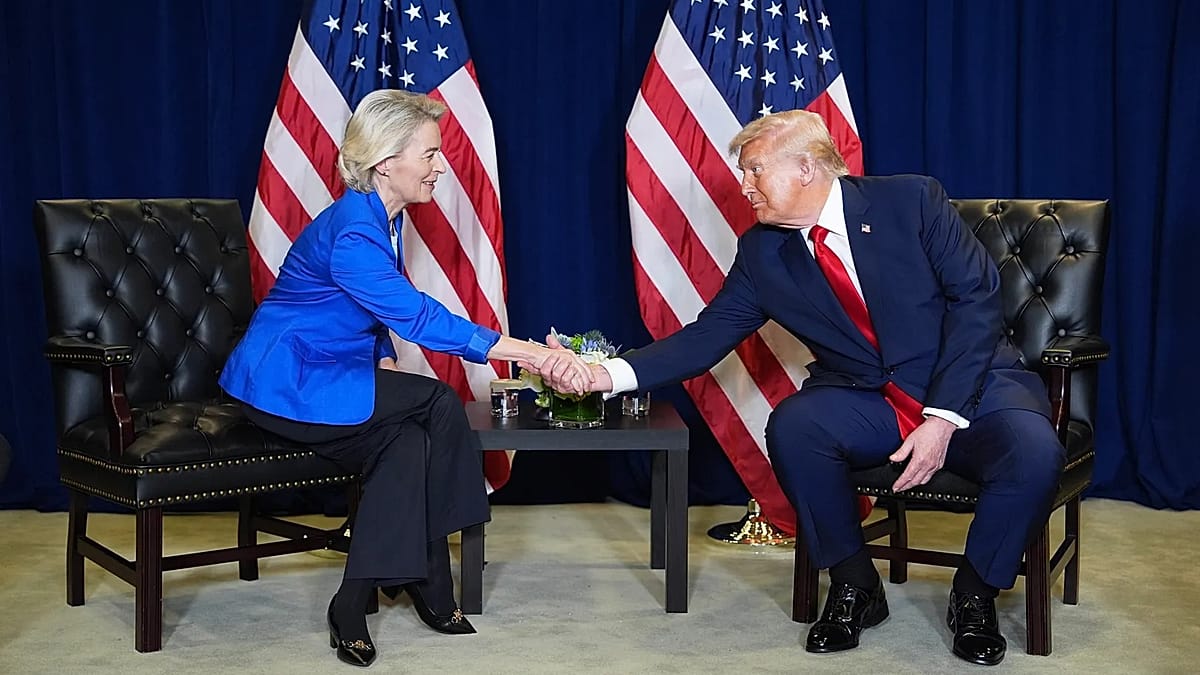
European officials are closely monitoring the level of the new tariffs. The Turnberry agreement, concluded by US President Donald Trump and Commission President Ursula von der Leyen in Scotland, caps US duties on EU goods at 15 percent. The EU currently pays average duties close to that limit, after the Trump administration imposed 10 percent global tariffs in February following a Supreme Court ruling that invalidated earlier levies.
“Of course we do not agree with the findings on forced labour, and we've made that very clear to our United States counterparts,” a senior EU official told European Pulse. “But the main objective is to make sure that the agreement is respected and that our companies can benefit from the stability and predictability that was set out there.”
The current legal basis for US tariffs does not allow them to remain in force beyond 150 days — that is, until 24 July — unless Congress approves an extension. With US midterm elections approaching, such approval is considered unlikely. The new forced labour investigation is designed to replace that regime.
“We expect to see some action soon,” Greer said on CNBC. “I can’t really specify a timeline right now — I have a responsibility to brief Congress and other stakeholders before I really reveal that kind of thing. But we do expect action soon on that front.”
The European Commission has defended its own regulations, insisting that the EU has strict rules against products made with forced labour. In early June, Olof Gill, the Commission's deputy chief spokesperson, stated that “the EU considers tariffs imposed on these grounds to be unjustified.”
The development comes as Brussels continues to seek exemptions for roughly €150 billion in exports from US tariffs, a separate but parallel negotiation. The outcome of the forced labour probe will be closely watched in capitals from Berlin to Paris, as well as in London and Bern, given the potential ripple effects on transatlantic trade.
For now, the EU appears willing to accept the new duties as long as they remain within the agreed framework — a pragmatic approach that prioritises stability over confrontation, even as the bloc disputes the underlying justification.