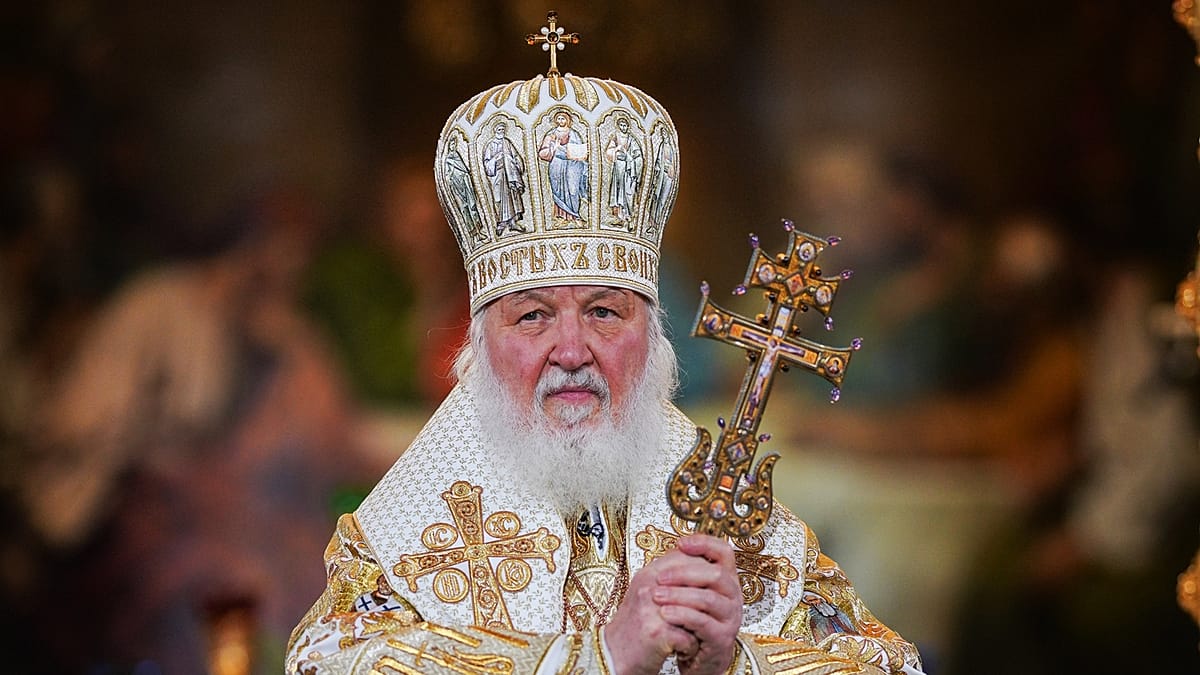
The European Union is making a renewed attempt to impose sanctions on Patriarch Kirill, the head of the Russian Orthodox Church, after Hungary blocked the measure in 2022. His name appears in the bloc's latest sanctions proposal, presented to member states on Tuesday, according to three diplomats familiar with the matter.
Brussels typically does not disclose the identities of those blacklisted until a final decision is reached. Individual sanctions would involve an asset freeze and a travel ban across the EU.
Kirill, a figure wielding both religious and political influence, has faced accusations of spreading revisionist propaganda to justify Russia's war in Ukraine. Under his leadership, the Russian Orthodox Church endorsed a document calling for the annihilation of Ukrainian independence and describing the invasion as a "Holy War."
A Contentious History
The EU first attempted to blacklist Kirill in 2022, but Hungary—then led by Prime Minister Viktor Orbán—vetoed the move, citing concerns over religious freedom. The veto sparked outrage among other member states and drew significant media attention.
The matter remained dormant until last month, when Hungary's new government under Péter Magyar indicated a willingness to proceed. EU officials seized the opportunity and added Kirill's name to the latest sanctions package.
However, Kirill's unique position as the head of the Russian Orthodox Church raises questions about whether all 27 member states will support the measure. In negotiations requiring unanimous approval, it is not uncommon for certain names to be removed to secure consensus.
The EU aims to finalize the 21st sanctions package by 15 July to avoid an automatic revision of the price cap on Russian oil. This package also targets other sectors, including efforts to close loopholes in existing measures, such as those related to alumina exports to Russia.
Kirill's inclusion reflects the EU's broader strategy to pressure individuals and entities supporting the Kremlin's war effort. The move comes amid intensified diplomatic efforts by Ukrainian President Volodymyr Zelenskyy to force Russia into peace talks.
Critics argue that sanctioning a religious leader could be seen as targeting freedom of belief, but supporters contend that Kirill's political role and his church's endorsement of the war make him a legitimate target. The Russian Orthodox Church has long been intertwined with the state, and Kirill has publicly backed President Vladimir Putin's policies.
The EU's previous sanctions packages have blacklisted hundreds of individuals and entities, including politicians, oligarchs, and military officials. The addition of Kirill would mark a significant escalation in the bloc's efforts to hold influential figures accountable.
As the 15 July deadline approaches, EU diplomats will negotiate behind closed doors to secure unanimous approval. Whether Kirill remains on the list or is removed to achieve consensus will be a key test of the bloc's resolve in maintaining a unified front against Russia.



