The European Commission is preparing a voluntary framework to accelerate the expansion of data centres across the EU, with the goal of tripling capacity within five to seven years. A leaked draft, obtained by Euronews, outlines a collaborative approach involving national governments, operators, and energy companies—but stops short of imposing mandatory sustainability requirements.
The document, titled "EU model for tripartite agreements on the sustainable integration of data centres into the energy system," describes the proposed measures as a "toolbox rather than a single integrated package that needs to be adopted as such." Member states would be free to select from options covering grid access, renewable energy, storage, flexibility, and the reuse of excess heat for district heating. Crucially, the draft states that "participation in local tripartite agreements is voluntary" and that commitments "do not create any legal obligations for the signatory parties."
Why data centres matter
Data centres are the backbone of the digital economy, powering everything from cloud services to artificial intelligence, which demands immense computing capacity. According to the leaked draft, the EU's installed capacity stood at approximately 12 gigawatts in 2025, compared with 52 gigawatts in the United States and 28 gigawatts in China, based on International Energy Agency estimates.
The Commission views expanding this capacity as essential for digital sovereignty. However, Italian MEP Benedetta Scuderi (Greens/EFA) questioned whether such growth would genuinely strengthen Europe's autonomy, particularly if much of the new infrastructure is built by American tech giants. "We know that we have very scarce resources for building data centres: energy, water and land," she said. "We need to be sure that what we build is what we need, that we don't go beyond that, that these data centres are not oversized or unnecessarily large-scale, and that they support our digital sovereignty. We cannot sell out our natural resources to American Big Tech because that would be of no benefit to us."
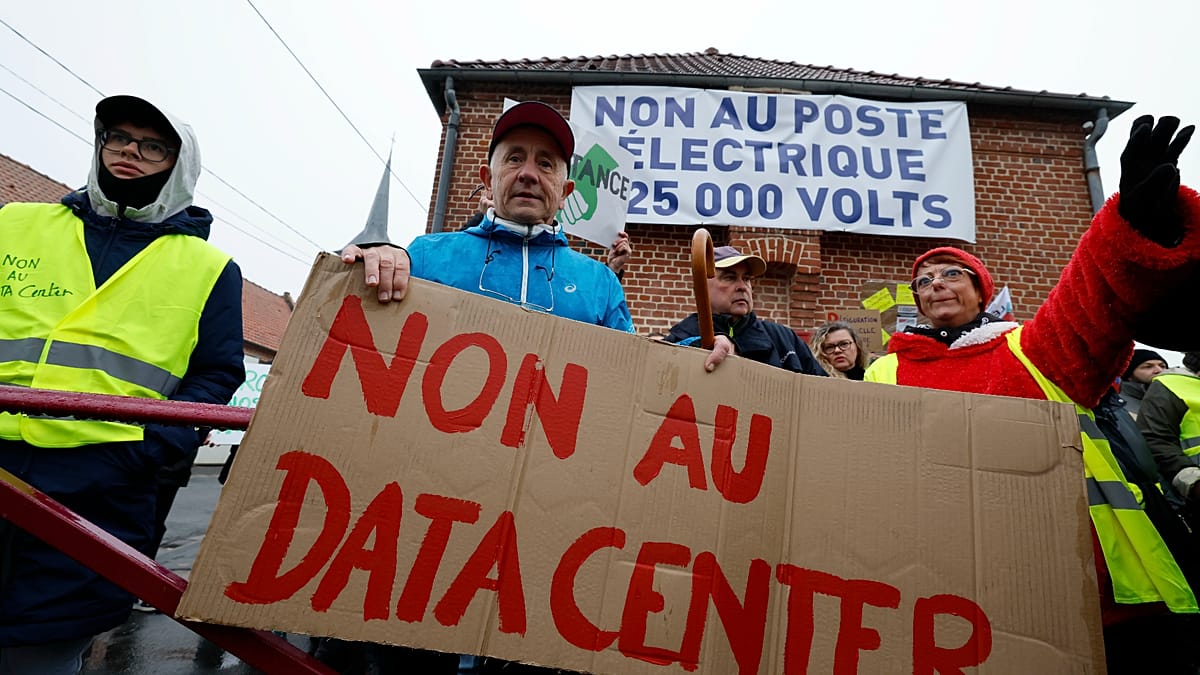
Data centres already consume around 2.5% of EU electricity, and their concentration near major hubs is straining local grids. This adds pressure to the bloc's energy transition, which also requires electricity for transport, buildings, and industrial decarbonisation.
Voluntary measures and their limits
The draft proposes a common EU sustainability rating scheme to make environmental performance comparable across facilities. It also encourages member states to designate areas for new data centres based on grid capacity and environmental factors, and to coordinate electricity, heating, and digital infrastructure planning. Operators would be urged to share demand forecasts, consider flexible connection agreements, and invest in clean power through long-term power purchase agreements.
Waste heat recovery is another focus, with the draft encouraging operators to publish heat-reuse plans and explore connections to district heating networks. Governments could support this through infrastructure planning and heat purchase agreements for public buildings.
Yet the framework does not require every new facility to finance additional renewable energy to cover its consumption. Instead, it suggests that member states "explore options for pursuing the time matching of clean energy supply" with data centre demand, leaving the details to national authorities.
Scuderi warned of the consequences of adding huge electricity demand to already strained systems. "If you put a huge increase in electricity demand on an already pressured electricity system, what will happen is that we will have a collapse of the system," she said. "We will have a huge increase in prices, and we will not know where to get electricity for things that are strategic, such as industry and households."
The Commission is also developing separate rules and standards for data centre sustainability, raising questions about how they will align with the voluntary approach. The draft's emphasis on flexibility reflects the difficulty of balancing rapid digital growth with the EU's climate goals, a tension that will likely shape the upcoming EU rating scheme for data centres and the broader push to green energy-intensive industries.
As the EU seeks to bolster its digital sovereignty, the question remains whether voluntary measures can deliver the necessary infrastructure without undermining environmental commitments. The leaked draft suggests a cautious path, but critics argue that without binding targets, the bloc risks falling short on both fronts.