The European Commission has declared that Ukraine's financial and military requirements for 2026 are fully met, closing a contentious chapter that began when Kyiv alerted allies to a $27 billion (€23.92 billion) hole in its defence budget. The announcement, made on Thursday, came after weeks of technical negotiations between Brussels and the Ukrainian government.
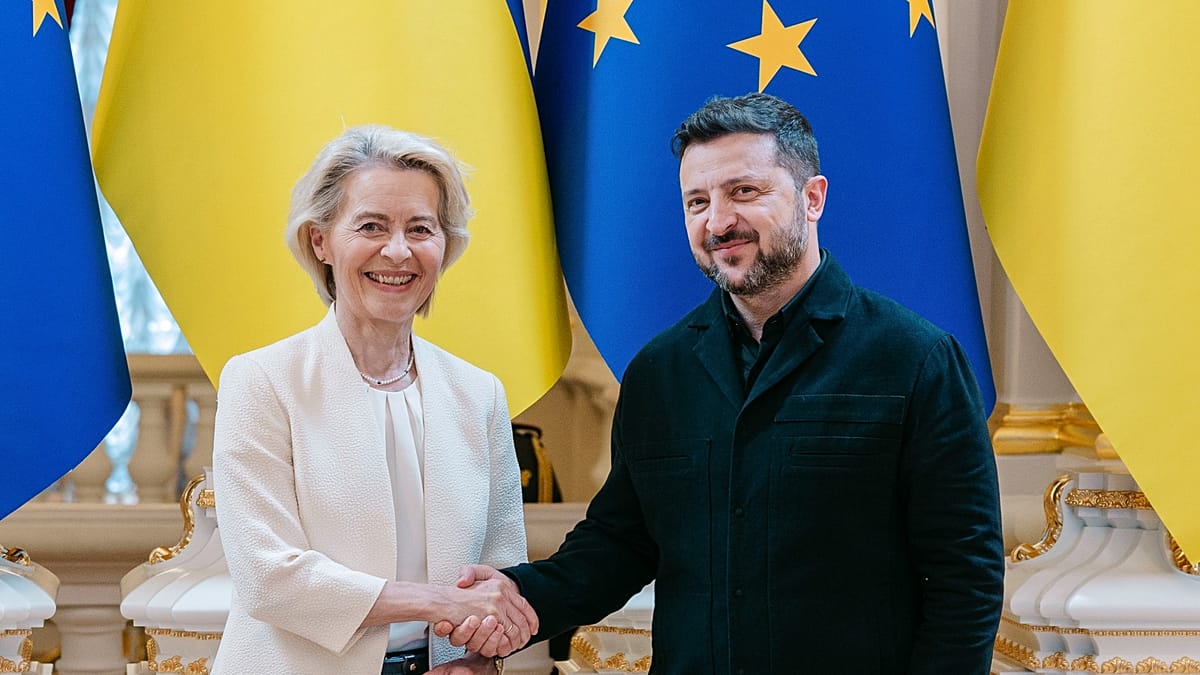
In a statement shared by Commission President Ursula von der Leyen, the executive said: "Today, through coordinated joint efforts, we have identified the means to cover Ukraine's budget and defence needs for 2026." It added that the steps needed to ensure timely disbursement had been reconfirmed.
The dispute dates back to late August, when Ukrainian President Volodymyr Zelenskyy publicly appealed for allies to fill the gap, warning that essential weapons deliveries were at risk. "We need more money, much more," he said at the time.
EU officials were initially reluctant to validate the $27 billion figure, which they considered unexpected and poorly explained. Kyiv later revised the estimate down to $20 billion, but the discrepancy fuelled friction. Instead of endorsing the numbers, Brussels pointed to the €90 billion loan under the G7-led initiative, which allocates €45 billion for 2026 and another €45 billion for 2027. Zelenskyy had suggested bringing part of next year's tranche forward, but the request was never formalised.
As talks dragged on, the Commission pressed Kyiv to accelerate reforms required to unlock the loan and the earlier Ukraine Facility. EU officials expressed frustration with the slow pace of legislative change. Still, they insisted that roughly $37 billion in available funds from these instruments would be enough to keep Ukraine on a stable footing through the end of the year.
Focus shifts to 2027
With 2026 now settled, attention has turned to the far more daunting challenge of 2027. Ukrainian Finance Minister Sergii Marchenko warned earlier this week that the country faces a staggering $78 billion shortfall next year: $32.6 billion for the budget and $45 billion for military spending. The Commission has not yet verified these figures.
Marchenko highlighted the devastating impact of Russia's relentless attacks on critical infrastructure, including data centres, telecoms, power grids, factories and railways. Combined with the ongoing blockade in the Black Sea, these strikes threaten to paralyse the Ukrainian economy and cripple tax collection. The grain blockade alone could add $60 billion to global food costs, according to the minister.
In its statement, the Commission promised to "swiftly" allocate the second €45 billion tranche of the loan, subject to established conditions. It also said Brussels and Kyiv would "begin work on identifying additional budgetary and defence needs" and urged allied nations to increase their contributions. "All sides agreed that other partners should also fulfil their financial commitments and step up their efforts in light of the significant challenges Ukraine is facing," the statement read.
Zelenskyy welcomed the outcome, praising the "good results" of the bilateral consultations covering both 2026 and 2027. The announcement comes as Ukraine continues to develop its own defence capabilities, including offering allies access to new drone interceptors, a sector where Estonia is also scaling up with lessons from the war.
Despite the resolution, the underlying fragility of Ukraine's finances remains. The country's ability to sustain its defence and maintain basic public services depends on continued Western support, and the 2027 gap looms large. The Commission's statement did not provide concrete figures for next year, but the promise to begin work early suggests that another round of intense negotiations is already on the horizon.