As the war in Ukraine enters its fifth year and hybrid threats multiply across the continent, Brussels is turning its attention to a pressing question: can Europe afford the defence boost it says it needs? And more fundamentally, who should foot the bill?
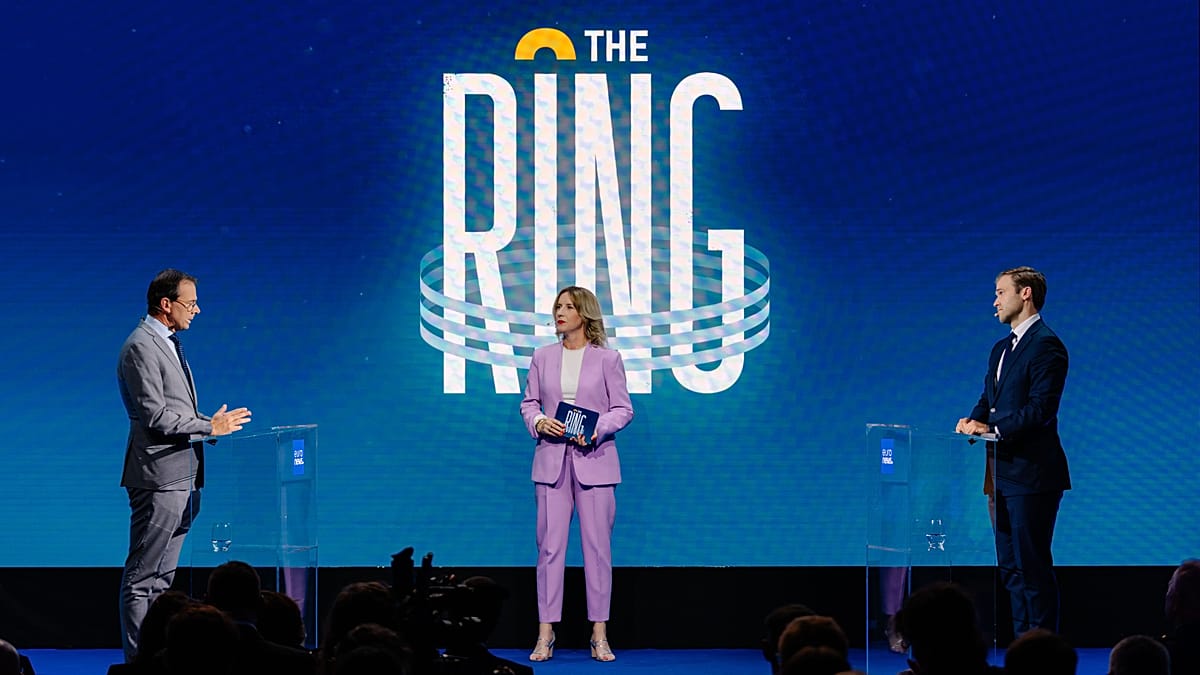
In a special live edition of The Ring, recorded at the Euronews Defence & Space Summit, Belgian centre-right MEP Wouter Beke and German social democrat Tobias Cremer went head-to-head before a live audience. The discussion ranged from national vetoes to the prospect of a European army and a proposed European Security Council, touching on the very core of the continent's strategic autonomy.
The 5% target: necessity or obsession?
One of the most contentious points was the NATO-inspired target of spending 5% of GDP on defence. Beke argued that such a figure is a necessary benchmark to galvanise political will and signal seriousness to both allies and adversaries. "If we are serious about defending our way of life, we need to put our money where our mouth is," he said, insisting that the target forces governments to make hard choices.
Cremer, however, cautioned against treating the number as a magic bullet. "The 5% figure risks becoming a misleading obsession," he warned. "What matters is not just how much we spend, but how we spend it. We need to invest in capabilities, not just count euros." The exchange underscored a deeper divide between those who see defence spending as a matter of political will and those who argue for smarter, more coordinated investment.
National control vs. European integration
The debate also zeroed in on the tension between national sovereignty and collective action. Beke, a member of the European People's Party, defended the principle of national control over defence, arguing that member states must retain the final say over their armed forces. "Europe is a union of nations, not a superstate," he said. "We cannot simply hand over our security to Brussels."
Cremer pushed back, advocating for a more integrated approach. "The threats we face do not respect national borders," he argued. "Hybrid attacks, cyber warfare, and disinformation require a coordinated European response. A patchwork of national systems is no longer sufficient." He floated the idea of a European Security Council, a body that could streamline decision-making and give the EU a stronger voice on the global stage.
The possibility of a European army, long a taboo in some capitals, was also on the table. While both MEPs acknowledged the political sensitivities, they differed on its feasibility. Beke dismissed it as a distant dream, while Cremer insisted that "the question is not if, but when."
Who pays for rearmament?
Underlying the entire discussion was the question of financing. With national budgets already stretched by post-pandemic recovery and the energy crisis, finding the billions needed for rearmament is no small feat. Beke argued that member states must be willing to increase their own contributions, pointing to the example of countries like Poland and the Baltic states, which have already ramped up spending.
Cremer, however, called for more innovative funding mechanisms, including joint EU borrowing for defence projects. "We have the tools to pool resources, but we lack the political will," he said. He also stressed the importance of investing in Europe's defence industry, which has struggled to keep pace with demand. As one Estonian MEP recently noted, the industry is not yet ready for a full-scale rearmament effort.
The debate also touched on the role of NATO and the United States. Both MEPs agreed that Europe must be able to defend itself, but they disagreed on how quickly that should happen. Beke insisted that the transatlantic alliance remains the cornerstone of European security, while Cremer argued that "Europe cannot rely on the whims of American voters." The discussion echoed the NATO chief's recent remarks that debating European defence preferences is a luxury the continent cannot afford.
Preparing for an uncertain tomorrow
As the summit drew to a close, both MEPs agreed on one thing: the status quo is no longer tenable. Whether through national efforts or deeper integration, Europe must adapt to a more dangerous world. The debate in The Ring made clear that the path forward is fraught with political and financial hurdles, but also that the conversation is finally happening.
For a continent that has long relied on the American security umbrella, the question of who pays for defence is not just about budgets—it is about identity. As Brussels confronts escalating hybrid threats, the answers will shape Europe's role in the world for decades to come.