Russia has ordered a group of Hungarian diplomats to leave the country within two weeks, retaliating against Budapest's expulsion of ten Russian officials in September. The move marks a further deterioration in bilateral relations and underscores the dramatic shift in Hungarian foreign policy since Péter Magyar took over as prime minister earlier this year.
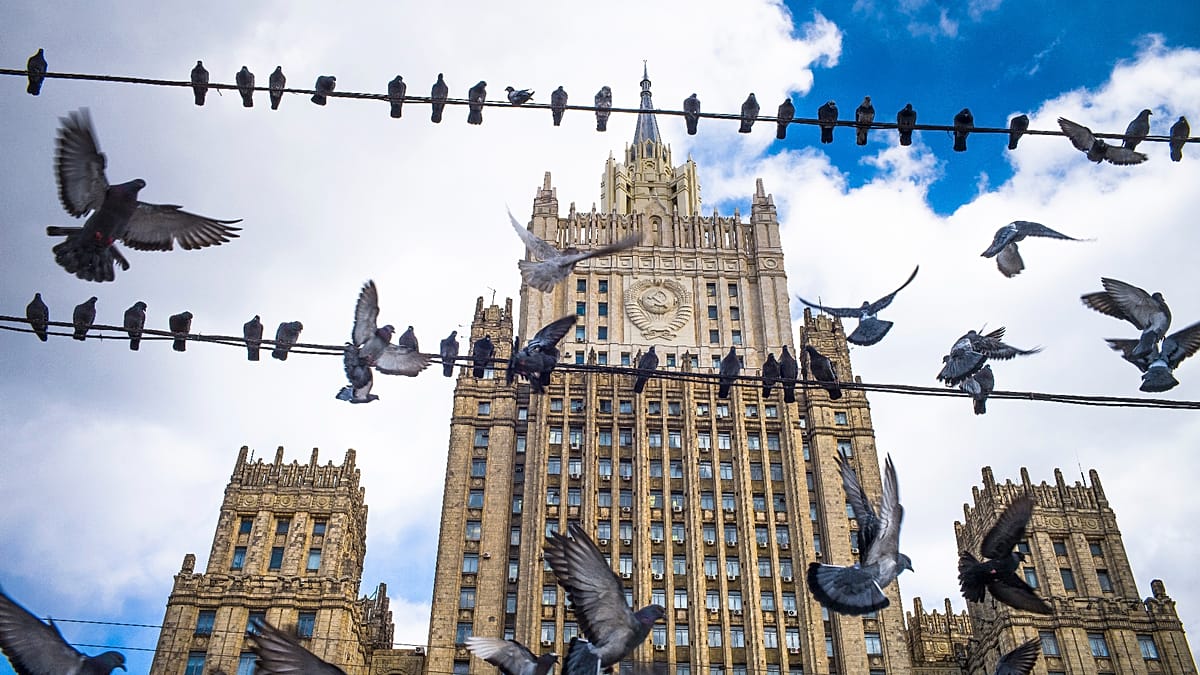
Hungary's chargé d'affaires, Gábor Gergics, was summoned to Russia's foreign ministry on Thursday and informed that staff from the Hungarian embassy in Moscow and consulates in St Petersburg and Kazan had been declared persona non grata. Moscow described Hungary's original expulsion as a "baseless and openly unfriendly" act.
Budapest acknowledged the Russian decision but stood by its position. "Hungary is not interested in an escalation of diplomatic tensions. But we stand by our decision, taken on national security grounds. Our missions continue to operate in full, and Hungary will maintain its diplomatic presence in Russia," the Hungarian foreign ministry wrote on X.
The tit-for-tat expulsions come after Hungary's foreign minister, Anita Orbán (no relation to the former premier), said in September that the Russian diplomats "had been engaged in activities in Hungary that are unacceptable for diplomats under the Vienna Convention." That expulsion was the first of its kind by Hungary since Russia's full-scale invasion of Ukraine in 2022.
A decisive break with the Orbán era
For sixteen years under Viktor Orbán, Hungary maintained closer ties with Moscow than any other EU leader. Orbán openly sympathised with the Kremlin, refused to join other member states in expelling Russian diplomats after the invasion, and made multiple visits to Moscow. He repeatedly used Hungary's veto in the European Council to block Ukraine-related initiatives.
That era ended with Fidesz's defeat in April's general elections. The new government of Prime Minister Péter Magyar has moved swiftly to realign Budapest's foreign policy. At the end of August, the government's guidance to its delegation at the UN General Assembly officially described Russia as a threat to Hungary and to the "global order," condemned Moscow's ongoing war in Ukraine, and affirmed support for Ukrainian sovereignty and its right to self-defence.
The shift is also visible in Hungary's approach to Kyiv. While Budapest is seeking to improve relations with Ukraine, it is currently blocking the opening of new EU accession negotiation clusters with Kyiv, using the leverage to secure concessions on the rights of the country's Hungarian minority.
The diplomatic clash comes as Europe grapples with a broader confrontation with Moscow. NATO Secretary General Mark Rutte has repeatedly urged Russia to halt its nuclear rhetoric, dismissing the threats as not posing an immediate danger to the alliance. Meanwhile, the EU has expanded its Mediterranean naval mission to counter Russia's shadow fleet, and some member states have called for a more robust response to hybrid attacks.
Hungary's new stance aligns it more closely with the EU mainstream, but the government in Budapest insists it does not seek escalation. "Our missions continue to operate in full," the foreign ministry said, signalling a desire to keep channels open even as tensions rise.
The expulsions are a reminder that Moscow is willing to retaliate against even its former friends. For Hungary, the cost of its realignment is now tangible, but the government appears determined to maintain its course.